
Ashoka
Ashoka the Great was a powerful Emperor of Magadha from the Mauryan dynasty who reigned in the 3rd century BCE. He is renowned for his pivotal role in the spread of Buddhism across Asia after a brutal war of conquest led him to embrace the principles of dhamma, or righteous conduct. His reign saw the establishment of numerous stupas, patronage of the Third Buddhist Council, and support for Buddhist missionaries, solidifying his legacy as a significant figure in Buddhist history and a symbol of modern India.
Key Facts
- ›Emperor of Magadha from the Mauryan dynasty, ruling over a vast empire in ancient India.
- ›Credited with playing a significant role in the spread of Buddhism across Asia.
- ›Converted to Buddhism after the brutal conquest of Kalinga, dedicating himself to the propagation of dhamma (righteous conduct).
- ›Patronized the Third Buddhist Council and supported Buddhist missionaries.
- ›His reign is documented through his own inscriptions and Buddhist legends, though these sources sometimes conflict.
- ›The State Emblem and National Flag of modern India feature adaptations of his symbols, the Lion Capital and the Ashoka Chakra.
Important Relationships
- Mauryan dynasty
- Bindusara
- Chandragupta
Magadha, Pataliputra, Kalinga, Takshashila, Ujjain
Buddhism
Sanskrit, Pali
About Ashoka
Ashoka the Great
Ashoka, also known as Asoka or Aśoka, and commonly referred to as Ashoka the Great, was a pivotal figure in ancient Indian history. He reigned as the third emperor of the Mauryan dynasty, ruling over a vast empire that encompassed a significant portion of the Indian subcontinent from approximately 268 BCE until his death in 232 BCE. His capital was located in Pataliputra.
Life and Historical Context
Ashoka's existence as a historical emperor was nearly lost to time but was re-established through the decipherment of inscriptions in the 19th century. Information about his life is drawn from his own inscriptions, other contemporary inscriptions, and ancient literature, particularly Buddhist texts. These sources, however, often present conflicting accounts, requiring careful historical analysis.
His reign is marked by the brutal Kalinga War, which occurred around 260 BCE. The immense suffering and loss of life during this conflict profoundly impacted Ashoka, leading to his eventual conversion to Buddhism and a subsequent dedication to the propagation of "dhamma," or righteous conduct. This shift in his philosophy is a central theme in his edicts.
Contributions and Legacy
Ashoka is widely credited with playing a crucial role in the spread of Buddhism across ancient Asia through his patronage and support of the faith. Buddhist legends attribute to him the establishment of numerous stupas, the sponsorship of the Third Buddhist Council, and generous donations to the monastic community (sangha).
His legacy continues to resonate in modern India. The State Emblem of the Republic of India is an adaptation of the Lion Capital of Ashoka, and the Ashoka Chakra, a wheel symbolizing dharma, is prominently featured at the center of the National Flag of India. These symbols serve as enduring reminders of his influence and the values he promoted.
Source: Wikipedia ↗
Frequently Asked Questions
Who was Ashoka the Great?
Ashoka the Great was an Emperor of Magadha from the Mauryan dynasty, reigning in the 3rd century BCE. He is remembered for his vast empire, his conversion to Buddhism, and his significant role in spreading the religion across ancient Asia.
What is Ashoka known for regarding Buddhism?
Ashoka is widely known as a great patron of Buddhism. He is credited with establishing many stupas, supporting Buddhist missionaries, and patronizing the Third Buddhist Council, which greatly aided the religion's dissemination.
What event led to Ashoka's conversion to Buddhism?
According to historical accounts and Buddhist legends, Ashoka's conversion to Buddhism was prompted by the brutal conquest of Kalinga around 260 BCE. The immense suffering caused by the war led him to renounce violence and dedicate himself to the principles of dhamma.
What are the main sources of information about Ashoka?
Information about Ashoka comes from his own inscriptions, other inscriptions that mention him, and ancient literature, particularly Buddhist texts. These sources, while sometimes contradictory, provide insights into his reign and his patronage of Buddhism.
How is Ashoka remembered in modern India?
Ashoka is deeply revered in modern India. The State Emblem of India is an adaptation of the Lion Capital of Ashoka, and the Ashoka Chakra is featured at the center of the National Flag of India, symbolizing his historical significance.
Related Buddhists
Harsha
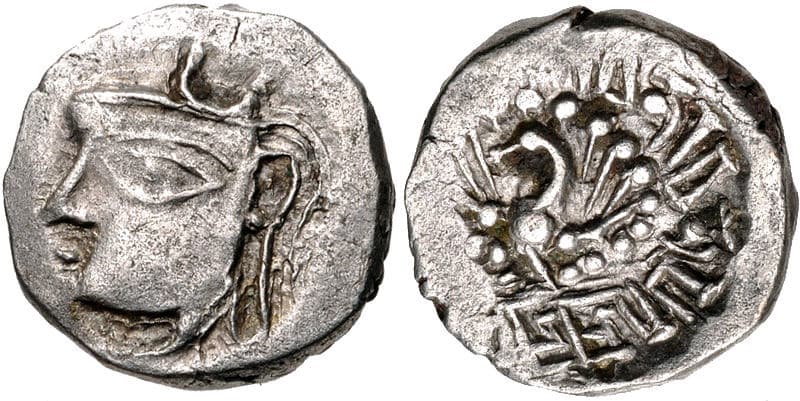
Harshavardhana, also known as Harsha, was an emperor who ruled from Kannauj starting in 606 CE until his death in 647 CE. He is recognized as one of the most significant kings of northern India, expanding his empire to encompass much of the region. His court was a center of learning and culture, attracting scholars and religious figures from across Asia, and he is remembered for his justice and generosity.
Devanampiya Tissa of Anuradhapura
Devanampiya Tissa was a significant early king of Anuradhapura, Sri Lanka, whose reign (traditionally 307-267 BC, or 247-207 BC by modern scholars) is primarily known for the arrival of Buddhism on the island. His friendship with the Mauryan Emperor Ashoka led to the mission of Ashoka's son, Mahinda, who converted the king and his court, marking a pivotal moment in Sri Lankan history.
Dharmaraksita
Dharmaraksita, also known as Dhammarakkhita, was a prominent Greek Buddhist missionary sent by the Mauryan emperor Ashoka to spread Buddhism. He is significant for his role in proselytizing in the northwestern Indian subcontinent and for his association with later Buddhist traditions, including training the monk Nagasena.