
Zenshuji Soto Mission
Zenshuji Soto Mission, established in 1922 in Los Angeles, California, holds the distinction of being the first Soto Zen Buddhist temple in North America. It currently serves as the North American headquarters for Soto Zen, operating as a direct branch of Eiheiji and Sojiji, the two principal temples in Japan.
Key Facts
- ›Established in 1922 in Los Angeles, California.
- ›The first Soto Zen Buddhist temple in North America.
- ›Serves as the North American headquarters for Soto Zen Buddhism.
- ›A direct branch of Eiheiji and Sojiji, the head temples in Japan.
- ›Temporarily closed during World War II, with its property used by other religious groups.
- ›Re-established and restored after World War II.
Important Relationships
- Eiheiji
- Sojiji
- Sotoshu Shumucho
- First Soto Zen Buddhist Temple In North America
- North American Headquarters For Soto Zen
- Establishment of the Temple In 1922
- Land Purchase and Construction Completed In 1926
- Recognition As A Non-Profit Organization In 1927
- Formalization As North America Headquarters For Soto Zen In 1937
- Temporary Closure and Use By Other Religious Groups During World War Ii
- Restoration After World War Ii
About Zenshuji Soto Mission
Zenshuji Soto Mission, officially known in Japanese as 曹洞宗北米両大本山別院禅宗寺 (Sōtōshū Hokubei Ryōdaihonzan betsuin Zenshūji), was established in 1922 in the Little Tokyo neighborhood of Los Angeles, California. It holds the significant historical distinction of being the very first Soto Zen Buddhist temple to be founded in North America. Today, Zenshuji serves as the principal North American headquarters for the Soto Zen school of Buddhism. It operates directly under the guidance of Sotoshu Shumucho, the main headquarters of Soto Zen located in Japan, and functions as a direct branch of Eiheiji and Sojiji, the two supreme head temples of Soto Zen in Japan.
Temple Practice and Philosophy
Zenshuji adheres to the ancient teachings of Gautama Buddha, which have been preserved and transmitted for over 2,500 years. These teachings were notably passed down through Koso Dogen Zenji (1200–1253) and Taiso Keizan Zenji (1268–1325), who are revered as the founding patriarchs of Soto Zen. The core principles of Soto Zen were introduced to Japan approximately eight hundred years ago during the Kamakura period by Dogen Zenji. Keizan Zenji further developed and expanded the school, making its practices more accessible and popular among lay followers. Dogen Zenji founded Eiheiji Temple in what is now Fukui Prefecture in 1244, while Keizan Zenji established Sojiji Temple in present-day Kanagawa Prefecture in 1321. Both Eiheiji and Sojiji continue to function as the primary head temples and monasteries for the Soto Zen school.
Historical Development
The establishment of Zenshuji Soto Mission in Los Angeles in 1922 by Rev. Hosen Isobe followed his attendance at the Panama–Pacific International Exposition in San Francisco. During this period, anti-immigration legislation made it exceedingly challenging for individuals of Japanese descent to acquire land in the United States. Despite these obstacles, land was successfully purchased in 1923, and the construction of the temple was completed in 1926. Zenshuji received official recognition as a non-profit organization from the United States in 1927. Its role as the North America Headquarters for Soto Zen and a direct branch of Eiheiji and Sojiji was formally established in 1937.
During World War II, when approximately 110,000 people of Japanese heritage were interned in detention camps, Zenshuji Soto Mission was temporarily closed. Its property was temporarily occupied by a Hindu temple and a Christian group for their respective worship services. Following the cessation of the war, Bishop Daito Suzuki, who became the third head priest on December 8, 1941, returned to Zenshuji and spearheaded its restoration efforts.
Several prominent figures have served at Zenshuji. Rev. Koun Yamada was the Bishop of North America at Zenshuji for nearly four years before returning to Japan to assume the presidency of Komazawa University and later become the abbot of Eiheiji. In the 1960s, Dr. Wako Kazumitsu Kato was a priest at Zenshuji; he later pursued an academic career, holding positions at several universities, including San Francisco State University, University of California, Berkeley, California State University, Los Angeles, and University of California, Los Angeles. He also served as Dean of International Studies at the Nagoya University of Foreign Studies for seven years and remains actively involved with Zenshuji. Bishop Kenko Yamashita is another key figure, having served as general supervisor for 26 years from the late 1960s through the mid-1980s.
Zenshuji Soto Mission Today
Currently, Rev. Shumyo Kojima maintains an office at Zenshuji and frequently officiates at various ceremonies and services held at the temple. Rev. Kojima is tasked with continuing Zenshuji's mission to provide guidance in Soto Zen practice to the ethnically diverse population of Los Angeles, catering to those seeking spiritual, intellectual, or social fulfillment.
Source: Wikipedia ↗
Frequently Asked Questions
When was Zenshuji Soto Mission founded?
Zenshuji Soto Mission was established in 1922. Its construction was completed in 1926, and it was formally recognized as the North America Headquarters for Soto Zen in 1937.
What is the significance of Zenshuji Soto Mission?
It is historically significant as the first Soto Zen Buddhist temple established in North America. Today, it functions as the primary headquarters for Soto Zen in the region, maintaining a direct connection to the head temples in Japan.
What happened to Zenshuji Soto Mission during World War II?
During World War II, Zenshuji Soto Mission was temporarily closed and its property was used by a Hindu temple and a Christian group for worship. The temple was restored after the war ended.
Who are the founding patriarchs of Soto Zen followed by Zenshuji?
Zenshuji Soto Mission follows the teachings of Gautama Buddha as transmitted by Koso Dogen Zenji (1200–1253) and Taiso Keizan Zenji (1268–1325), recognized as the founding patriarchs of Soto Zen.
What is the current role of Zenshuji Soto Mission?
Currently, Zenshuji serves as the North American headquarters for Soto Zen, under the guidance of Sotoshu Shumucho in Japan. It continues its mission to offer spiritual guidance in Soto Zen practice to diverse communities in Los Angeles.
Related Buddhist Temples
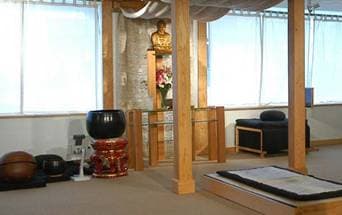
Atlanta Soto Zen Center
The Atlanta Soto Zen Center (ASZC) is a Soto Zen practice center established in 1977. It serves as a primary training hub for the Mokurai Silent Thunder Order, an organization with affiliated centers across the United States and Canada. The ASZC is recognized by the Soto Zen Buddhist Association.
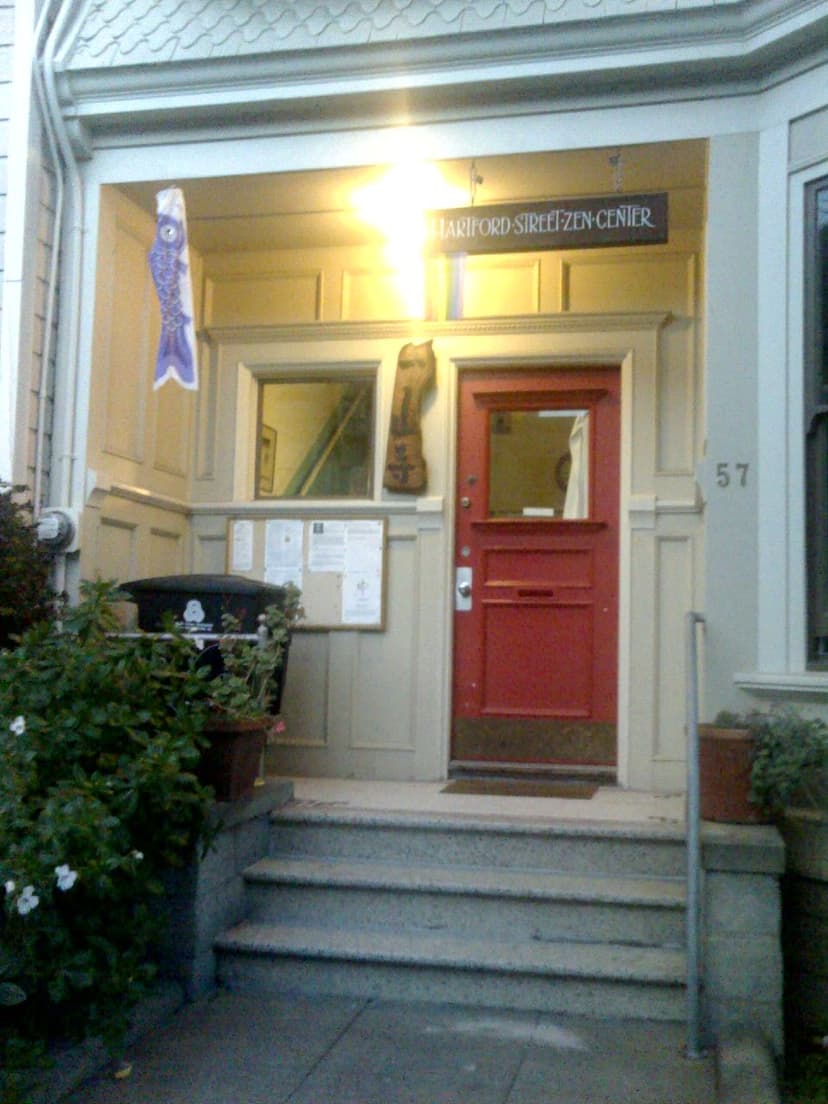
Hartford Street Zen Center
The Hartford Street Zen Center, also known by its temple name Issan-ji, is a Soto Zen practice center located in San Francisco's Castro district. It holds historical significance as the site of the first Buddhist hospice in the United States, Maitri Hospice, established to care for individuals dying of AIDS.
Hazy Moon Zen Center
The Hazy Moon Zen Center is a Soto Zen Buddhist practice center located in Los Angeles, California. Founded in 1996 by William Nyogen Yeo Roshi, it serves as a place for public zazen practice, Dharma talks, and intensive retreats.