
Wat Paramaiyikawat
Wat Paramaiyikawat, also known as Wat Paramaiyikawat Warawihan, is an ancient Buddhist temple located on Ko Kret island in Nonthaburi Province, Thailand. Classified as a second-rank royal temple, it holds significant historical importance, having been restored and named by King Chulalongkorn in honor of his grandmother, and is recognized for its unique Mon architectural influences, particularly its leaning "Phra Chedi Mutao" pagoda.
Key Facts
- ›Originally established in the late Ayutthaya period and known as "Wat Pak Ao".
- ›Restored and renamed "Wat Paramaiyikawat" by King Chulalongkorn in 1874.
- ›Features mural paintings in the ordination hall and stucco-decorated doors and windows.
- ›Home to the "Phra Chedi Mutao", a leaning white pagoda in Mon style, a replica of Bago's Shwemawdaw Pagoda.
- ›Registered as a national ancient monument by the Fine Arts Department since 1935.
- ›Serves as a gateway to Ko Kret due to its ferry pier.

Important Relationships
- King Chulalongkorn (Rama V)
- Princess Sudarattanarachaprayur
Phra Chedi Mutao, Mural Paintings In Ordination Hall, Stucco-Decorated Doors and Windows
- Built In the Late Ayutthaya Period.
- Restored By King Taksin In 1774.
- Restored and Renamed By King Chulalongkorn In 1874.
- King Chulalongkorn Poured Relics of Buddha Inside Phra Chedi Mutao In 1884.
- Pagoda Tilted Due To Bank Erosion Around 1891.
- Registered As A National Ancient Monument In 1935.
Mon
About Wat Paramaiyikawat
Wat Paramaiyikawat, also known by its full name Wat Paramaiyikawat Warawihan, is a significant Buddhist temple situated on Ko Kret island in Nonthaburi Province, central Thailand, along the Chao Phraya River. It holds the distinction of being a second-rank royal temple, signifying its historical importance and royal patronage.
Early History and Royal Patronage
The temple's origins trace back to the late Ayutthaya period, during which it was known as "Wat Pak Ao," a name reflecting its location at an estuary. Following the fall of Ayutthaya and the city's occupation by the Burmese in 1764, the temple was abandoned. Its revival began in 1774 when King Taksin welcomed Mon immigrants and ordered the temple's restoration. The Mons referred to it as "Pia Moo Kia Terng," meaning "temple at the cape."
In 1874, King Chulalongkorn (Rama V) visited the temple and, finding it in poor condition, initiated a comprehensive restoration. He ensured the preservation of its Mon architectural style and dedicated the merit of this endeavor to his grandmother, Princess Sudarattanarachaprayur, who had raised him. It was during this restoration that the temple received its current name, "Wat Paramaiyikawat," meaning "temple of grandmother."
Architectural Significance and Landmarks
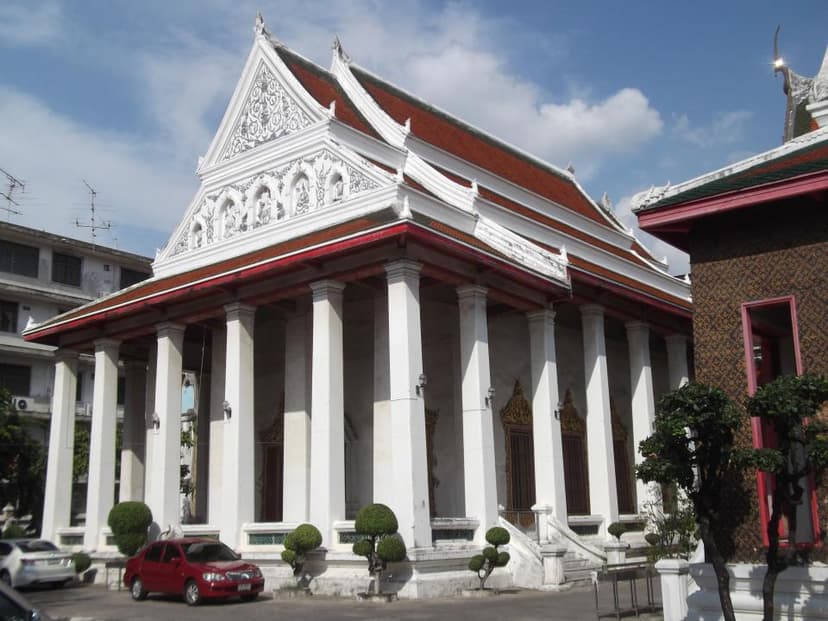
The interior of the temple's ordination hall is adorned with mural paintings executed in an applied Thai traditional style. The doors and windows are further enhanced with decorative colored stucco work. Prominently situated on the island's easternmost corner is the "Phra Chedi Mutao" (พระเจดีย์มุเตา), a striking white pagoda built in the Mon style. King Chulalongkorn himself presided over the ceremony to place Buddha relics within this pagoda in 1884. The pagoda is famously known for its distinctive leaning posture, which developed over time due to water erosion of the bank, despite unsuccessful restoration attempts in 1992. The "Phra Chedi Mutao" is a replica of the Shwemawdaw Pagoda in Bago, Myanmar, a sacred site for the Mon people.
Symbolism and Modern Role
The leaning pagoda is now regarded as a symbol and landmark of Ko Kret, offering a picturesque view, especially from the midstream of the Chao Phraya River or from passing boats, given its location at the confluence of the Chao Phraya and Lat-Kret waterways. Both the temple and the pagoda have been officially recognized as national ancient monuments by the Fine Arts Department since 1935. Wat Paramaiyikawat also functions as a key point of access to Ko Kret, with a ferry pier directly opposite the mainland town of Pak Kret, making it a popular route for visitors.
Source: Wikipedia ↗
Frequently Asked Questions
What is the history of Wat Paramaiyikawat?
The temple is believed to have been built in the late Ayutthaya period and was initially called "Wat Pak Ao". After being left empty during the fall of Ayutthaya, it was restored in 1774 by King Taksin when Mon immigrants arrived. King Chulalongkorn later ordered a significant restoration in 1874, preserving its Mon style and renaming it "Wat Paramaiyikawat".
Why is the "Phra Chedi Mutao" pagoda significant?
The "Phra Chedi Mutao" is a white pagoda in Mon style and a prominent symbol of Ko Kret. It is a replica of the Shwemawdaw Pagoda in Bago, Myanmar, highly revered by the Mons. Its distinctive feature is its leaning posture, caused by water erosion of the bank.
What are the notable architectural features of Wat Paramaiyikawat?
The ordination hall contains mural paintings in an applied Thai traditional style, and its doors and windows are decorated with colored stucco. Outside, the "Phra Chedi Mutao" pagoda stands out with its unique leaning form and Mon architectural style.
What is the current status of Wat Paramaiyikawat?
The temple is currently active and registered as a national ancient monument. It is also considered a significant landmark and gateway to Ko Kret, attracting visitors and pilgrims.
What does the name "Wat Paramaiyikawat" mean?
The name "Wat Paramaiyikawat" means "temple of grandmother" in Thai. King Chulalongkorn bestowed this name upon the temple during its restoration in 1874 to honor his grandmother, Princess Sudarattanarachaprayur, who had raised him.
Related Buddhist Temples

Wat Hong Rattanaram
Wat Hong Rattanaram Ratchaworawihan, often shortened to Wat Hong Rattanaram, is an ancient Thai Buddhist temple situated along the Khlong Bangkok Yai canal in Bangkok. Classified as a second-rank royal temple, it holds significant historical importance, having been patronized by King Taksin and later restored by King Nangklao and King Mongkut. The temple is renowned for its sacred Buddha statues and artistic murals.
Wat Chakkrawat
Wat Chakkrawat, formerly known as Wat Sam Pluem, is a historic Buddhist monastery located in Bangkok's Chinatown. It holds significance as an ancient temple established during the early days of the Rattanakosin Kingdom, predating the development of the Yaowarat road, and was later designated a royal temple.

Wat Molilokkayaram
Wat Molilokkayaram Ratchawarawihan is a significant Buddhist temple in Bangkok, Thailand, renowned as a prominent center for the study of Pali language and Buddhist scriptures. Originally established in the mid-18th century, it has undergone several renovations and name changes under various Thai monarchs, eventually becoming a second-class royal monastery and a vital educational institution for monks.