
Wat Molilokkayaram
Wat Molilokkayaram Ratchawarawihan is a significant Buddhist temple in Bangkok, Thailand, renowned as a prominent center for the study of Pali language and Buddhist scriptures. Originally established in the mid-18th century, it has undergone several renovations and name changes under various Thai monarchs, eventually becoming a second-class royal monastery and a vital educational institution for monks.
Key Facts
- ›Founded in the MID-18th century during the late Ayutthaya period.
- ›Incorporated into King Taksin's Thonburi Palace in 1767.
- ›Renovated and renamed multiple times by Kings Rama II and Rama III.
- ›Serves as a leading Pali school for novice monks and monks, producing many Pali-winning students.
- ›Features notable structures such as the Ordination Hall, Phra Wihan Chang Kluea, Ho Somdet, and Ho Trai.
- ›Phra Phuttha Molilokanart is the principal Buddha image enshrined in the Ordination Hall.

Important Relationships
- King Taksin
- King Phutthaloetla Naphalai (Rama II)
- King Nangklao (Rama III)
Phra Phuttha Molilokanart, Phra Wihan Chang Kluea, Ho Somdet, Ho Trai
- Incorporated Into King Taksin's Thonburi Palace
- Renovated and Renamed By King Phutthaloetla Naphalai
- Restored and Renamed By King Nangklao
- Upgraded To A Pali School
- Seventeen-Year-Old Novice Monk Achieved 'Pali 9' Highest Level
About Wat Molilokkayaram
Wat Molilokkayaram Ratchawarawihan
Wat Molilokkayaram Ratchawarawihan is a significant Buddhist temple located in Bangkok, Thailand. It holds particular importance as a distinguished center for the study of Pali, the liturgical language of Theravada Buddhism, and Buddhist scriptures. The temple is recognized as a second-class royal monastery, underscoring its historical and cultural eminence.
History and Development
The temple's origins trace back to the mid-18th century, during the twilight years of the Ayutthaya Kingdom. It was initially known as "Wat Tai Talat," meaning "Temple at market tip," due to its proximity to the end of the Thonburi Market. The founder of the temple is not precisely recorded. In 1767, following the fall of Ayutthaya, King Taksin integrated the temple into his Thonburi Palace complex. During the subsequent Rattanakosin period, King Phutthaloetla Naphalai (Rama II) undertook renovations of the ordination hall and renamed the temple "Wat Phutthaisawan." Later, King Nangklao (Rama III) further restored the temple and changed its name to "Wat Molilokyasutharam," which eventually evolved into the present-day "Wat Molilokkayaram." The temple also served as an educational site for the childhood of King Phutthaloetla Naphalai's son.
A pivotal development occurred in 1997 when the abbot initiated efforts to upgrade the temple into a dedicated Pali school for novice and ordained monks. This initiative has yielded remarkable success, establishing Wat Molilokkayaram as the institution with the highest number of Pali-winning students in Thailand. This academic prestige was highlighted in 2024 when Phanuwat Kongthungmon, a seventeen-year-old novice monk from the temple, became the youngest individual in Thai history to pass the examinations for "Pali 9," the most advanced level of Pali studies within the Thai Sangha.
Permanent Structures
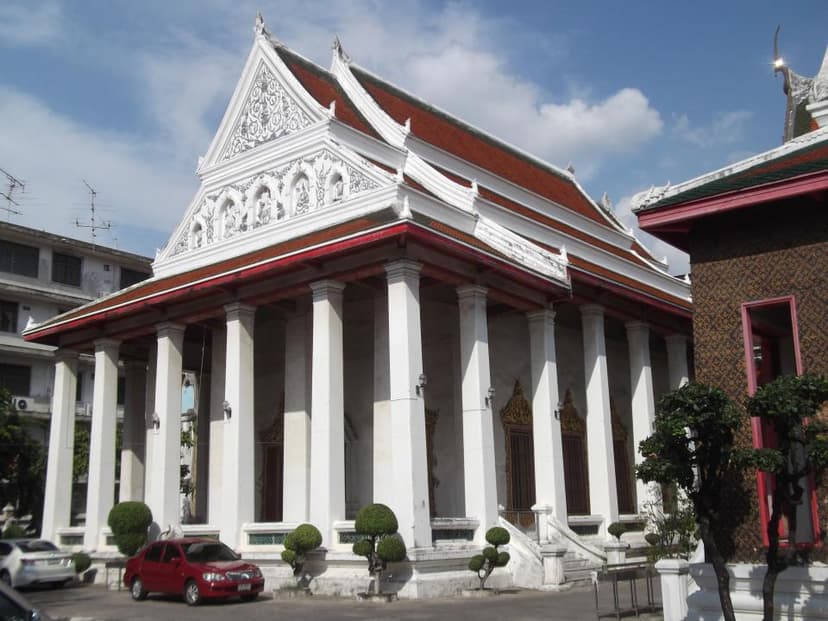
The temple complex features several notable permanent structures. The Ordination Hall is home to the principal Buddha image, enshrined in the Māravijaya attitude, known as Phra Phuttha Molilokanart. Phra Wihan Chang Kluea is an ancient building, with "Chang Kluea" translating to "salty warehouse" in Thai, suggesting its original use possibly as a storage facility during King Taksin's reign. It now functions as a chapel and houses another principal Buddha image named Phra Poramet. The Ho Somdet is a distinctive two-story building, with its ground floor containing statues of French soldiers, possibly dating back to the era of Wichaiprasit Fort. The Ho Trai is the temple's scripture wooden hall, believed to have been constructed during the reign of King Nangklao.
Source: Wikipedia ↗
Frequently Asked Questions
When was Wat Molilokkayaram founded?
The temple was built in the mid-18th century, around the end of the Ayutthaya period. Its exact founder is not recorded in historical accounts.
What is Wat Molilokkayaram known for?
Wat Molilokkayaram is particularly well-known as a center for the study of Pali language. It is currently the school with the most Pali-winning students in Thailand.
What are some of the important structures within Wat Molilokkayaram?
Key structures include the Ordination Hall, which houses the Phra Phuttha Molilokanart Buddha image, and Phra Wihan Chang Kluea, an ancient building believed to have served as a salty warehouse. The temple also has a scripture hall known as Ho Trai.
Has the temple always been called Wat Molilokkayaram?
No, the temple has had several names throughout its history. It was initially known as 'Wat Tai Talat,' later renamed 'Wat Phutthaisawan' by King Rama II, and then 'Wat Molilokyasutharam' by King Rama III before becoming Wat Molilokkayaram.
What is the significance of the Pali studies at Wat Molilokkayaram?
In 1997, the temple was upgraded to a Pali school for novices and monks. It has since become highly successful, producing the most Pali-winning students in Thailand, with a 17-year-old novice monk achieving the highest level in 2024.
Related Buddhist Temples
Wat Chakkrawat
Wat Chakkrawat, formerly known as Wat Sam Pluem, is a historic Buddhist monastery located in Bangkok's Chinatown. It holds significance as an ancient temple established during the early days of the Rattanakosin Kingdom, predating the development of the Yaowarat road, and was later designated a royal temple.

Wat Hong Rattanaram
Wat Hong Rattanaram Ratchaworawihan, often shortened to Wat Hong Rattanaram, is an ancient Thai Buddhist temple situated along the Khlong Bangkok Yai canal in Bangkok. Classified as a second-rank royal temple, it holds significant historical importance, having been patronized by King Taksin and later restored by King Nangklao and King Mongkut. The temple is renowned for its sacred Buddha statues and artistic murals.

Wat Paramaiyikawat
Wat Paramaiyikawat, also known as Wat Paramaiyikawat Warawihan, is an ancient Buddhist temple located on Ko Kret island in Nonthaburi Province, Thailand. Classified as a second-rank royal temple, it holds significant historical importance, having been restored and named by King Chulalongkorn in honor of his grandmother, and is recognized for its unique Mon architectural influences, particularly its leaning "Phra Chedi Mutao" pagoda.