
Wat Mai Suwannaphumaham
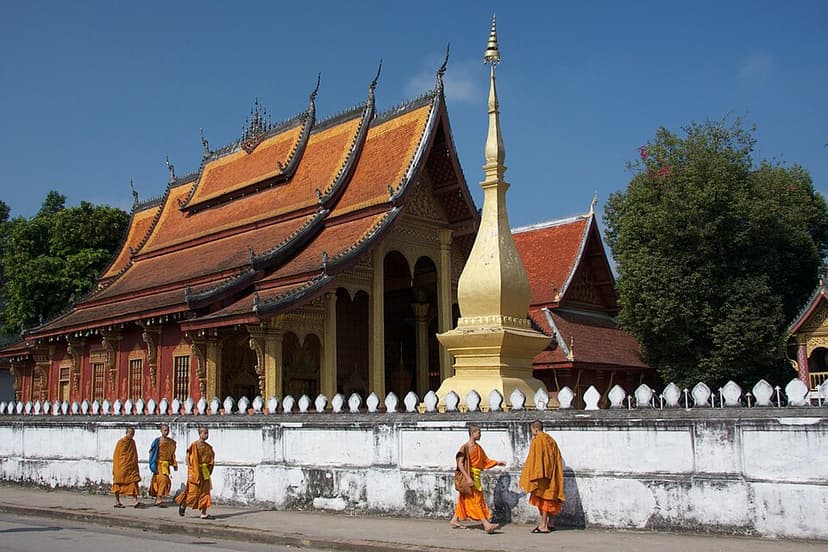
Wat Mai Suwannaphumaham, often shortened to Wat Mai, is the largest Buddhist temple in Luang Prabang, Laos. Constructed around the turn of the 18th century, it is a significant religious and architectural landmark in the city.
Key Facts
- ›Built at the turn of the 18th century.
- ›It is the largest temple in Luang Prabang.
- ›The temple is also known as Wat Mai or Wat may.
- ›It is located in Luang Prabang, Laos.

About Wat Mai Suwannaphumaham
Wat Mai Suwannaphumaham, commonly known as Wat Mai or Wat May, stands as the largest Buddhist temple in Luang Prabang, Laos. Its construction dates back to the turn of the 18th century, establishing it as a significant historical and religious site within the city.
Historical Context
The temple's origins are rooted in the early 18th century, a period of considerable development in Luang Prabang. As the largest temple in the city, Wat Mai Suwannaphumaham has likely played a central role in the religious and cultural life of the community for centuries.
Architectural Significance
While specific architectural details are not elaborated upon, its status as the largest temple implies a substantial structure. Its presence contributes to the rich architectural heritage of Luang Prabang, a city known for its numerous temples and historical buildings.
Source: Wikipedia ↗
Frequently Asked Questions
Where is Wat Mai Suwannaphumaham located?
Wat Mai Suwannaphumaham is situated in Luang Prabang, Laos. It is identified as the largest temple within the city.
When was Wat Mai Suwannaphumaham built?
Historical records indicate that Wat Mai Suwannaphumaham was constructed at the turn of the 18th century. This places its founding around the year 1700.
What is another name for Wat Mai Suwannaphumaham?
The temple is frequently referred to by its shorter name, Wat Mai. It is also sometimes called Wat May.
What is the significance of Wat Mai Suwannaphumaham?
Wat Mai Suwannaphumaham holds significance as the largest Buddhist temple in Luang Prabang. Its construction at the turn of the 18th century also marks it as a historically important structure.
Related Buddhist Temples
Wat Sen
Wat Sen, also known as Wat Sene Souk Haram, is a significant Buddhist temple located in Luang Prabang, Laos. Built in 1718 by King Kitsarath using 100,000 stones from the Mekong River, its name translates to "Temple of 100,000 treasures." The temple underwent restoration in 1957 to commemorate the 2500th anniversary of the Buddha's birth.

Wat Hosian Voravihane
Wat Hosian Voravihane is a Buddhist temple located in Luang Prabang, Laos. As an active temple, its grounds feature residential areas for monks and a school building, indicating its ongoing role in the community's religious and educational life.

Wat Manorom
Wat Manorom is a significant Buddhist temple and monastery located in Luang Prabang, Laos. Its founding is debated, with theories placing its establishment between 1372 and 1492, and it houses a notable 6-meter-high bronze Buddha statue dating from the 1370s.