
Thiên Hậu Temple
Temple·Multiple
Thiên Hậu Temple is a religious site dedicated to Mazu, the Chinese Goddess of the Sea. Mazu is a significant figure revered by fishermen, sailors, and those whose livelihoods depend on the sea, and she is also considered an ancestral deity for the Lin clan. These temples are important centers of worship and cultural preservation for communities connected to maritime activities.
Key Facts
- ›Dedicated to Mazu, the Chinese Goddess of the Sea.
- ›Mazu is also known as Tian Shang Sheng Mu and Tian Hou.
- ›Patron deity for fishermen, sailors, and sea-related occupations.
- ›Regarded as an ancestral deity for the Lin clan.
- ›Temples dedicated to Mazu are found across various countries in Asia and beyond.
About Thiên Hậu Temple
What is a Thiên Hậu Temple?
Thiên Hậu Temple refers to a temple dedicated to Mazu, a deified form of the historical figure Lin Mo Niang. Mazu is widely revered in Chinese folk religion and Taoism as the Goddess of the Sea, the protector of fishermen, sailors, and all those who make their living from maritime activities. She is also known by other titles, such as Tian Shang Sheng Mu (Heavenly Holy Mother) and Tian Hou (Empress of Heaven).
Significance and Worship
The worship of Mazu is deeply ingrained in coastal communities across East Asia and Southeast Asia. Her temples serve as vital centers for prayer, seeking divine protection during sea voyages, and for expressing gratitude for safe returns. Beyond her role as a patron deity of the sea, Mazu is also considered an ancestral deity for the Lin clan, reflecting her importance in both spiritual and familial contexts. The tradition of Mazu worship has spread globally, with temples established in communities with significant Chinese diasporas.
Geographical Distribution
While often associated with coastal China and Taiwan, Thiên Hậu Temples can be found in a wide array of locations. These include numerous sites within Mainland China, Hong Kong, Macao, and Taiwan. Their presence extends to Southeast Asian countries such as Myanmar, Malaysia, Singapore, Thailand, the Philippines, and Vietnam. Furthermore, Mazu temples are established in North America, with notable concentrations in the United States and Canada, reflecting the migratory patterns and cultural continuity of Chinese communities.
Source: Wikipedia ↗
Frequently Asked Questions
Who is Mazu and why are temples dedicated to her?
Mazu is the Chinese Goddess of the Sea, also known as Tian Shang Sheng Mu or Tian Hou. Temples are dedicated to her because she is the patron deity for fishermen, sailors, and anyone involved in sea-related occupations, believed to offer protection on the waters.
What other significance does Mazu hold?
Beyond her role as a sea goddess, Mazu is also venerated as an ancestral deity by the Lin clan. This dual significance makes Mazu temples important cultural and familial sites.
Where can Thiên Hậu Temples be found?
Temples dedicated to Mazu, including those referred to as Thiên Hậu Temple, are located in numerous countries. These include various regions in China, Taiwan, Southeast Asian nations like Malaysia, Singapore, Thailand, the Philippines, and Vietnam, as well as in Myanmar and in North America (United States and Canada).
Related Buddhist Temples
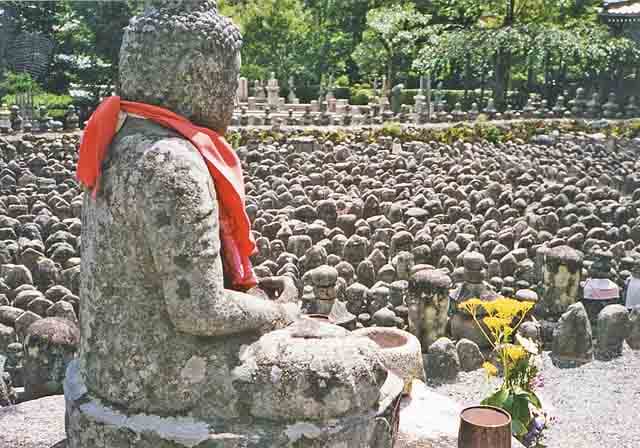
Adashino Nenbutsu-ji
Adashino Nenbutsu-ji is a Buddhist temple in Kyoto, Japan, historically situated in an area where the bodies of the deceased were abandoned. Founded as a temple by Kūkai in 811 and later altered by Hōnen, it now houses approximately eight thousand Buddhist statuettes that memorialize the souls of the dead. The temple is particularly known for its 'sento kuyo' ceremony, where thousands of stone statues are illuminated with candles.
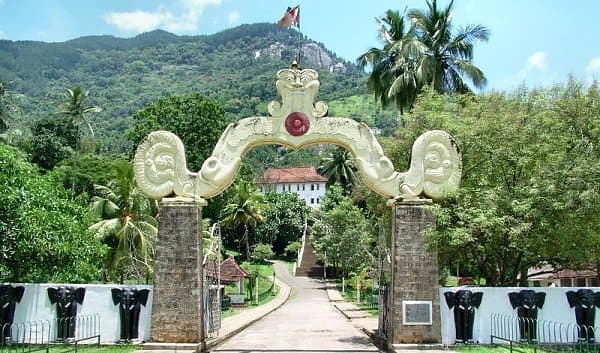
Aluvihare Rock Temple
The Aluvihare Rock Temple, also known as Matale Alu Viharaya, is a significant Buddhist temple in Sri Lanka's Matale District. It holds historical importance as the site where the Pāli Canon was first transcribed onto palm leaves, preserving Buddhist scriptures during times of upheaval. The temple complex features numerous monastery caves, some adorned with ancient inscriptions, frescoes, and Buddha statues, making it a place of both historical preservation and religious devotion.
American Bodhi Center
The American Bodhi Center, part of the Texas Buddhist Association (TBA), is a vast 515-acre Buddhist facility located in Waller County, Texas. Established to serve as a long-term center integrated with the local community, it provides a space for religious ceremonies, educational programs, and meditation. The center is notable for its size, environmentally conscious design, and housing of rare original relics of Shakyamuni Buddha.