
Aluvihare Rock Temple
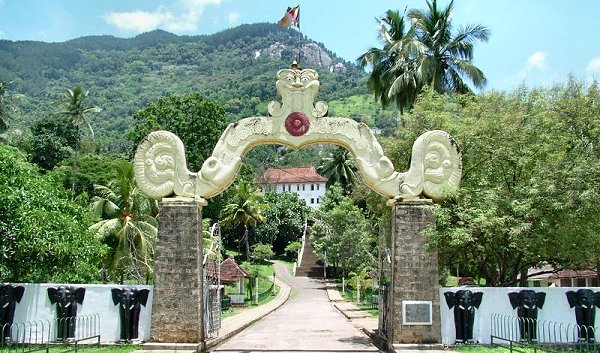
The Aluvihare Rock Temple, also known as Matale Alu Viharaya, is a significant Buddhist temple in Sri Lanka's Matale District. It holds historical importance as the site where the Pāli Canon was first transcribed onto palm leaves, preserving Buddhist scriptures during times of upheaval. The temple complex features numerous monastery caves, some adorned with ancient inscriptions, frescoes, and Buddha statues, making it a place of both historical preservation and religious devotion.
Key Facts
- ›The Aluvihare Rock Temple is believed to have been founded in the 3rd Century B.C. during the reign of King Devanampiyatissa.
- ›It is the historic location where the PāLI Canon was first written down completely in text on ola (palm) leaves.
- ›During the 1st Century BC, 500 scholarly monks congregated here to transcribe the Tripiṭaka due to fears of its loss.
- ›The temple complex contains many monastery caves, some with frescoes, ancient inscriptions, and Buddha statues.
- ›The old library housing the transcribed manuscripts was destroyed during the Matale Rebellion in 1848, necessitating a recompilation.
- ›The monk-scholar Buddhagosa is believed to have spent several years at Aluvihare Rock Temple for his scholarly work.
Important Relationships
- King Devanampiyatissa
- King Walagamba
- Buddhagosa
Monastery Caves, Frescoes, Buddha Statues, Ancient Inscriptions, Reclining Buddha Statue, Depictions of Hellish Afterlife
- First Transcription of the PāLi Canon On Ola Leaves
- Destruction of the Old Library and Temple Complex During the Matale Rebellion
- Recompilation and Re-Transcription of the TripiṭAka
About Aluvihare Rock Temple
The Aluvihare Rock Temple, also known by the name Matale Alu Viharaya, is a sacred Buddhist site located in Aluvihare, within the Matale District of Sri Lanka. Nestled amidst hills, the cave temple is situated approximately 30 kilometers north of Kandy, along the Matale-Dambulla road. Its historical significance is deeply rooted in its role as the repository for the first complete written transcription of the Pāli Canon, the sacred scriptures of Theravada Buddhism, which was inscribed on ola (palm) leaves.
History and Significance
The origins of the Aluvihare Rock Temple are traced back to the 3rd Century B.C., during the reign of King Devanampiyatissa, who is credited with founding the temple, planting a Bo sapling, and building the dagoba following the introduction of Buddhism to Sri Lanka. A critical period in its history occurred in the 1st Century BC. Facing a severe famine known as 'Baminithiyasaya' and simultaneous South Indian invasions, Buddhist monks recognized the threat to the existence of the Buddha Sasana. The challenging conditions made memorizing and reciting the Dhamma difficult. During this time, King Walagamba, who had been temporarily overthrown, regained his throne after fourteen years. Upon his restoration, the monks, having survived in difficult conditions, decided to transcribe the Tripiṭaka for future generations. Aluvihare Rock Temple was chosen as a secure location for this crucial undertaking. Approximately 500 scholarly monks gathered to recite and agree upon the doctrines before inscribing them onto ola leaves using metal styluses. The doctrines were written in the Pali language.
Destruction and Recompilation
Tragically, the old library at Aluvihare Rock Temple, which had safeguarded these transcribed manuscripts for centuries, was completely destroyed during the Matale Rebellion in 1848. Many parts of the temple complex also suffered damage during this incident, the consequences of which are still visible today. The destruction necessitated a lengthy process of recompilation. Generations of monks were required to transcribe the Tripiṭaka anew, a painstaking task that meant the first of the three "baskets of the law" was not completed until 1982.
Temple Features
The Aluvihare Rock Temple is characterized by numerous monastery caves. Some of these caves feature ancient inscriptions, while others display comparatively modern wall and ceiling paintings. Impressive statues and images of Buddha are also housed within the complex. The main cave contains a large reclining statue of the Buddha, alongside standing and seated images. Another cave entrance features striking depictions of hellish realms, illustrating the consequences of sin. One cave is dedicated to the revered Indian monk-scholar Buddhagosa, who is renowned as a preeminent exponent and interpreter of the Pali canonical scriptures. While he resided in Anuradhapura during the 4th and 5th centuries, it is believed he spent several years at the Matale Alu Viharaya engaging in his scholarly pursuits.
Etymology
The name 'Aluvihare' is subject to various folklore and beliefs, all seemingly connected to the concept of light. One interpretation suggests that 'Aloka Vihara' (temple of light) evolved into Aluvihara, with 'Aloka' being the Pali word for light, rendered as 'Alu' in ancient Sinhalese. Another view posits that the temple's location in a rock cave, despite a large rock to the east, allowed sunlight to penetrate, earning it the name 'Aloka Lena' (cave with light). These interpretations collectively indicate that the temple's name is intrinsically linked to light.
Source: Wikipedia ↗
Frequently Asked Questions
Where is the Aluvihare Rock Temple located?
The Aluvihare Rock Temple is located in Aluvihare, in the Matale District of Sri Lanka. It is situated about 30 km north of Kandy, along the Matale-Dambulla road, and is surrounded by hills.
What is the historical significance of the Aluvihare Rock Temple?
Its primary historical significance lies in being the location where the Pāli Canon, the complete scriptures of Theravada Buddhism, was first written down in text on palm leaves. This monumental task was undertaken to preserve Buddhist doctrine during a period of famine and invasion.
When was the Aluvihare Rock Temple founded?
Historical accounts trace the founding of the Aluvihare Rock Temple back to the 3rd Century B.C., during the reign of King Devanampiyatissa, who is said to have established the temple after Buddhism was introduced to Sri Lanka.
What major events impacted the Aluvihare Rock Temple?
A significant event was the destruction of its old library, which housed the transcribed manuscripts, during the Matale Rebellion in 1848. This incident led to the loss of many parts of the temple complex and necessitated a long process of recompiling and re-transcribing the scriptures.
What are some notable features of the Aluvihare Rock Temple?
The temple is known for its monastery caves, some of which contain ancient inscriptions and modern wall and ceiling paintings. It also houses impressive statues and images of Buddha, including a large reclining Buddha statue in the main cave.
Related Buddhist Temples

Sela Cetiya
The Sela Cetiya, also known as Ambastala Dagaba, is a significant stupa located at the Mihintale Royal Rock Temple in Sri Lanka. It is one of the 16 main places of worship and is believed to have been built by King Mahadatika Mahanaga to commemorate the introduction of Buddhism to Sri Lanka, marking the spot where Mahinda Thero met King Devanampiyatissa.

Yatala Vehera
Yatala Vehera is an ancient Buddhist stupa located in Deberawewa, Sri Lanka, believed to have been constructed in the 3rd Century B.C. It is significant for its unique architectural features, including a stage of granite stones, a wall adorned with sculpted elephant heads, a moat, and a large moonstone. The stupa is considered by some to be the first ever built in the Ruhuna kingdom and is associated with early Sinhalese arahants and regional royalty.

Gokanna Vihara
Gokanna Vihara was an ancient Buddhist temple historically situated in Trincomalee, Sri Lanka, near the entrance of Fort Frederick. The Mahavamsa chronicle indicates its construction by King Mahasen in the 3rd century AD, replacing a Hindu temple on Swami Rock.