
Yatala Vehera
Yatala Vehera is an ancient Buddhist stupa located in Deberawewa, Sri Lanka, believed to have been constructed in the 3rd Century B.C. It is significant for its unique architectural features, including a stage of granite stones, a wall adorned with sculpted elephant heads, a moat, and a large moonstone. The stupa is considered by some to be the first ever built in the Ruhuna kingdom and is associated with early Sinhalese arahants and regional royalty.
Key Facts
- ›Dating back to the 3rd Century B.C., Yatala Vehera is an ancient Buddhist stupa.
- ›It is situated in Deberawewa, Thissamaharama, in the Hambantota District of Sri Lanka.
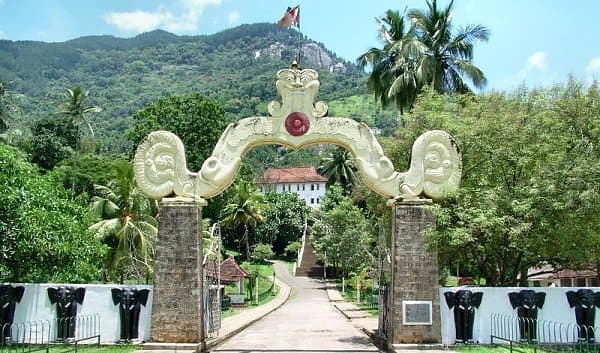
- ›The stupa is built on a stage of large flat granite stones and features a surrounding wall of sculpted elephant heads.
- ›Historical accounts suggest it was built by regional kings Yatala Thissa or Mahanaga to commemorate a birth.
- ›It is believed to have been offered to Arahant Arittha Thero, the first Sinhalese arahant.
- ›Restoration work on the stupa began in 1883 AD and took over a century to complete.

Important Relationships
- Yatala Thissa (regional king)
- Mahanaga (regional king)
- Arahant Arittha Thero
Stage Made of Large Flat Granite Stones, Surrounding Wall of Sculpted Elephant Heads, Moat, Large Moonstone
- Construction Dating Back To the 3rd Century B.C.
- Believed To Be the First Stupa Built In the Kingdom of Ruhuna
- Offered To Arahant Arittha Thero
- Restoration Work Commenced In 1883 Ad
About Yatala Vehera
Yatala Vehera is an ancient Buddhist stupa of considerable historical and architectural significance, located in Deberawewa, Thissamaharama, within Sri Lanka's Hambantota District. Its origins are traced back to the 3rd Century B.C., making it one of the older religious structures in the region. The stupa is distinguished by its unique construction, featuring a prominent stage built from large, flat granite stones. A notable element is the surrounding wall, which is adorned with sculpted elephant heads, a feature that adds to its distinctiveness. The presence of a moat and a large moonstone at its base further enhances its architectural character.
Historical accounts suggest that Yatala Vehera was established by regional royalty. Some traditions attribute its construction to King Yatala Thissa of Ruhuna, who is said to have built it to commemorate the place of his birth. An alternative belief credits King Mahanaga, the father of Yatala Thissa, with its erection to mark his son's birth. The stupa is also referred to in historical documents and chronicles by other names, including Mani Chethiya and Yattalaya. Its exact contents remain unknown, though a significant number of relic caskets have been unearthed from the site, indicating its importance as a reliquary.
The spiritual significance of Yatala Vehera is further highlighted by the belief that it was offered to Arahant Arittha Thero, recognized as the first Sinhalese arahant. This association underscores its deep roots in early Buddhist history in Sri Lanka. It is also widely considered to be the very first stupa constructed within the ancient kingdom of Ruhuna. The stupa has undergone extensive restoration efforts, with work commencing in 1883 AD and continuing for over a century to ensure its preservation. A small opening has been incorporated into the renovated structure, allowing visitors and scholars to observe the different phases of its construction and repair.
Source: Wikipedia ↗
Frequently Asked Questions
When was Yatala Vehera built?
Yatala Vehera is an ancient Buddhist stupa believed to date back to the 3rd Century B.C., approximately 2300 years ago. The exact founding date is subject to historical interpretation, with some accounts pointing to specific regional kings.
Where is Yatala Vehera located?
Yatala Vehera is located in Deberawewa, within the Thissamaharama area of the Hambantota District in Sri Lanka.
What are the notable architectural features of Yatala Vehera?
The stupa is constructed on a platform of large flat granite stones. It is distinguished by a surrounding wall featuring sculpted elephant heads, a moat, and a significant moonstone at its base.
Who is credited with building Yatala Vehera?
Historical records suggest it was built either by regional king Yatala Thissa of Ruhuna to mark his birthplace or by his father, regional king Mahanaga, to commemorate his son's birth.
What is the significance of Yatala Vehera in Buddhist history?
It is believed to be the first stupa constructed in the kingdom of Ruhuna and was possibly offered to Arahant Arittha Thero, the first Sinhalese arahant. Numerous relic caskets have also been discovered within the stupa.
Has Yatala Vehera undergone any restoration?
Yes, restoration work commenced on Yatala Vehera in 1883 AD. The process was extensive and took over a century to finalize. A small opening remains in the renovated stupa to showcase its construction phases.
Related Buddhist Temples

Sela Cetiya
The Sela Cetiya, also known as Ambastala Dagaba, is a significant stupa located at the Mihintale Royal Rock Temple in Sri Lanka. It is one of the 16 main places of worship and is believed to have been built by King Mahadatika Mahanaga to commemorate the introduction of Buddhism to Sri Lanka, marking the spot where Mahinda Thero met King Devanampiyatissa.
Aluvihare Rock Temple
The Aluvihare Rock Temple, also known as Matale Alu Viharaya, is a significant Buddhist temple in Sri Lanka's Matale District. It holds historical importance as the site where the Pāli Canon was first transcribed onto palm leaves, preserving Buddhist scriptures during times of upheaval. The temple complex features numerous monastery caves, some adorned with ancient inscriptions, frescoes, and Buddha statues, making it a place of both historical preservation and religious devotion.

Gokanna Vihara
Gokanna Vihara was an ancient Buddhist temple historically situated in Trincomalee, Sri Lanka, near the entrance of Fort Frederick. The Mahavamsa chronicle indicates its construction by King Mahasen in the 3rd century AD, replacing a Hindu temple on Swami Rock.