
Tabo Monastery
Tabo Monastery, also known as Tabo Chos-Khor Monastery, is a significant Buddhist enclave in Spiti Valley, Himachal Pradesh, India, renowned for its age and artistic treasures. Founded in 996 CE, it is distinguished as the oldest continuously operating Buddhist site in India and the Himalayas, housing extensive frescoes, manuscripts, and statues that depict Buddhist narratives and deities.
Key Facts
- ›Founded in 996 CE by the Tibetan translator Rinchen Zangpo on behalf of King Yeshe-Ö of the Guge Kingdom.
- ›It is the oldest continuously operating Buddhist enclave in India and the Himalayas.
- ›The monastery is noted for its numerous frescoes, thankas (scroll paintings), manuscripts, statues, and extensive murals.
- ›It was severely damaged by a 1975 earthquake and subsequently rebuilt, with new structures added.
- ›The 14th Dalai Lama has held significant Kalachakra ceremonies at the monastery in 1983 and 1996.
- ›Tabo Monastery is protected by the Archaeological Survey of India as a national historic treasure.

Important Relationships
- Rinchen Zangpo (founder)
- Yeshe-Ö (commissioning king)
- Jangchub O'd (renovator)
- 14th Dalai Lama
- Archaeological Survey of India (ASI)
Frescoes Depicting Buddhist Tales, Collection of Thankas, Manuscripts, Well-Preserved Statues, Extensive Murals, Cave Shrines Used For Meditation
- Founded In 996 Ce
- Renovated 46 Years Later By Jangchub O'D
- Attacks On the Assembly Hall In 1837
- Severe Damage From the 1975 Kinnaur Earthquake
- 14th Dalai Lama Held Kalachakra Ceremonies In 1983 and 1996
- Millennium Celebration In 1996
- Inauguration of Kalachakra Stupa In 2009
Tibetan, Indian, Central Asian
About Tabo Monastery
Tabo Monastery, also known as Tabo Chos-Khor Monastery, is a Tibetan Buddhist monastery located in the Tabo village of Spiti Valley, in the state of Himachal Pradesh, northern India. Founded in 996 CE by the renowned Tibetan Buddhist lotsawa (translator) Rinchen Zangpo, under the patronage of King Yeshe-Ö of the Guge Kingdom, Tabo holds the distinction of being the oldest continuously operating Buddhist enclave in both India and the Himalayas. Its historical and artistic importance is immense, making it a vital cultural and religious site.
Historical Context and Significance
The monastery was built as a 'daughter' monastery to the Tholing Monastery in western Tibet, playing a crucial role in the re-introduction of Indian Mahayana Buddhism to Tibet during the 11th century. The Purang-Guge kingdom, to which Yeshe-Ö and Jangchub O'd (who renovated the monastery 46 years after its founding) belonged, was instrumental in spreading Buddhism through its extensive trade routes. Historical accounts inscribed on the monastery's walls document these contributions to Tibetan political, religious, and economic institutions.
Artistic and Architectural Treasures
Tabo Monastery is celebrated as the "Ajanta of the Himalayas" due to its exceptionally preserved frescoes and stucco paintings. The walls of its temples are adorned with narratives from the Buddhist pantheon, featuring a vast collection of thankas (scroll paintings), manuscripts, well-preserved statues, and extensive murals that cover nearly every surface. The paintings within the main temple (Tsug la Khang) and its stupas initially represented the Nyingmapa, Kadampa, and Sakyapa traditions, with later periods reflecting the Gelugpa tradition. The architectural blend incorporates provincial, regional, Indian, and Central Asian characteristics.
Modern Era and Preservation
While the monastery has endured periods of conflict, as evidenced by inscriptions detailing attacks in the 19th century, it has also experienced periods of peace under British rule. A significant challenge arose with the 1975 Kinnaur earthquake, which severely damaged the original structures. Subsequent restoration efforts and the addition of new buildings, such as the Du-kang (Assembly Hall) in 1983, have revitalized the site. The 14th Dalai Lama has visited the monastery multiple times, notably holding the Kalachakra ceremonies in 1983 and 1996, and celebrating its millennium in the latter year. Tabo Monastery is recognized as a national historic treasure by the Archaeological Survey of India (ASI), which also proposed it for UNESCO World Heritage Site status. Despite these efforts, the monastery faces ongoing challenges from the aging of its wooden structures and the fading of its priceless artworks, with climate change also posing a threat to its mud-based exterior structures and the surrounding valley.
Source: Wikipedia ↗
Frequently Asked Questions
When was Tabo Monastery founded?
Tabo Monastery was founded in 996 CE, which corresponds to the Tibetan year of the Fire Ape. It was established by the Tibetan Buddhist lotsawa Rinchen Zangpo on behalf of King Yeshe-Ö.
What makes Tabo Monastery historically significant?
Its significance lies in being the oldest continuously operating Buddhist enclave in both India and the Himalayas. It is also a repository of a vast collection of art, including frescoes, thankas, manuscripts, and murals.
What kind of art can be found at Tabo Monastery?
The monastery is famous for its numerous frescoes that depict tales from the Buddhist pantheon. It also houses priceless collections of thankas (scroll paintings), well-preserved statues, and extensive murals covering almost every wall.
Has the monastery undergone any major restoration?
Yes, the original monastery was severely damaged by the Kinnaur earthquake in 1975. Following this, it underwent restoration, and new structures were added, including a new Assembly Hall.
Has the 14th Dalai Lama visited Tabo Monastery?
The 14th Dalai Lama has visited Tabo Monastery on multiple occasions. He held the Kalachakra ceremonies there in 1983 and 1996, and was scheduled to inaugurate a Kalachakra Stupa in 2009.
What is the current status of Tabo Monastery's preservation?
The monastery is protected by the Archaeological Survey of India as a national historic treasure. Efforts are being made for its refurbishment, as the wooden structures are aging and some paintings are fading.
Related Buddhist Temples
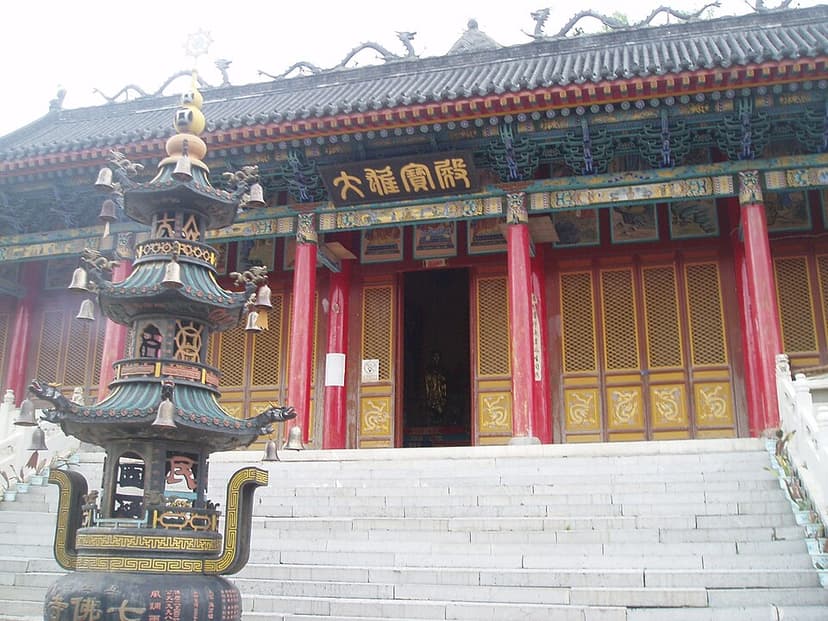
Qifo Temple
Qifo Temple is a significant Buddhist temple located in Taihuai Town, Shanxi, China. Originally constructed during the Northern Song dynasty, it has undergone several reconstructions and conversions, most notably to Tibetan Buddhism in 1734. Despite being destroyed during the Cultural Revolution, it was rebuilt starting in 1991 and features several halls and a notable white marble pagoda.
Rewalsar
Rewalsar, also known as Tso Pema in Tibetan, is a significant pilgrimage town in Himachal Pradesh, India, revered by Hindus, Buddhists, and Sikhs. It is particularly sacred to Tibetan Buddhists due to its association with Padmasambhava (Guru Rinpoche) and features prominent monasteries, a large statue of Padmasambhava, and the Rewalsar Lake.

Amarbayasgalant Monastery
Amarbayasgalant Monastery is one of Mongolia's three largest Buddhist monastic centers, established in the early 18th century. It was built to house the remains of Zanabazar, the first spiritual head of Tibetan Buddhism for the Khalkha in Outer Mongolia, and reflects a unified Chinese architectural style with Mongol and Tibetan influences.