
Shwedagon Pagoda
The Shwedagon Pagoda, also known as the Great Dagon Pagoda or Golden Pagoda, is the most sacred Buddhist pagoda in Myanmar, located in Yangon. It is renowned for its gilded stupa, which is believed to enshrine relics of the four previous Buddhas, making it a site of immense religious significance and a major pilgrimage destination.
Key Facts
- ›Believed to contain relics of the four previous Buddhas, including hair from Gautama Buddha.
- ›Constructed on Singuttara Hill, it stands 112 meters tall and dominates the Yangon skyline.
- ›Legend states it was built over 2,500 years ago while the Buddha was alive, making it potentially the oldest Buddhist stupa.
- ›Has undergone numerous repairs and height adjustments throughout its history, with its current height established in 1775.
- ›The pagoda is adorned with gold plates and precious gems, including a 76-carat diamond at its apex.
- ›It has served as a site for significant political gatherings and protests throughout Myanmar's modern history.

Important Relationships
- Kakusandha (Buddha)
- Koṇāgamana (Buddha)
- Kassapa (Buddha)
- Gautama (Buddha)
- King Okkalapa of Dagon
- Queen Shin Saw Pu
- King Dhammazedi
- King Hsinbyushin
- King Mindon
- King Singu
- Tharrawaddy Min
- Filipe de Brito e Nicote
- Hiram Cox
- U Dhammaloka
- Lord Maung Htaw Lay
- Mr. Phayre
- General Aung San
- Aung San Suu Kyi
- Rudyard Kipling
- Gilded Stupa
- Believed Relics of Four Previous Buddhas
- Diamond Bud Crown With Thousands of Diamonds and Rubies
- Singuttara Hill Location
- Eight Planetary Posts With Animal Representations
- Giant Leogryph Guardians At Entrances
- Legendary Construction During the Buddha's Lifetime
- Plundering By Filipe De Brito E Nicote
- Occupation and Use As A Fortress By British During First Anglo-Burmese War
- Re-Occupation and Fortification By British During Second Anglo-Burmese War
- Site of Student Protests and Planning For Nationalist Movements
- Address By General Aung San Demanding Independence
- Address By Aung San Suu Kyi Demanding Democracy
- September 2007 Protests Involving Monks and Civilians
About Shwedagon Pagoda
Shwedagon Pagoda: Myanmar's Golden Sacred Site
The Shwedagon Pagoda, officially named Shwedagon Zedi Daw and also known as the Great Dagon Pagoda or Golden Pagoda, stands as the most sacred Buddhist pagoda in Myanmar, located on Singuttara Hill in Yangon. Its immense gilded stupa, reaching 112 meters in height, is an iconic feature of the Yangon skyline and a focal point of religious devotion.
History and Legend
Legend imbues the Shwedagon Pagoda with an extraordinary antiquity, claiming its construction over 2,500 years ago while the Buddha himself was still alive. This tradition holds that two merchants, Tapussa and Bhallika, received eight strands of the Buddha's hair and were instructed to enshrine them in a stupa. King Okkalapa of Dagon is said to have facilitated this, incorporating relics of the three preceding Buddhas as well. While this legendary origin places its founding in antiquity, the earliest verifiable mention in royal chronicles dates to the 14th century CE, with significant renovations and height increases recorded in the 15th century by Queen Shin Saw Pu and King Dhammazedi.
The pagoda has faced challenges throughout its history, including damage from earthquakes. Major rebuilding efforts occurred after a significant earthquake in 1768, which necessitated raising the stupa to its current height. The pagoda's adornments have also been a continuous focus, with successive monarchs and devotees donating gold leaf to maintain its dazzling appearance. By the early 16th century, the Shwedagon Pagoda had firmly established itself as a premier Buddhist pilgrimage site.
Architecture and Design
The Shwedagon Pagoda is a magnificent example of religious architecture. Its base is a brick plinth covered in gold plates, rising to terraces accessible only to monks and males. Above this is the main bell-shaped stupa, followed by a series of decorative elements culminating in the 'diamond bud' at its apex. This crowning jewel is adorned with 5,448 diamonds and 2,317 rubies, with a significant 76-carat diamond at the very top. The entire structure is covered in genuine gold plates, attached with traditional rivets, a testament to ongoing devotion and maintenance.
Four main entrances lead to the platform, each guarded by a pair of giant leogryphs. The eastern and southern approaches are lined with vendors selling religious items, flowers, and amulets. The pagoda's design incorporates directional shrines dedicated to the four previous Buddhas: Kakusandha (east), Koṇāgamana (south), Kassapa (west), and Gautama (north), reflecting a common practice of clockwise circumambulation.
Religious and Cultural Significance
The Shwedagon Pagoda is central to Buddhist practice in Myanmar. It is customary for devotees to perform a blessing ritual, often involving pouring water onto Buddha images at their respective planetary posts, which are determined by the day of the week of their birth. These posts are marked by animal symbols representing each day. The pagoda's plinth is octagonal and surrounded by eight small shrines, each corresponding to a planetary post.
Beyond its religious importance, the Shwedagon Pagoda has also been a significant site for political activism and national identity. Students planned protests against colonial rule from its terraces in 1920, and it has been a gathering place for major demonstrations demanding independence and democracy, notably in 1946 with General Aung San and in 1988 with Aung San Suu Kyi. The issue of shoe-wearing within its precincts also became a symbol of Burmese resistance against colonial disregard for religious customs.
Notable Events and Replicas
Throughout its history, the Shwedagon Pagoda has witnessed events of both plunder and preservation. In 1608, it was plundered by Portuguese adventurer Filipe de Brito e Nicote. During the Anglo-Burmese Wars, the British occupied and used the pagoda as a fortress, leading to instances of vandalism and the attempted removal of its bells. Lord Maung Htaw Lay is credited with preventing further looting during the Second Anglo-Burmese War and initiating renovations.
Several replicas of the Shwedagon Pagoda exist, including the Uppatasanti Pagoda in Naypyidaw, Myanmar, and another at Lumbini Natural Park in Indonesia. A monastery modeled after the pagoda was also inaugurated in Minnesota, United States.
Source: Wikipedia ↗
Frequently Asked Questions
What is the Shwedagon Pagoda's significance?
The Shwedagon Pagoda is considered the most sacred Buddhist pagoda in Myanmar. It is believed to house relics of the four previous Buddhas of the present kalpa, including strands of hair from Gautama Buddha, making it a paramount site for Buddhist devotion and pilgrimage.
When was the Shwedagon Pagoda built?
Legend holds that the Shwedagon Pagoda was constructed more than 2,500 years ago, while the Buddha was still alive. Historical records first mention repairs and height additions in the 15th century CE.
What are the notable features of the Shwedagon Pagoda?
The pagoda is characterized by its immense gilded stupa, measuring 112 meters in height, topped with a diamond bud studded with thousands of diamonds and rubies. It is situated on Singuttara Hill and is surrounded by numerous shrines and pavilions.
Has the Shwedagon Pagoda been damaged?
Yes, the pagoda has been damaged by several earthquakes throughout its history. The most significant damage occurred in 1768, which brought down the top of the stupa, requiring a rebuilding effort.
Is the Shwedagon Pagoda a pilgrimage site?
Yes, by the beginning of the 16th century, the Shwedagon Pagoda had become the most famous Buddhist pilgrimage site in Burma. It continues to be a major destination for Buddhist pilgrims.
What rituals are performed at the Shwedagon Pagoda?
Devotees often perform a blessing ritual by pouring water on Buddha images at their respective planetary posts, determined by the day of the week they were born. Pilgrims also offer flowers, candles, and prayer flags.
Related Buddhist Temples
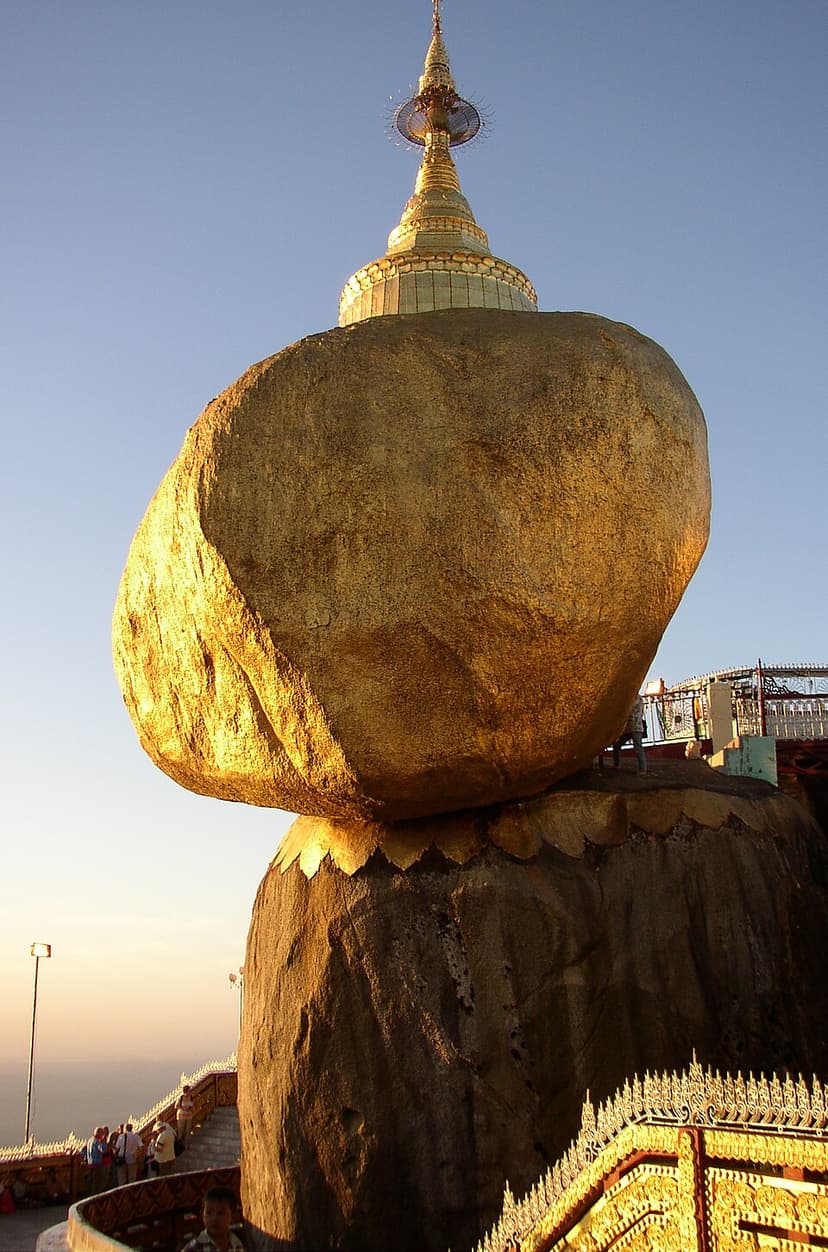
Kyaiktiyo Pagoda
Kyaiktiyo Pagoda, also known as the Golden Rock, is a significant Buddhist pilgrimage site in Mon State, Myanmar. It is famed for a small pagoda built atop a precariously balanced granite boulder covered in gold leaf, which legend states is held in place by a strand of Buddha's hair. This unique site is considered the third most important Buddhist pilgrimage destination in Myanmar.
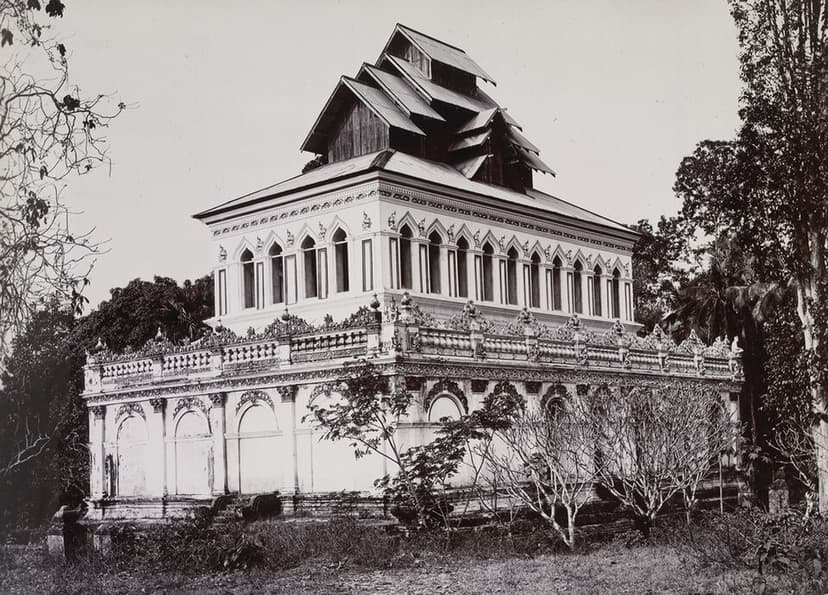
Kalyani Ordination Hall
The Kalyani Ordination Hall is a significant Buddhist site in Bago, Myanmar, renowned for housing the Kalyani Inscriptions. These inscriptions, dating back to 1480, are crucial historical records of Theravada Buddhism. The hall itself, originally built in 1476 by King Dhammazedi to purify the Sangha, has been destroyed and reconstructed multiple times, with its current form dating from 1954.
Mahamuni Buddha
The Mahamuni Buddha Temple, located southwest of Mandalay, Myanmar, is a significant Buddhist pilgrimage site housing the highly venerated Mahamuni Image. This sacred image is believed by many to represent the Buddha's life essence and is central to the spiritual lives of numerous people in Burma.