
Manhattan
Manhattan is the most densely populated and geographically smallest of New York City's five boroughs, serving as its economic, administrative, and cultural heart. Historically part of Lenape territory before Dutch colonization, it has been a pivotal site for trade, governance, and cultural movements, significantly shaping the identity of the United States and the world.
Key Facts
- ›Manhattan Island was historically inhabited by the Munsee, Lenape, and Wappinger tribes, with settlements and trails interconnected across the land.
- ›The name 'Manhattan' likely derives from the Munsee Lenape word 'manaháhtaan', meaning 'the place where we get bows' or 'place for gathering the wood to make bows'.
- ›European settlement began in 1624 with a Dutch fur trading post, leading to the establishment of Fort Amsterdam and New Amsterdam in 1625, recognized as the birth of New York City.
- ›The borough has served as the capital of the United States, hosted key events of the American Revolution, and was the first stop for millions of immigrants.
- ›Manhattan is a global center for finance, media, and entertainment, home to Wall Street, the New York Stock Exchange, and numerous multinational corporations.
- ›Significant cultural and social movements have roots in Manhattan, including the Harlem Renaissance and the modern gay-rights movement sparked by the Stonewall riots.
Important Relationships
- Dutch colonists
- English monarchy
- King Charles II of England
- Duke of York
- Giovanni da Verrazzano
- Henry Hudson
- Robert Juet
- Peter Stuyvesant
- George Washington
- Alexander Hamilton
- Fernando Wood
- Walt Disney Company
- al-Qaeda
Statue of Liberty, Central Park, Empire State Building, Chrysler Building, One World Trade Center, Times Square, Grand Central Terminal, Wall Street, New York Stock Exchange, Nasdaq, United Nations Headquarters
European Settlement Began, Establishment of Fort Amsterdam/New Amsterdam, Renamed New York By English Forces, New York City Served As U.S. Capital, Battle of Fort Washington, New York Draft Riots, Consolidation Into Greater New York City, Triangle Shirtwaist Factory Fire, Stonewall Riots, September 11 Terrorist Attacks, Hurricane Sandy
Art Deco
About Manhattan
What is Manhattan?
Manhattan is the most densely populated and geographically smallest of the five boroughs of New York City. It is coextensive with New York County and is situated almost entirely on Manhattan Island, near the southern tip of New York State. Historically a vital hub for trade and governance, Manhattan has evolved into the urban core of the New York metropolitan area and is globally recognized as a center for culture, finance, media, and entertainment.
History and Development
Before European colonization, Manhattan was part of the territory inhabited by the Munsee, Lenape, and Wappinger tribes. The name 'Manhattan' is believed to derive from the Munsee Lenape word 'manaháhtaan,' which translates to 'the place where we get bows.' European settlement commenced in 1624 with the establishment of a Dutch fur trading post, leading to the construction of Fort Amsterdam and the founding of New Amsterdam in 1625, marking the inception of New York City. The territory came under English control in 1664 and was renamed 'New York.'
Manhattan played a significant role in the early history of the United States, serving as the nation's capital from 1785 to 1790. It was the site of crucial events during the American Revolution and later became the primary destination for millions of immigrants arriving in the late 19th century, a role symbolized by the Statue of Liberty. The 19th century also saw the implementation of the Commissioners' Plan of 1811, which laid out the island's iconic grid plan, and the opening of Central Park, the first landscaped public park in an American city.
Cultural and Economic Significance
The 20th century witnessed Manhattan's rise as a global economic powerhouse, with the construction of iconic skyscrapers like the Empire State Building and the Chrysler Building. The borough was also a crucible for significant cultural movements, including the Harlem Renaissance and the modern gay-rights movement, which traces its origins to the Stonewall riots in 1969. Despite facing economic challenges and rising crime rates in the latter half of the century, Manhattan experienced a resurgence in the 1980s, solidifying its status as a world financial center.
In the 21st century, Manhattan continues to be a focal point for global events, including the September 11 terrorist attacks and the Occupy Wall Street protests. The borough is characterized by its continuous urban energy, its status as one of the most expensive U.S. counties, and its role as host to major multinational corporations, world-renowned institutions, and top tourist attractions like Times Square and Central Park. Its geographical layout is divided into three informal sections: Lower Manhattan, Midtown, and Upper Manhattan, with Fifth Avenue serving as a central division between its East and West Sides.
Source: Wikipedia ↗
Frequently Asked Questions
What is the origin of the name Manhattan?
The name Manhattan is most likely derived from the Munsee Lenape word 'manaháhtaan'. This term has been translated to mean 'the place where we get bows' or 'place for gathering the wood to make bows', referencing a grove of hickory trees ideal for bowmaking.
When did European settlement begin in Manhattan?
A permanent European presence began in 1624 with the founding of a Dutch fur trading settlement. In 1625, construction started on Fort Amsterdam on Manhattan Island, which later became known as New Amsterdam.
What was Manhattan's role during the American Revolution?
Manhattan was central to the New York Campaign, a series of major battles. The Continental Army was forced to abandon the island in 1776, and the city became the British military and political center in North America until their occupation ended on November 25, 1783.
How has Manhattan's role as a capital evolved?
New York City, based in Manhattan, served as the fifth capital of the United States under the Articles of Confederation from 1785 to 1789. It then became the first capital under the new Constitution from March 4, 1789, to 1790.
What major cultural movements originated or flourished in Manhattan?
Manhattan was the center of the Harlem Renaissance in the 1920s, a significant boom in African-American culture. The Stonewall Inn in Greenwich Village is considered the birthplace of the modern gay-rights movement following events in 1969.
What are some of Manhattan's most notable 21st-century events?
Manhattan was the site of the September 11 terrorist attacks in 2001, which destroyed the original World Trade Center. More recently, it experienced extensive destruction from Hurricane Sandy in 2012, prompting discussions about coastal defenses.
Related Buddhist Temples
Sewickley
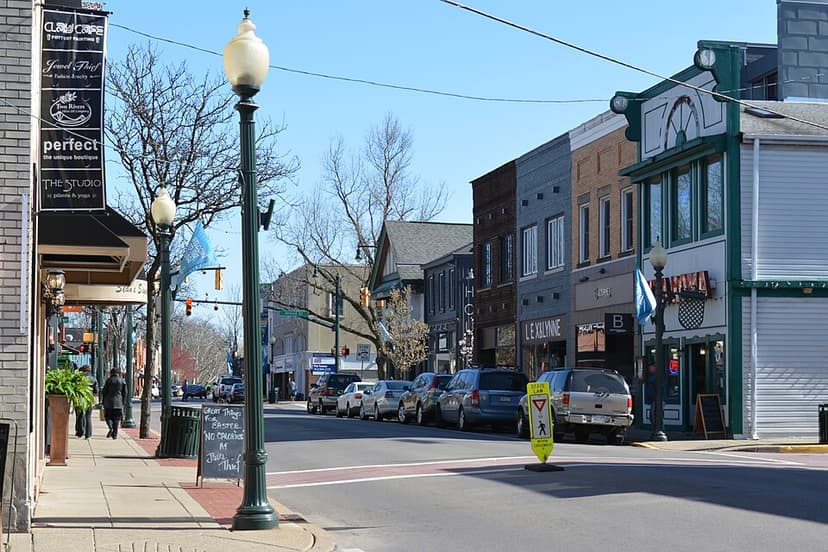
Sewickley is a residential suburban borough located in Allegheny County, Pennsylvania, situated along the Ohio River approximately 12 miles northwest of Pittsburgh. It is known for its historical roots, educational institutions, and its role as a filming location for various movies and television shows. The community's development was significantly influenced by transportation advancements, including the railway and the construction of the Sewickley Bridge.
Baldan Bereeven Monastery
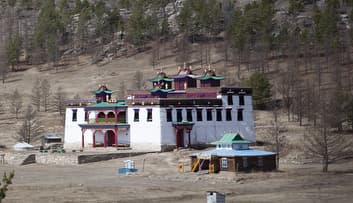
Baldan Bereeven Monastery is a significant Gelugpa Buddhist monastery located in the Khentii Province of Mongolia. Originally founded in 1654 and modeled after Tibetan monasteries, it grew to become one of Mongolia's largest and most important religious centers, reaching its zenith in the mid-19th century with up to 8,000 monks. Although destroyed by the communist regime in 1937, restoration efforts have been underway since 1990, with three temples currently rebuilt.
Banruo Temple (Shenyang)
Banruo Temple, also known as Bo're Temple, is a significant Buddhist temple located in Shenyang, China. Established in 1684 during the Qing dynasty, it has undergone reconstructions and faced damage during the Cultural Revolution before being officially reopened and recognized as a National Key Buddhist Temple. The temple is notable for its Bhikkhuni (nun) designation and its well-preserved architectural features, including the Hall of Four Heavenly Kings and the Mahavira Hall.