
Banruo Temple (Shenyang)
Banruo Temple, also known as Bo're Temple, is a significant Buddhist temple located in Shenyang, China. Established in 1684 during the Qing dynasty, it has undergone reconstructions and faced damage during the Cultural Revolution before being officially reopened and recognized as a National Key Buddhist Temple. The temple is notable for its Bhikkhuni (nun) designation and its well-preserved architectural features, including the Hall of Four Heavenly Kings and the Mahavira Hall.
Key Facts
- ›Established in 1684 during the reign of the Kangxi Emperor in the Qing dynasty.
- ›Rebuilt in 1909 and again in 1924.
- ›Suffered damage during the Cultural Revolution in 1966 but was later reopened.
- ›Designated as a National Key Buddhist Temple in Han Chinese Areas in 1983.
- ›Recognized as a municipal level cultural relic preservation organ in 1985 and a provincial level key cultural heritage in 2015.
- ›It functions as a Bhikkhuni temple, meaning it is a residence for Buddhist nuns.
Important Relationships
- Kangxi Emperor
- Shi Gulin
- Feng Ri'an
- Huo Anrong
- Hall of Four Heavenly Kings
- Mahavira Hall
- Buddhist Texts Library
- Plaque With "Bo'Re Temple" Written By Feng Ri'An
- Plaque With "Mahavira Hall" Written By Huo Anrong
- Rebuilt In 1909
- Rebuilt In 1924
- Slightly Damaged During the Cultural Revolution In 1966
- Reactivated Religious Activities and Reopened To the Public After the 3rd Plenary Session of the 11th Central Committee of the Chinese Communist Party
- Authorized As A National Key Buddhist Temple In 1983
- Designated As A Municipal Level Cultural Relic Preservation Organ In 1985
- Designated As A Provincial Level Key Cultural Heritage In 2015
About Banruo Temple (Shenyang)
The Banruo Temple, also known as Bo're Temple, is a significant Buddhist temple located in the Shenhe District of Shenyang, Liaoning, China. Occupying an area of 1,000 square meters with an additional 3,600 square meters for temple lands, forests, and mountains, it is distinguished as a Bhikkhuni temple, serving as a residence for Buddhist nuns.
History and Significance
The temple's origins trace back to 1684, when it was first established by the monk Shi Gulin during the reign of the Kangxi Emperor of the Qing dynasty. Over the centuries, Banruo Temple has undergone significant transformations, including reconstructions in 1909 and 1924. Its history is marked by resilience; while parts of the temple sustained damage during the Cultural Revolution in 1966, it was later revived. Following the national policy of religious freedom, the temple officially reopened its religious activities.
Banruo Temple's importance is underscored by its recognition as a National Key Buddhist Temple in Han Chinese Areas, a designation granted by the State Council of China in 1983. Further acknowledging its cultural value, it was designated a municipal-level cultural relic preservation organ in 1985 and elevated to a provincial-level key cultural heritage in 2015. The local government has undertaken repairs and renovations to preserve the complex.
Architecture and Features
The temple's architecture is designed to face south and is organized into two courtyards. Among its extant structures are the Hall of Four Heavenly Kings, the Mahavira Hall, and a Buddhist Texts Library. The Shanmen, or main gate, features a plaque inscribed with "Bo're Temple" by the calligrapher Feng Ri'an. The Hall of Four Heavenly Kings enshrines statues of the Maitreya Buddha, Skanda, and the Four Heavenly Kings. The Mahavira Hall, considered the temple's most important space, houses statues of Sakyamuni (in the center), Amitabha (to the left), and Bhaisajyaguru (to the right). Behind these figures are paintings of Guanyin, Manjushri, and Samantabhadra. The hall is further adorned with stone rubbings of the Sixteen Arhats and a plaque bearing "Mahavira Hall," written by Huo Anrong.
Source: Wikipedia ↗
Frequently Asked Questions
When was Banruo Temple first established?
Banruo Temple was first established in 1684, during the reign of the Kangxi Emperor in the Qing dynasty. It has since been rebuilt several times.
What is the significance of Banruo Temple's designation?
In 1983, Banruo Temple was authorized as a National Key Buddhist Temple in Han Chinese Areas by the State Council of China. It is also recognized as a municipal and provincial level cultural heritage site.
What happened to Banruo Temple during the Cultural Revolution?
During the Cultural Revolution, which began in 1966, most parts of Banruo Temple were slightly damaged under the attack of the Red Guards. However, it was later reopened and reactivated its religious activities.
What are the main halls within Banruo Temple?
The extant buildings include the Hall of Four Heavenly Kings, the Mahavira Hall, and a Buddhist Texts Library. The Mahavira Hall is considered the most important hall in the temple.
Is Banruo Temple a place for monks or nuns?
Banruo Temple is a Bhikkhuni temple, meaning it is a residence and center for Buddhist nuns.
Related Buddhist Temples
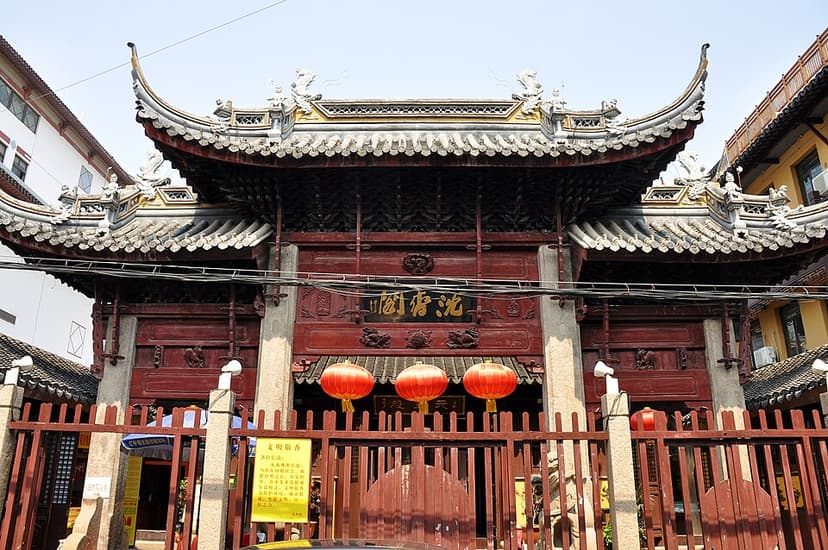
Chenxiang Pavilion
Chenxiang Pavilion is a Buddhist temple located in Shanghai, China, currently serving as a nunnery. Originally established in 1600 and rebuilt in 1815, it has a history marked by periods of preservation and destruction, notably during the Cultural Revolution. The temple is recognized for its architectural significance and its designation as a National Key Buddhist Temple.

Temple of Great Compassion
The Temple of Great Compassion (Dabei Yuan) is a significant Chan Buddhist temple located in Tianjin, China. It is the largest and oldest temple in the city, comprising an old monastery dating back to the Qing dynasty and a newer section built in 1940, making it a vital center for Buddhist practice and cultural heritage.

Yonghe Temple
The Yonghe Temple, also known as the Yonghe Lamasery or Lama Temple, is a significant Tibetan Buddhist monastery in Beijing, China, belonging to the Gelug school. It served as the country's highest Buddhist temple during the Qing dynasty and is renowned for its impressive blend of Han Chinese and Tibetan architectural styles, housing remarkable artworks.