
Chenxiang Pavilion
Chenxiang Pavilion is a Buddhist temple located in Shanghai, China, currently serving as a nunnery. Originally established in 1600 and rebuilt in 1815, it has a history marked by periods of preservation and destruction, notably during the Cultural Revolution. The temple is recognized for its architectural significance and its designation as a National Key Buddhist Temple.
Key Facts
- ›First established in 1600 by Pan Yunduan during the late Ming dynasty.
- ›The current structure was founded in 1815 and initially named Ciyun Chan Temple.
- ›Inscribed as a Shanghai Municipal Cultural Preservation Unit in 1959.
- ›Suffered significant damage and loss of relics during the Cultural Revolution (1966-1976).
- ›Designated a National Key Buddhist Temple in Han Chinese Area in 1983.
- ›Listed as a Major National Historical and Cultural Site in Shanghai in 1996.
Important Relationships
- Wanli Emperor
- Pan Yunduan
- Master Yingci
- Ming Dynasty Wooden Statue of Guanyin
- Statues of Maitreya, Skanda, Four Heavenly Kings, Three Saints of Hua-Yan , Brahma, Indra, Guanyin With Shancai and Longnü, and Eighteen Arhats
- Hall of Dharma Protectors Dedicated To Lord Guan
- Establishment By Pan Yunduan
- Reconstruction and Renaming To Ciyun Chan Temple
- Inscribed As Shanghai Municipal Cultural Preservation Unit
- Damage and Use As A Factory During the Cultural Revolution
- Designated National Key Buddhist Temple
- Listed As Major National Historical and Cultural Site In Shanghai
Qing Dynasty Architectural Principles, Traditional Chinese Architecture
About Chenxiang Pavilion
Chenxiang Pavilion, also known as Chenxiangge Nunnery, is a significant Buddhist temple situated in the Huangpu District of Shanghai, China. It currently functions as an active nunnery, housing Buddhist nuns.
History and Significance
The temple's origins trace back to 1600, when it was first established by an official named Pan Yunduan during the late Ming dynasty. The current temple structure, however, was founded in 1815 during the Qing dynasty and was initially called "Ciyun Chan Temple." Chenxiang Pavilion holds considerable historical and cultural importance, evidenced by its various preservation designations. It was inscribed as a Shanghai Municipal Cultural Preservation Unit in 1959. Despite suffering extensive damage and the loss of many religious and cultural relics, including a Ming dynasty wooden statue of Guanyin, during the Cultural Revolution beginning in 1966, the temple was later recognized for its enduring significance. In 1983, it was designated a National Key Buddhist Temple in the Han Chinese Area by the State Council of China, and in 1996, it was listed among the fourth batch of Major National Historical and Cultural Sites in Shanghai.
Architecture
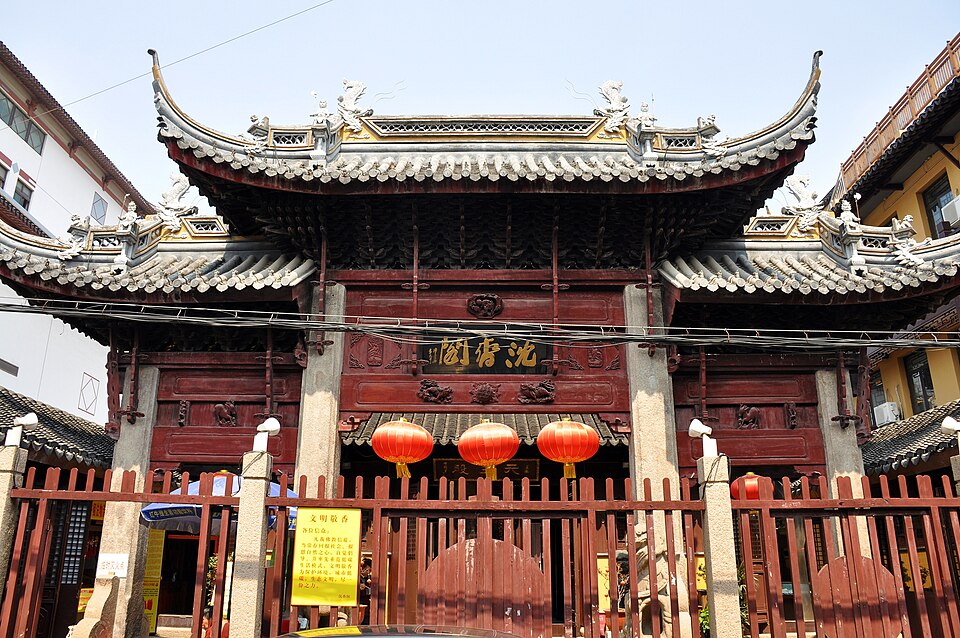
Spanning a total area of 2,378 square meters, the extant structure of Chenxiang Pavilion adheres to Qing dynasty building principles and maintains a traditional architectural style. The temple complex is organized with its main structures—from the Shanmen to the Hall of Guanyin—aligned along a central axis and divided into three courtyards. Key architectural components include a Paifang at the front, followed by the Hall of Four Heavenly Kings, the Mahavira Hall, and the Hall of Guanyin at the rear. Complementing these are the Hall of Dharma Protectors and the Memorial Hall of Master Yingci, located on the sides of the central axis.
Within the Hall of Four Heavenly Kings, statues of Maitreya and Skanda are enshrined, along with the Four Heavenly Kings. The Mahavira Hall is dedicated to the Three Saints of Hua-yan, featuring Sakyamuni in the center, flanked by Manjushri and Samantabhadra. Statues of Brahma and Indra are also present, alongside a statue of Guanyin with Shancai and Longnü at the back of the hall, and the Eighteen Arhats positioned before the gable walls. The Hall of Guanyin houses a 1-meter high wood carving statue of Guanyin; the original Ming dynasty statue was lost during the Cultural Revolution, and the current one was a donation from Hong Kong Buddhist devotees. The Hall of Dharma Protectors is dedicated to Lord Guan, revered as a protector of the Sangharama.
Source: Wikipedia ↗
Frequently Asked Questions
When was Chenxiang Pavilion first established?
Chenxiang Pavilion was first established in the year 1600 by an official named Pan Yunduan during the late Ming dynasty. The current temple structure, however, was founded later in 1815 during the Qing dynasty.
What is the current function of Chenxiang Pavilion?
Currently, Chenxiang Pavilion serves as a nunnery, providing a residence and place of worship for Buddhist nuns. This function is a continuation of its role as a Buddhist temple.
What significant historical events have impacted Chenxiang Pavilion?
The temple was inscribed as a Shanghai Municipal Cultural Preservation Unit in 1959. However, it suffered extensive damage and loss of religious and cultural relics during the Cultural Revolution starting in 1966, after which it was used as a factory.
What are some of the main halls within Chenxiang Pavilion?
The temple's main structures include the Paifang, the Hall of Four Heavenly Kings, the Mahavira Hall, and the Hall of Guanyin, all aligned along a central axis. There are also dedicated halls for Dharma Protectors and a memorial hall for Master Yingci.
Is Chenxiang Pavilion recognized for its historical or cultural importance?
Yes, Chenxiang Pavilion has received significant recognition. It was designated a National Key Buddhist Temple in Han Chinese Area in 1983 and listed among the Major National Historical and Cultural Sites in Shanghai in 1996.
Related Buddhist Temples
Banruo Temple (Shenyang)
Banruo Temple, also known as Bo're Temple, is a significant Buddhist temple located in Shenyang, China. Established in 1684 during the Qing dynasty, it has undergone reconstructions and faced damage during the Cultural Revolution before being officially reopened and recognized as a National Key Buddhist Temple. The temple is notable for its Bhikkhuni (nun) designation and its well-preserved architectural features, including the Hall of Four Heavenly Kings and the Mahavira Hall.

Temple of Great Compassion
The Temple of Great Compassion (Dabei Yuan) is a significant Chan Buddhist temple located in Tianjin, China. It is the largest and oldest temple in the city, comprising an old monastery dating back to the Qing dynasty and a newer section built in 1940, making it a vital center for Buddhist practice and cultural heritage.

Yonghe Temple
The Yonghe Temple, also known as the Yonghe Lamasery or Lama Temple, is a significant Tibetan Buddhist monastery in Beijing, China, belonging to the Gelug school. It served as the country's highest Buddhist temple during the Qing dynasty and is renowned for its impressive blend of Han Chinese and Tibetan architectural styles, housing remarkable artworks.