
Kanheri Caves
The Kanheri Caves are a significant complex of rock-cut Buddhist monuments located within Sanjay Gandhi National Park in Mumbai, India. Dating from the 1st to the 10th century CE, these caves served as monasteries, study centers, and places of worship, showcasing a rich history of Buddhist art, architecture, and religious practice on the Konkan coast. Their extensive collection of sculptures, reliefs, and inscriptions makes them a vital historical and archaeological site.
Key Facts
- ›The Kanheri Caves complex consists of 109 rock-cut caves carved into a basalt outcrop.
- ›The caves date from the 1st century CE to the 10th century CE, with the oldest being plain and later ones highly embellished.
- ›They served as Buddhist viharas (monasteries) for living, studying, and meditating, and chaityas (halls for congregational worship).
- ›Notable features include intricate reliefs of Buddha and bodhisattvas, particularly Avalokiteshwara, and rock-cut stupas.
- ›Inscriptions found at Kanheri provide historical details, including references to the Satavahana and Traikutaka dynasties.
- ›Kanheri was an important Buddhist settlement and university center connected to major trade routes by the 3rd century CE.

Important Relationships
- Satavahana ruler Vashishtiputra Satakarni
- Rudradaman I
- Yajna Sri Satakarni
- Atisha
- Rahulagupta
- Sateraka (minister)
- Mahakshatrapa Rudradaman
- 109 Rock-Cut Caves
- Rock-Cut Steps For Access
- Stone Plinths Functioning As Beds
- Congregation Halls With Stone Pillars
- Stupas
- Rock-Cut Channels For Rainwater Cisterns
- Intricate Reliefs of the Buddha and Bodhisattvas
- Sculptures of Avalokiteshwara
- Inscriptions In Brahmi, Devanagari, and Pahlavi
- Became An Important Buddhist Settlement On the Konkan Coast By the 3rd Century Ce.
- Functioned As A University Center Under the Maurayan and Kushan Empires.
- Buddhist Teacher Atisha Studied Buddhist Meditation Under Rahulagupta At the Krishnagiri Vihara In the Late 10th Century.
Rock-Cut Architecture, Chaitya Architecture, Vihara Architecture
About Kanheri Caves
The Kanheri Caves, known historically as Krishnagiri ('black mountain'), represent a remarkable complex of over one hundred rock-cut Buddhist monuments situated in the lush forests of Sanjay Gandhi National Park on Salsette Island, near Mumbai, India. These caves, meticulously carved into a massive basalt outcrop, span a significant period of Buddhist history in India, with their origins dating back to the 1st century CE and continuing to evolve until the 10th century CE.
Historical Context and Function
By the 3rd century CE, Kanheri had established itself as a vital Buddhist settlement and an important hub on the Konkan coast. Its strategic location facilitated connections with numerous trade centers, including Sopara, Kalyan, Nasik, Paithan, and Ujjain, underscoring its role as a nexus for both religious and economic activity. During the rule of the Maurayan and Kushan empires, Kanheri functioned as a prominent university center for Buddhist learning and practice. The caves were primarily designed as viharas, intended for the residential, study, and meditative needs of Buddhist monks. Larger structures served as chaityas, or halls dedicated to congregational worship, adorned with intricate sculptures and reliefs.
Architectural and Artistic Features
The architectural evolution at Kanheri is evident in the progression from relatively plain, unadorned caves in its early phase to highly embellished later constructions. Each cave typically features a stone plinth that served as a bed. The complex is renowned for its detailed Buddhist sculptures, including numerous depictions of the Buddha and various bodhisattvas, with Avalokiteshwara being a particularly prominent figure. The walls of some caves were adorned with intricate relief carvings and paintings. Rock-cut channels were ingeniously designed to direct rainwater into cisterns, ensuring a reliable water supply for the monastic community. The Great Chaitya cave (Cave No. 3) is a notable example, architecturally similar to the chaityas at Karla Caves and featuring colossal Buddha figures and a stupa.
Inscriptions and Later History
Kanheri boasts a substantial collection of nearly 51 legible inscriptions and 26 epigraphs, written in Brahmi, Devanagari, and even Pahlavi scripts. These inscriptions offer invaluable historical data, including royal patronage and significant events. One inscription records the marriage of the Satavahana ruler Vashishtiputra Satakarni to the daughter of Rudradaman I. Further inscriptions mention the Traikutaka dynasty and rulers like Yajna Sri Satakarni. The site also holds historical significance for later Buddhist scholarship, with the Buddhist teacher Atisha visiting the Krishnagiri Vihara in the late 10th century to study under Rahulagupta. The site, though no longer an active monastic residence, remains a crucial archaeological and heritage site, offering profound insights into ancient Indian Buddhist culture.
Source: Wikipedia ↗
Frequently Asked Questions
What are the Kanheri Caves?
The Kanheri Caves are a collection of over 100 rock-cut Buddhist monuments, including caves, sculptures, and stupas, situated on Salsette Island in Mumbai, India. They were created between the 1st and 10th centuries CE.
What is the historical significance of the Kanheri Caves?
Kanheri was a major Buddhist settlement and educational center by the 3rd century CE, linked to important trade cities. The numerous inscriptions offer valuable insights into the political and social history of the region during the Satavahana and other dynasties.
What kind of Buddhist art and architecture can be found at Kanheri?
The caves feature Buddhist sculptures and relief carvings, including depictions of the Buddha and bodhisattvas like Avalokiteshwara. They also contain rock-cut stupas and architectural elements ranging from plain monastic cells to elaborate congregational halls.
How were the Kanheri Caves used historically?
Most of the caves were viharas, serving as residences, study spaces, and meditation centers for Buddhist monks. Larger caves functioned as chaityas, or assembly halls for worship.
What is the meaning of the name Kanheri?
The name Kanheri is derived from the Sanskrit word Krishnagiri, which translates to 'black mountain,' likely referring to the dark color of the basalt rock formation.
Are there any specific notable caves within the complex?
Yes, the Great Chaitya cave (Cave No. 3) is particularly important for its architecture and sculptures, mirroring designs found at Karla Caves. The Darbar Cave (Cave No. 11) is the largest assembly hall, thought to represent arrangements for early Buddhist convocations.
Related Buddhist Temples

Bedse Caves
Bedse Caves is a significant Buddhist rock-cut monument complex located in Pune District, Maharashtra, India. Dating back to the 1st century BCE of the Satavahana period, the caves comprise a chaitya (prayer hall) and a vihara (monastery), both featuring intricate carvings and decorative motifs. They are notable for their architectural style and their place within a historically important region of Buddhist cave sites.
Udayagiri and Khandagiri Caves
The Udayagiri and Khandagiri Caves are a series of partly natural and partly artificial caves of significant archaeological, historical, and religious importance in Odisha, India. Primarily carved during the 2nd or 1st century BCE, they are believed to have served as residential blocks for Jain monks, most notably during the reign of King Kharavela. The complex, situated on two adjacent hills, is renowned for its ornately carved structures and inscriptions, offering insights into ancient Jainism and regional history.
Bhaja Caves
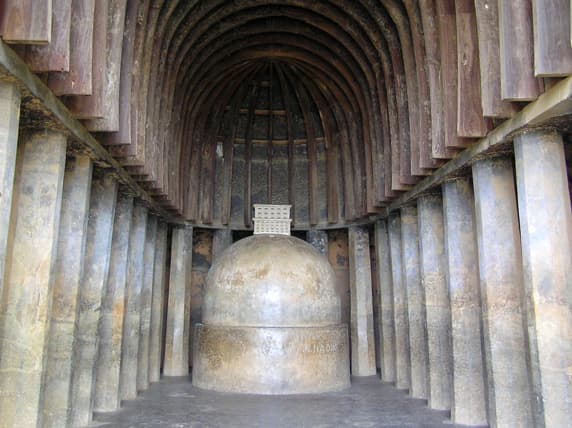
The Bhaja Caves are a complex of 22 rock-cut Buddhist caves located in Maharashtra, India, dating back to the 2nd century BC. Situated on an ancient trade route, these caves are significant for their early Buddhist architecture, particularly the chaitya (Cave XII) which showcases the evolution of wooden architectural forms in stone. The site is also notable for its stupas, inscriptions, and relief carvings that provide insights into ancient Indian culture, including the use of musical instruments like the tabla.