
Jokhang Monastery
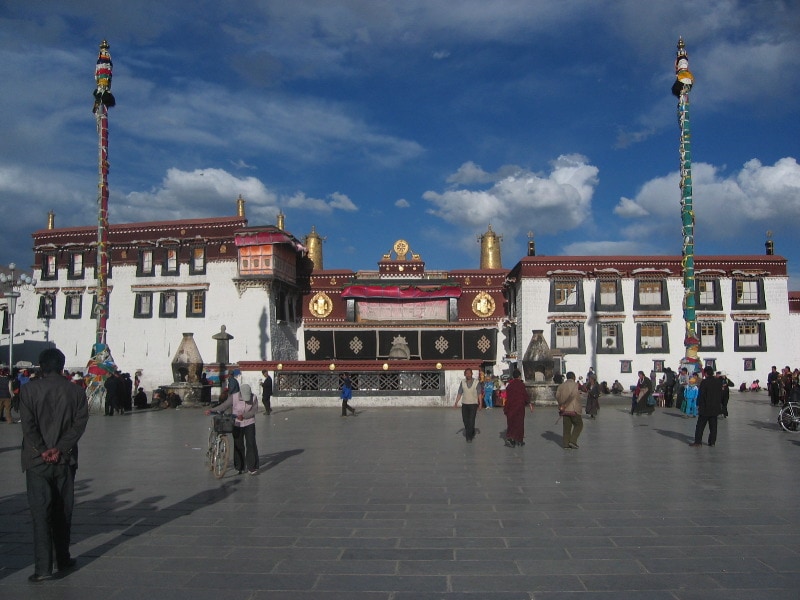
The Jokhang Monastery, also known as Rasa Trulnang or Zuglagkang, is considered the "heart of Lhasa" and is the most sacred Buddhist temple in Tibet. Built around 640 CE by King Songtsen Gampo, it was established to house important Buddhist statues brought to Tibet by his queens. The temple complex includes a monastery and serves as a focal point for pilgrimage and commercial activity.
Key Facts
- ›Founded in approximately 640 CE by King Songtsen Gampo.
- ›Houses the Jowo Shakyamuni statue, brought to Tibet by Chinese Princess Wencheng.
- ›Considered the spiritual heart of Lhasa and the holiest shrine in Tibet.
- ›Became a UNESCO World Heritage Site in 2000 as an extension of the Potala Palace.
- ›Suffered damage and periods of closure during the Cultural Revolution but was renovated.
- ›Features Tibetan Buddhist architectural style with influences from China, India, and Nepal.
Important Relationships
- King Songtsen Gampo
- Queen Bhrikuti
- Princess Wencheng
- King Amsuvarman
- Emperor Taizong of Tang
- Qianlong Emperor
- Fifth Dalai Lama
- Atisha
- Potala Palace
Jowo Shakyamuni Statue, Jowo Mikyo Dorje Statue, Tang Dynasty-Tubo Peace Alliance Tablet, Golden Deer Statues On Rooftop, Dharma Wheel, Victory Flags, Gilded Bronze Tiles, Newari Door Frames and Columns
- Construction Initiated By King Songtsen Gampo
- Statue of Jowo Mikyo Dorje Deified
- Statue of Jowo Shakyamuni Deified
- Persecution of Buddhists and Temple Use As Stables
- Atisha Taught At Jokhang
- Last Renovation By the Fifth Dalai Lama
- Attack By Red Guards
- Renovation
- Designated Unesco World Heritage Site
- Fire Incident
Tibetan Buddhist, Chinese, Indian Vihara, Nepalese
About Jokhang Monastery
The Jokhang Monastery, historically known as Rasa Trulnang or Zuglagkang, stands as the most sacred Buddhist temple in Tibet and is considered the spiritual heart of Lhasa. Established around 640 CE by King Songtsen Gampo, the monastery was built to house significant Buddhist statues brought to Tibet by his Nepalese and Tang Chinese queens. Its construction involved numerous Nepalese and Indian artists and craftsmen, and its design reflects a fusion of Tibetan Buddhist, Chinese, Indian Vihara, and Nepalese architectural styles.
History and Significance
The Jokhang was built in the first stage of King Songtsen Gampo's plan to construct twelve temples across Tibet. It was established to house the Jowo Mikyo Dorje, a statue of Akshobhya Buddha brought by his Nepalese queen, Bhrikuti. Later, the statue of Jowo Shakyamuni, brought by his Chinese queen, Princess Wencheng, was also housed here, becoming the temple's most revered image, known as Jowo Rinpoche. The temple's location in Barkhor Square makes it a central point for pilgrimage and daily life in Lhasa, with pilgrims circumambulating the temple along a dedicated walkway.
Over centuries, the Jokhang underwent several renovations and enlargements, with the last major one by the Fifth Dalai Lama in 1610. The temple has witnessed periods of religious persecution, including its use as stables during the anti-Buddhist activities of the late ninth and early tenth centuries. During the Cultural Revolution, it was attacked by Red Guards, leading to a decade of religious inactivity, but was subsequently renovated between 1972 and 1980. In 2000, the Jokhang was recognized as a UNESCO World Heritage Site as an extension of the Potala Palace, highlighting its global cultural significance.
Architecture and Features
The Jokhang temple complex covers 2.51 hectares and features a four-story Buddha Hall as its main structure. Its architecture is characterized by Tibetan Buddhist elements, including gilded bronze roof tiles, figurines, and decorated pavilions, along with influences from other cultures. The temple faces west, honoring Princess Bhrikuti. Inside, it is a labyrinth of chapels illuminated by votive candles and filled with incense, containing over 3,000 images of Buddhas, deities, and historical figures, as well as manuscripts and artifacts.
Notable features include the Jowo Shakyamuni statue, which is adorned with a bejeweled crown and sits on a lotus throne. The temple also preserves ancient wooden beams and rafters, some dating back to the seventh and eighth centuries. Two inscribed pillars, the "Forever Following Tablet" and the "Tang Dynasty-Tubo Peace Alliance Tablet," flank the temple's entrances and bear historical treaties and edicts.
Source: Wikipedia ↗
Frequently Asked Questions
When was Jokhang Monastery built?
The oldest part of Jokhang Monastery was built in 652 CE by King Songtsen Gampo. The temple was established around 640 CE, with construction continuing over centuries.
What is the significance of the Jowo Shakyamuni statue?
The Jowo Shakyamuni statue was brought to Tibet by Princess Wencheng, the Chinese wife of King Songtsen Gampo. It is the most revered statue in Tibet and is housed in the Jokhang's inner sanctum.
What is the historical importance of Jokhang Monastery?
Jokhang Monastery is historically significant as the spiritual center of Lhasa and Tibet. It was built to house sacred relics and has been a focal point for Tibetan Buddhism for over thirteen centuries.
What happened to Jokhang Monastery during the Cultural Revolution?
During the Cultural Revolution, the Red Guards attacked Jokhang Monastery in 1966, and worship ceased for a decade. The temple was later renovated between 1972 and 1980, and has since been re-consecrated.
Is Jokhang Monastery a UNESCO World Heritage Site?
Yes, Jokhang Monastery became a UNESCO World Heritage Site in 2000. It was designated as an extension of the Potala Palace, which was already a World Heritage Site.
Related Buddhist Temples

Erdene Zuu Monastery
Erdene Zuu Monastery, established in 1585, is likely the oldest surviving Buddhist monastery in Mongolia. Located in Kharkhorin, it holds significant historical and religious importance as a center for Tibetan Buddhism and is now part of the Orkhon Valley Cultural Landscape World Heritage Site. Despite facing destruction and conversion into a museum, it has been restored as an active place of worship.

Yonghe Temple
The Yonghe Temple, also known as the Yonghe Lamasery or Lama Temple, is a significant Tibetan Buddhist monastery in Beijing, China, belonging to the Gelug school. It served as the country's highest Buddhist temple during the Qing dynasty and is renowned for its impressive blend of Han Chinese and Tibetan architectural styles, housing remarkable artworks.
Chokorgyel Monastery
Chokorgyel Monastery is a significant Gelugpa Buddhist monastery located in Gyatsa County, Tibet. Founded in 1509 by Gedun Gyatso, the 2nd Dalai Lama, it holds historical importance as a meditation site and a vital stopping point for senior lamas journeying to the sacred lake Lhamo La-tso. The monastery was severely damaged multiple times throughout its history, notably by Dzungar Mongols in 1718 and almost completely destroyed during the Cultural Revolution, but has since seen partial rebuilding and renewed monastic residency.