
Delgamuwa Raja Maha Vihara
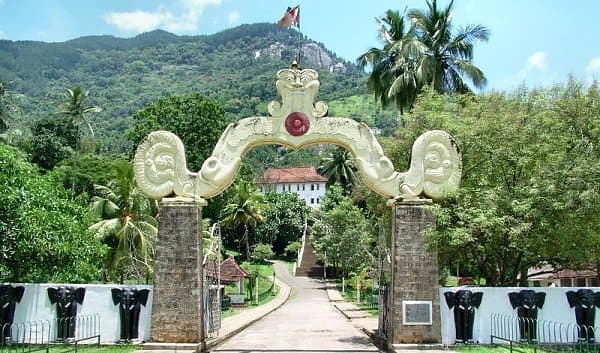
Delgamuwa Raja Maha Vihara is an ancient Buddhist temple in Kuruvita, Ratnapura District, Sri Lanka, historically significant as a refuge for the sacred tooth relic of the Buddha during Portuguese rule. It played a crucial role in safeguarding the relic from invaders, making it a site of national historical and religious importance.
Key Facts
- ›Reputed as the hiding place for the Buddha's tooth relic during Portuguese occupation.
- ›The temple was known by other names in the past, including Saparagamu Vihara and Labujagama Viharaya.
- ›The tooth relic was hidden in a Kurahan (finger millet) grinding stone at the Vihara premises in 1549.
- ›The temple was robbed and later demolished by the Portuguese, who subsequently constructed a fort on the site.
- ›Currently declared as an archaeological site in Sri Lanka.
- ›The written history of the temple dates back to the Sitawaka kingdom.

Important Relationships
- King Mayadunne of Sitawaka
- Diyawadana Nilame Hiripitiye Divana Rala
- King Bhuwanakabahu VII of Kotte
- King Don Juan Dharmapala
- Konappu Bandara (Wimaladharmasuriya I)
Kurahan Grinding Stone
- Hiding of the Buddha's Tooth Relic
- Reclamation of the Tooth Relic By King Wimaladharmasuriya I
- Robbery and Demolition of the Temple By the Portuguese
- Construction of A Portuguese Fort On the Temple Site
About Delgamuwa Raja Maha Vihara
Delgamuwa Raja Maha Vihara is an ancient Buddhist temple located in Kuruvita, within the Ratnapura District of Sri Lanka. The temple holds significant historical and religious importance, primarily for its reputed role as a hiding place for the sacred tooth relic of the Buddha during the period of Portuguese influence in the country.
History and Significance
The recorded history of Delgamuwa Vihara traces back to the era of the Sitawaka kingdom. Historically, it was also known by the names Saparagamu Vihara and Labujagama Viharaya. The temple's prominence grew with the arrival of the Portuguese in 1505, which led to political instability. Following King Bhuwanakabahu VII's death and King Don Juan Dharmapala's conversion to Catholicism, a crisis emerged concerning the safekeeping of the tooth relic. In 1549, the Diyawadana Nilame Hiripitiye Divana Rala, custodian of the relic, moved it from the Kotte Kingdom to King Mayadunne of Sitawaka for protection. Under King Mayadunne's guidance, the relic was then brought to Delgamuwa Vihara for further security, where it was concealed within a Kurahan (finger millet) grinding stone on the temple premises.
Later Events
In 1592, Konappu Bandara, who ascended the throne of Kandy as Wimaladharmasuriya I, retrieved the tooth relic from Delgamuwa Vihara. He subsequently established a dedicated two-storied palace in Kandy to enshrine the relic. In the years following the relic's removal, Delgamuwa Raja Maha Vihara suffered destruction. It was robbed and demolished by the Portuguese, who later constructed a fort on the site, erasing much of its original structure.
Current Status
Today, Delgamuwa Raja Maha Vihara is recognized as an archaeological site in Sri Lanka, underscoring its value as a protected monument of national heritage. While the physical remnants may be limited due to historical destruction, its significance as a sanctuary for a revered Buddhist relic continues to be a central part of its legacy.
Source: Wikipedia ↗
Frequently Asked Questions
What is the historical significance of Delgamuwa Raja Maha Vihara?
Delgamuwa Raja Maha Vihara is historically significant as it served as a sanctuary for the sacred tooth relic of the Buddha. It is reputed to have hidden the relic from the Portuguese during their rule in Sri Lanka.
When was the tooth relic hidden at Delgamuwa Raja Maha Vihara?
The tooth relic was brought to Delgamuwa Vihara for safekeeping in 1549, following political turmoil and King Don Juan Dharmapala's conversion to Catholicism. It was later reclaimed by King Wimaladharmasuriya I in 1592.
What happened to the temple after the tooth relic was removed?
A few years after the tooth relic was moved, the temple was robbed and demolished by the Portuguese. They later constructed a fort on the temple's grounds.
What were the previous names of Delgamuwa Raja Maha Vihara?
In the past, the temple was known by other names, including Saparagamu Vihara and Labujagama Viharaya.
What is the current status of Delgamuwa Raja Maha Vihara?
Delgamuwa Raja Maha Vihara has been declared an archaeological site in Sri Lanka, indicating its protected historical and cultural importance.
Related Buddhist Temples
Aluvihare Rock Temple
The Aluvihare Rock Temple, also known as Matale Alu Viharaya, is a significant Buddhist temple in Sri Lanka's Matale District. It holds historical importance as the site where the Pāli Canon was first transcribed onto palm leaves, preserving Buddhist scriptures during times of upheaval. The temple complex features numerous monastery caves, some adorned with ancient inscriptions, frescoes, and Buddha statues, making it a place of both historical preservation and religious devotion.
Asgiri Maha Viharaya
Asgiri Maha Viharaya, also known as Asgiriya Temple, is a significant Buddhist monastery in Kandy, Sri Lanka. It serves as the headquarters for the Asgiriya Chapter of the Siyam Nikaya, one of the two monastic orders responsible for the custodianship of the sacred Tooth Relic of the Buddha housed in the Temple of the Tooth (Sri Dalada Maligawa). The monastery plays a crucial role in the administration and religious life of Sri Lankan Buddhism.
Asokaramaya Buddhist Temple
Asokaramaya Buddhist Temple is a significant religious site in Kalutara, Sri Lanka, established in the 1870s. It was founded to provide a sanctuary for disciples of the revered monk Aluthgama Sangharatne and was generously funded by local resident Elliyas Fernando. Over time, the temple has undergone numerous expansions and renovations, evolving into a complex housing various important structures and relics.