
Asgiri Maha Viharaya
Temple·Sri Lanka·14th century·Siyam Nikaya
Asgiri Maha Viharaya, also known as Asgiriya Temple, is a significant Buddhist monastery in Kandy, Sri Lanka. It serves as the headquarters for the Asgiriya Chapter of the Siyam Nikaya, one of the two monastic orders responsible for the custodianship of the sacred Tooth Relic of the Buddha housed in the Temple of the Tooth (Sri Dalada Maligawa). The monastery plays a crucial role in the administration and religious life of Sri Lankan Buddhism.
Key Facts
- ›Founded by Commander Siriwardhana on the orders of King Parakramabahu IV in the 14th century.
- ›Headquarters of the Asgiriya Chapter of Siyam Nikaya, a major Buddhist monastic fraternity.
- ›One of the two monastic custodians of the sacred Tooth Relic of the Buddha.
- ›Includes the 'Purana Viharaya' (old temple), 'Meda Pansala' (middle temple), and 'Aluth Viharaya' (new temple).
- ›Features the Adahana Maluwa, the royal cremation ground of the Kandyan Kingdom.
- ›Currently oversees 565 Buddhist temples across Sri Lanka.
Important Relationships
- Sri Dalada Maligawa
- Asgiriya Chapter of Siyam Nikaya
- Malwathu Maha Viharaya
- Parakramabahu IV of Kurunegala
- Commander Siriwardhana
- Valasgala hermitage
- Natha Devale, Kandy
- Gadaladeniya Vihara
- Adahana Maluwa
- Purana Viharaya With Buddha Statue Under Makara Thorana
- Meda Pansala
- Aluth Viharaya
- Gedige Vihara
- Recumbent Buddha Statue Carved Out of Rock
- Two 'Poya Ge's
- Founded On the Instructions of King Parakramabahu Iv.
- Monks Sent From Valasgala Hermitage In Yapahuwa Established Residence.
- Monks Safeguarded the Tooth Relic On Behalf of the Ruling Monarch During Times of Invasion and Rebellion.
- Railway Tunnel Constructed During 1878–80 Period Passed Below the Adahana Maluwa, Destroying Remains of Tombs.
- Similarities To Natha Devale and Gadaladeniya Vihara
- Makara Thorana
About Asgiri Maha Viharaya
Asgiri Maha Viharaya, also known by the names Asgiriya Temple and Asgiriya Gedige, is a prominent Buddhist monastery situated in Kandy, Sri Lanka. It holds a position of considerable importance as the headquarters of the Asgiriya Chapter of the Siyam Nikaya, one of the principal monastic fraternities in the country. Together with the Malwathu Maha Viharaya, Asgiri Maha Viharaya shares the vital responsibility of safeguarding the sacred Tooth Relic of the Buddha, which is enshrined in the nearby Sri Dalada Maligawa.
Historical Context and Origins
The establishment of Asgiri Maha Viharaya dates back to the 14th century, founded by Commander Siriwardhana under the directive of King Parakramabahu IV of Kurunegala (reigned 1305–1335 A.D.). The initial monastic buildings were situated on the grounds that now host Trinity College. The monks who first resided here were adherents of the Wanavasi sect and were dispatched from the Valasgala hermitage in Yapahuwa. The name 'Asgiri' is understood to be a Sinhalese adaptation of the Pali term 'Acchagiri,' which is the Pali translation of 'Valasgala.' An alternative tradition suggests the name derives from Queen Chandrawathie, mother of King Vikramabahu, who was cremated in the adjacent grounds.
Throughout the history of the Kandyan Kingdom, numerous monarchs contributed to the development and upkeep of Asgiri Maha Viharaya. The monks of the Asgiriya Chapter played a crucial role in protecting the Tooth Relic, especially during periods of conflict, invasions, and rebellions, acting as custodians on behalf of the ruling monarch.
Key Structures and Features
The monastery complex is comprised of several distinct sections, including the "Purana Viharaya" (the old temple), the "Meda Pansala" (the middle temple), and the "Aluth Viharaya" (the new temple), alongside the "Gedige Vihara." The "Meda Pansala" was constructed in 1767 by Meegastanne Dissawe, and the "Aluth Viharaya" was built by Pilimathalawe Dissawe the following year. The "Purana Viharaya" is notable for housing a serene statue of the Buddha beneath a Makara Thorana (Dragon Arch), with statues of deities Natha and Saman flanking it. A more recent "Aluth Viharaya" was renovated in 1801 by Pilimathalawe Adhikaram, son of Pilimathalawe Dissawe. The monastery also features a striking 36-foot-long recumbent Buddha statue carved from rock and two "poya ge's," which serve as assembly halls for the monastic fraternity.
Adahana Maluwa
One of the most historically significant sites within the Asgiri Maha Vihara premises is the "Adahana Maluwa," which served as the Royal Cremation Ground of the Kandyan Kingdom. The viharaya itself had three terraces: Uda Maluwa (upper), Meda Maluwa (centre), and Palle Maluwa (lower). The "Meda Maluwa" was specifically designated for the cremation of royal family members, leading to the temple in that area being known as the "Adahanamaluwa Gedige Viharaya." This site was where the remains of the Kings of Kandy and their kin were burned and buried. Historically, the Adahana Maluwa Gedige is considered the second oldest structure in Kandy and shares architectural resemblances with the Natha Devale in Kandy and the Gadaladeniya Vihara. During the construction of the railway line to Matale between 1878 and 1880 by the British colonial government, a tunnel was excavated beneath the Adahana Maluwa, leading to the destruction of the remaining tombs in the Royal Burial Grounds.
Leadership
Asgiri Maha Viharaya is led by the Chief Incumbent, who also holds the title of Mahanayaka Thera of the Asgiriya Chapter of Siyam Nikaya. The appointment of senior Buddhist monks to these high positions in Sri Lanka became formalized with the re-establishment of Upasampada (higher ordination) in 1753, largely through the efforts of Sangharaja Weliwita Sri Saranankara Thera during the reign of King Kirti Sri Rajasinha. The current Chief Incumbent is Warakagoda Sri Gnanarathana Thera, who assumed the role in 2016.
Source: Wikipedia ↗
Frequently Asked Questions
When was Asgiri Maha Viharaya founded?
Asgiri Maha Viharaya was founded by Commander Siriwardhana on the instructions of King Parakramabahu IV. Historical records place this event during the reign of Parakramabahu IV, who ruled from 1305 to 1335 A.D.
What is the significance of Asgiri Maha Viharaya?
Its primary significance lies in its role as the headquarters of the Asgiriya Chapter of the Siyam Nikaya. Furthermore, it shares the custodianship of the sacred Tooth Relic of the Buddha with another monastery, highlighting its importance in Sri Lankan Buddhist tradition.
What are the main parts of Asgiri Maha Viharaya?
The monastery complex comprises several key areas, including the 'Purana Viharaya' (old temple), the 'Meda Pansala' (middle temple), and the 'Aluth Viharaya' (new temple). It also contains the historically significant 'Adahana Maluwa'.
What is the Adahana Maluwa?
The Adahana Maluwa, located within the Asgiri Maha Vihara premises, served as the Royal Cremation Ground for the Kandyan Kingdom. It was the site where the bodies of kings and their family members were cremated, and their remains were interred.
What is the origin of the name 'Asgiri'?
The name 'Asgiri' is believed to be derived from the Pali term 'Acchagiri,' which translates to 'Valasgala.' This name itself originates from the Valasgala hermitage in Yapahuwa, from which the monks who first resided at Asgiri Maha Viharaya were sent.
What architectural styles are present at Asgiri Maha Viharaya?
The Adahana Maluwa, specifically, exhibits architectural similarities to structures found at the Natha Devale in Kandy and the Gadaladeniya Vihara. The 'Purana Viharaya' features a statue of Buddha under a Makara Thorana (Dragon Arch).
Related Buddhist Temples

Buttsū-ji
Buttsū-ji is a significant Zen Buddhist temple located in Mihara, Hiroshima Prefecture, Japan. It serves as the head temple for one of the fourteen autonomous branches of the Rinzai school of Zen Buddhism, overseeing forty-seven subordinate temples. The temple was founded in 1397 by Kobayakawa Haruhira, the lord of Mihara, and is named in honor of the Chinese master Buttsu Zenji.
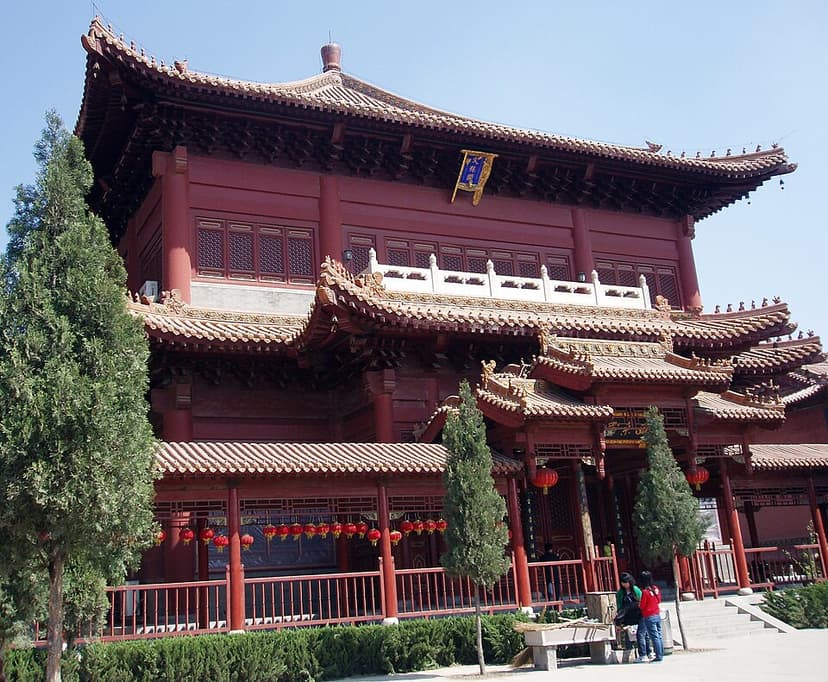
Bailin Temple (Beijing)
Bailin Temple, meaning 'Monastery of the Cypress Grove,' is a significant 14th-century Tibetan Buddhist temple located in Beijing, China. Originally constructed in 1347 during the Yuan Dynasty, it served as a prominent center for the Sakya school before experiencing periods of disrepair and subsequent renovations under various emperors. The temple holds a complete set of printing blocks for the Tripitaka, carved in the early 18th century, which are considered a valuable cultural and religious relic.
Cloud Platform at Juyongguan
The Cloud Platform at Juyongguan is a significant mid-14th-century Buddhist structure located at the Juyongguan Pass of the Great Wall of China. Originally serving as the base for three stupas, it is now celebrated for its intricate Buddhist carvings and multilingual inscriptions, making it a key historical and cultural site.