
Dag Shang Kagyü
Dag Shang Kagyü is a Buddhist temple and study center located in Panillo, Huesca, Spain, established in 1984 by H.Em Kalu Rinpoche. It serves as a hub for learning Buddhist practices, philosophy, and Tibetan language, featuring a prominent 17-meter stupa in a traditional Bhutanese style.
Key Facts
- ›Established in 1984 by H.Em Kalu Rinpoche.
- ›Operates as a study center for Buddhist practices since 1985.
- ›Features a 17-meter stupa in a traditional Bhutanese architectural style.
- ›Includes a translation school for Tibetan literature, philosophy, and language.
- ›Is part of the Rimé (non-sectarian) movement, respecting all Buddhist traditions.

Important Relationships
- H.Em Kalu Rinpoche
17-Meter Stupa, Traditional Bhutanese Style Architecture, Translation School
Bhutanese
About Dag Shang Kagyü
Dag Shang Kagyü is a significant Buddhist temple and study center located in Panillo, within the province of Huesca, Spain. Its establishment in 1984 by H.Em Kalu Rinpoche marked the beginning of its role as a vibrant center for Buddhist learning and practice. Since 1985, it has also functioned as a dedicated study center, offering comprehensive programs in Buddhist philosophy, practices, and the Tibetan language.
Architectural and Educational Features
The temple is distinguished by its traditional Bhutanese architectural style, most notably featuring a prominent 17-meter stupa. Beyond its visual appeal, Dag Shang Kagyü is equipped with a translation school focused on the study of Tibetan literature and philosophy, catering to those seeking deeper knowledge of these subjects. The center also provides spaces for individuals who wish to undertake extended retreats, staying at the monastery for periods ranging from months to years, allowing for immersive spiritual development.
Community and Philosophy
The resident community at Dag Shang Kagyü is led by Lama Drubgyu Tenpa, the temple's director. The monastic body comprises eight additional lamas, with five originating from Bhutan and the remainder from Europe, fostering an international and diverse spiritual environment. The temple adheres to the principles of the Rimé movement, a non-sectarian approach within Buddhism that respects and acknowledges the validity of all traditions and paths leading to supreme spiritual realization.
Source: Wikipedia ↗
Frequently Asked Questions
Where is Dag Shang Kagyü located?
Dag Shang Kagyü is situated in Panillo, Huesca, Spain. It was established on lands that were sold in 1984 and subsequently expanded with donations from disciples.
When was Dag Shang Kagyü founded?
The monastery was established in 1984 by H.Em Kalu Rinpoche. It began functioning as a study center for Buddhist practices the following year, in 1985.
What are the main features of Dag Shang Kagyü?
The temple is characterized by its traditional Bhutanese style and a significant 17-meter stupa. It also houses a translation school dedicated to teaching Tibetan literature, philosophy, and language.
What is the affiliation of Dag Shang Kagyü?
Dag Shang Kagyü is associated with the Rimé movement, which is a non-sectarian approach in Buddhism. This movement emphasizes respect for all traditions and acknowledges the validity of diverse paths to spiritual realization.
Who directs Dag Shang Kagyü?
The current director of Dag Shang Kagyü is Lama Drubgyu Tenpa. The community includes eight other lamas, comprising five from Bhutan and the remaining from Europe.
Related Buddhist Temples

Sakya Tashi Ling
Sakya Tashi Ling is a monastery belonging to the Sakyapa tradition, one of the four major schools of Tibetan Buddhism. Originally established in 1905 by a Catalan family who had immigrated to the Americas, the building was later passed to the Buddhist community, who restored it and installed a museum. The monastery was re-established in its current location in Olivella, Catalonia, Spain, in 1996.
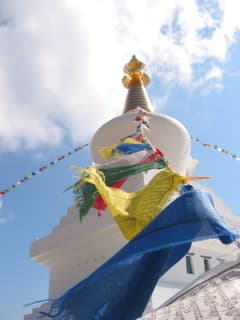
Benalmádena Stupa
The Benalmádena Stupa is a prominent Buddhist monument located in Benalmádena, Spain, overlooking the Costa del Sol. Standing at 33 meters tall, it holds the distinction of being the tallest stupa in Europe. Inaugurated in 2003, it was the final project envisioned by the renowned Tibetan Buddhist master Lopon Tsechu Rinpoche, symbolizing peace, prosperity, and harmony.
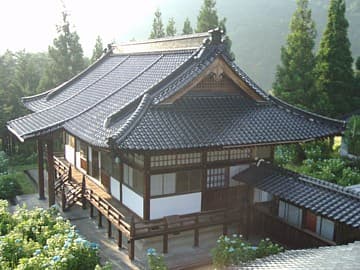
Antai-ji
Antai-ji is a Sōtō Zen Buddhist temple located in northern Hyōgo Prefecture, Japan, known for its emphasis on zazen and self-sufficiency. Originally founded in Kyoto in 1921, it was relocated to its current mountain setting to preserve its practice from urban noise and development.