
Benalmádena Stupa
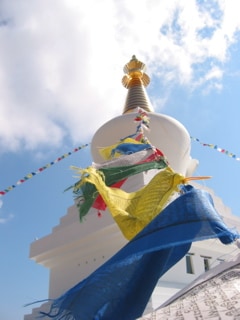
The Benalmádena Stupa is a prominent Buddhist monument located in Benalmádena, Spain, overlooking the Costa del Sol. Standing at 33 meters tall, it holds the distinction of being the tallest stupa in Europe. Inaugurated in 2003, it was the final project envisioned by the renowned Tibetan Buddhist master Lopon Tsechu Rinpoche, symbolizing peace, prosperity, and harmony.
Key Facts
- ›It is the tallest stupa in Europe, measuring 33 meters (108 ft) in height.
- ›The stupa was inaugurated on October 5, 2003.
- ›It was the final project of the Tibetan Buddhist master Lopon Tsechu Rinpoche.
- ›Unlike many traditional stupas, it features an interior meditation room and an exhibition space.
- ›The construction was overseen by architect Woitek Kossowski, with ritual guidance from Lama Lopon Tsechu Rinpoche.
- ›It is managed by the Asociación Cultural Karma Kagyu de Benalmádena, under the spiritual guidance of the 17th Karmapa Trinley Thaye Dorje.
Important Relationships
- Lopon Tsechu Rinpoche
- Woitek Kossowski
- H.H. Kunzig Shamar Rinpoche
- Lömpo Sangye Ngodup
- Lama Ole Nydahl
- Enrique Bolin
- 17th Karmapa Trinley Thaye Dorje
- Tallest Stupa In Europe
- Interior Meditation Room
- Exhibition Space For Tibetan Buddhism and Himalayan Culture
- Wall Paintings Depicting the Life of Buddha Sakyamuni
Inauguration On October 5, 2003
About Benalmádena Stupa
The Benalmádena Stupa, known in Tibetan as Chan Chub Chorten, is a significant Buddhist monument located in Benalmádena, Málaga, within the Andalusian region of southern Spain. Overlooking the popular Costa del Sol, it stands as a symbol of peace, prosperity, and harmony, and is recognized as the tallest stupa in Europe, measuring an impressive 33 meters (108 ft) in height. Its inauguration took place on October 5, 2003, marking the completion of a project deeply envisioned by the esteemed Tibetan Buddhist master Lopon Tsechu Rinpoche, who passed away shortly before its final dedication.
Buddhist Significance and Unique Features
In Buddhist tradition, a stupa represents enlightenment and serves as a focal point for meditation. The Benalmádena Stupa embodies Buddha's enlightenment and the realization of the mind's true nature. While traditionally sealed structures, this stupa features an internal 100-square-meter meditation room and an additional space designed for exhibitions related to Tibetan Buddhism and Himalayan culture. The walls of the meditation chamber are adorned with paintings that narrate the life story of the historical Buddha, Sakyamuni, offering a rich visual and spiritual experience.
Construction and Guidance
The construction of the Benalmádena Stupa was a collaborative effort. The ritualistic aspects were guided by the Bhutanese Lama Lopon Tsechu Rinpoche, while the architectural and construction oversight was managed by German-based Polish architect Woitek Kossowski. The inauguration ceremony was a significant event, attended by H.H. Kunzig Shamar Rinpoche, a principal teacher in the Karma Kagyu lineage, Lömpo Sangye Ngodup, a minister from Bhutan, Lama Ole Nydahl, and the Mayor of Benalmádena, Enrique Bolin. Mayor Bolin's support was instrumental, inspired by another large stupa in the region, and he facilitated the provision of the land for this project. The stupa is operated by the non-profit Asociación Cultural Karma Kagyu de Benalmádena, operating under the spiritual direction of the 17th Karmapa Trinley Thaye Dorje.
Source: Wikipedia ↗
Frequently Asked Questions
What is a stupa in Buddhism?
In Buddhism, a stupa is a monument that symbolizes peace, prosperity, and harmony. It also serves as a place for meditation and represents Buddha's enlightenment and the realization of the nature of the mind.
What makes the Benalmádena Stupa unique?
The Benalmádena Stupa is unusual because, unlike typically sealed stupas, it contains an interior 100-square-meter meditation room and a space for exhibitions on Tibetan Buddhism and Himalayan culture.
Who was Lopon Tsechu Rinpoche?
Lopon Tsechu Rinpoche was a highly respected Tibetan Buddhist master who guided the initial vision and ritual elements of the Benalmádena Stupa. He built many stupas across Europe before his death in 2003, with this being his final project.
Who inaugurated the Benalmádena Stupa?
The stupa was inaugurated on October 5, 2003, by H.H. Kunzig Shamar Rinpoche, who is the second-most important teacher within the Karma Kagyu lineage of Tibetan Buddhism.
What is the significance of the paintings inside the meditation room?
The walls of the meditation room are adorned with paintings depicting the life story of the historical Buddha, Sakyamuni, providing an educational and contemplative element for visitors.
Related Buddhist Temples

Dag Shang Kagyü
Dag Shang Kagyü is a Buddhist temple and study center located in Panillo, Huesca, Spain, established in 1984 by H.Em Kalu Rinpoche. It serves as a hub for learning Buddhist practices, philosophy, and Tibetan language, featuring a prominent 17-meter stupa in a traditional Bhutanese style.

Sakya Tashi Ling
Sakya Tashi Ling is a monastery belonging to the Sakyapa tradition, one of the four major schools of Tibetan Buddhism. Originally established in 1905 by a Catalan family who had immigrated to the Americas, the building was later passed to the Buddhist community, who restored it and installed a museum. The monastery was re-established in its current location in Olivella, Catalonia, Spain, in 1996.
Kagyu Samyé Ling Monastery and Tibetan Centre
Kagyu Samye Ling Monastery and Tibetan Centre is a significant Tibetan Buddhist complex located in Eskdalemuir, Scotland, closely associated with the Karma Kagyu school. Established in 1967, it emerged from humble beginnings in a former hunting lodge to become one of the oldest and most important Tibetan centers in Europe, attracting international visitors and fostering Tibetan art and culture.