
Antai-ji
Temple·Japan·20th century·Sōtō Zen Buddhism
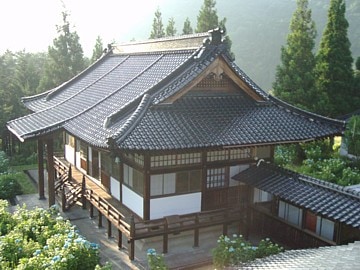
Antai-ji is a Sōtō Zen Buddhist temple located in northern Hyōgo Prefecture, Japan, known for its emphasis on zazen and self-sufficiency. Originally founded in Kyoto in 1921, it was relocated to its current mountain setting to preserve its practice from urban noise and development.
Key Facts
- ›Founded in 1921 by Oka Sotan as a monastery for scholars studying the Shōbōgenzō.
- ›Relocated to its present site in northern Hyōgo Prefecture by Abbot Kōhō Watanabe to escape urban noise.
- ›Emphasizes zazen practice and self-sufficiency, relying on donations and begging (takuhatsu) rather than parishioner fees.
- ›The temple is inaccessible during winter months due to heavy snowfall.
- ›A documentary film about the monastery, "Zen for Nothing," was released in 2016.
Important Relationships
- Oka Sotan
- Kōdō Sawaki
- Kōshō Uchiyama
- Kōhō Watanabe
- Shinyu Miyaura
- Muho Noelke
- Nakamura Eko
- Shohaku Okumura
- Eishin Ikeda
- Werner Penzel
- Sabine Timoteo
- Mountainous Location On About 50 Hectares of Land
- Takuhatsu
- Memorial To Sawaki Kodo At the Original Kyoto Site
- Founding In 1921
- KōDō Sawaki Becoming Fifth Abbot In 1949
- Relocation To Northern HyōGo Prefecture
- Premiere of the Documentary "Zen For Nothing" In 2016
About Antai-ji
Antai-ji: A Sōtō Zen Monastery
Antai-ji is a significant Sōtō Zen Buddhist temple renowned for its dedication to the practice of zazen and its commitment to self-sufficiency. Situated on approximately 50 hectares of mountainous land in Shin'onsen, Mikata District, in northern Hyōgo Prefecture, Japan, the temple offers a serene environment close to a national park on the Sea of Japan coast. While it welcomes visitors during the summer, its remote mountain location makes it inaccessible during the winter due to heavy snowfall.
History and Relocation
The temple was originally founded in 1921 by Oka Sotan in the Gentaku area of northern Kyoto. Its initial purpose was to serve as a monastery for scholars to study the profound teachings of the Shōbōgenzō. Many leading scholars frequented the temple during this period. Following its vacancy during World War II, Kōdō Sawaki became the fifth abbot in 1949, transforming Antai-ji into a center for zazen practice. Although Sawaki was frequently traveling, his student Kōshō Uchiyama bore most of the temple's responsibilities until Sawaki took up residence in 1962. Upon Sawaki's death in 1965, Uchiyama assumed the role of the sixth abbot.
During the late 1960s, Antai-ji gained recognition both within Japan and internationally for its rigorous practice of zazen and its adherence to formal begging, known as takuhatsu. Unusually for the time in Japan, the temple supported itself without income from parishioner families, relying instead on donations from lay practitioners and begging. Uchiyama mentored several students who would later become prominent Zen teachers, including Shohaku Okumura and Eishin Ikeda.
As the number of visitors and surrounding construction increased in Kyoto, the resulting noise disrupted the practice of zazen. Consequently, the seventh abbot, Kōhō Watanabe, made the decision to relocate Antai-ji to its present, more secluded location in northern Hyōgo. The original Kyoto temple was demolished, with only a fenced-off stone from its garden, bearing a memorial to Sawaki Kodo, remaining at the site. A Jehovah's Witness church now stands near its former location.
Life in Northern Hyōgo
At its new mountain home, the seventh abbot Kōhō Watanabe sought to revive Zen's ideal of self-sufficiency. The eighth abbot, Shinyu Miyaura, continued this pursuit of a quiet life of zazen and monastic self-reliance until his untimely death in the snow in February 2002. Following Miyaura, his disciple, the German monk Muho Noelke, served as the ninth abbot until 2020. He was succeeded by his Japanese Dharma heir, Nakamura Eko, who is the current abbess.
A documentary film titled "Zen for Nothing," directed by Werner Penzel and featuring Sabine Timoteo, was released in 2016, shedding light on the monastery's unique way of life. Antai-ji continues to be a vital center for Zen practice, emphasizing simplicity, mindfulness, and a deep connection to nature.
Source: Wikipedia ↗
Frequently Asked Questions
When was Antai-ji founded?
Antai-ji was founded in 1921 by Oka Sotan. It was initially located in Kyoto before moving to its current site in northern Hyōgo Prefecture.
What is the significance of Antai-ji's location?
The current location in the mountains of northern Hyōgo Prefecture was chosen by Abbot Kōhō Watanabe to provide a quiet environment conducive to zazen practice, away from the noise of the city.
How does Antai-ji support itself?
Antai-ji is known for its self-sufficiency, relying entirely on donations from lay practitioners and the practice of formal begging, or takuhatsu, rather than income from parishioner families or funeral ceremonies.
Is Antai-ji accessible year-round?
No, Antai-ji is inaccessible during the winter months due to heavy snow. It accepts visitors during the summer months.
What is the connection between Antai-ji and Kōdō Sawaki?
Kōdō Sawaki became the fifth abbot of Antai-ji in 1949 and transformed it into a place dedicated to Zazen. Although he was often traveling, he resided at the temple from 1962 until his death in 1965.
Related Buddhist Temples

Chion-in
Chion-in is the headquarters of the Jōdo-shū (Pure Land Sect) in Kyoto, Japan, founded on the teachings of Hōnen. The temple complex encompasses the site where Hōnen disseminated his doctrines and where he ultimately passed away, making it a pivotal location for Pure Land Buddhism.

Buttsū-ji
Buttsū-ji is a significant Zen Buddhist temple located in Mihara, Hiroshima Prefecture, Japan. It serves as the head temple for one of the fourteen autonomous branches of the Rinzai school of Zen Buddhism, overseeing forty-seven subordinate temples. The temple was founded in 1397 by Kobayakawa Haruhira, the lord of Mihara, and is named in honor of the Chinese master Buttsu Zenji.

Byōdō-in
Byōdō-in is a significant Buddhist temple located in Uji, Kyoto Prefecture, Japan, originally established as a rural villa in 998 and converted into a temple in 1052. It is renowned for its Phoenix Hall, a National Treasure and UNESCO World Heritage site, which exemplifies Heian period architecture and houses a celebrated Amida Buddha statue.