
Chung Tian Temple
Temple·Australia·20th century·Fo Guang Shan
Chung Tian Temple is a Chan Buddhist temple located in Priestdale, Queensland, Australia, and is part of the Fo Guang Shan monastic order. Founded by Venerable Master Hsing Yun, it serves as a peaceful and culturally diverse venue promoting Humanistic Buddhism, multiculturalism, and multi-faith harmony.
Key Facts
- ›Construction began in January 1991 and it opened in June 1993.
- ›It is part of the Fo Guang Shan Buddhist monastic order.
- ›Founded by Venerable Master Hsing Yun.
- ›Offers meditation classes, Buddhism classes for children, and Chinese language classes.
- ›Features a seven-tiered pagoda, Bodhisattva Hall, meditation room, and restaurant.
- ›It is one of the most popular tourist sites in Brisbane.

Important Relationships
- Fo Guang Shan Buddhist monastic order
Seven-Tiered Pagoda, Bodhisattva Hall, Meditation Room, Restaurant, Chinese School
Construction Began January 1991, Temple Opened June 1993, Celebration of Chinese New Year
Chinese Buddhist
About Chung Tian Temple
Chung Tian Temple is a significant Chan Buddhist temple situated at 1034 Underwood Road in Priestdale, Queensland, Australia. Established as part of the globally recognized Fo Guang Shan Buddhist monastic order, the temple embodies the principles of Humanistic Buddhism. Its construction began in January 1991, and it officially opened its doors to the public in June 1993. The temple was founded by the esteemed Venerable Master Hsing Yun, the visionary behind the entire Fo Guang Shan organization.
Purpose and Community Engagement
The temple is dedicated to providing a serene and culturally inclusive environment for the community and visitors alike. It actively promotes multicultural diversity and multi-faith harmony, serving as a venue where people from various backgrounds can connect and engage. Chung Tian Temple offers a range of public programs designed to foster spiritual and personal growth.
Programs and Facilities
Regular programs include meditation classes held every Sunday, covering theoretical aspects, breathing techniques, and postures. Additionally, there are Buddhism classes for children and Chinese language classes catering to both native speakers and international students, with seven levels available for ages five to seventeen. The temple complex features several key buildings, including a Bodhisattva Hall, a meditation room, a restaurant, and a lecture room. Dominating the skyline is the temple's distinctive seven-tiered pagoda, a prominent architectural element.
Cultural Significance and Tourism
Chung Tian Temple is recognized as one of Brisbane's most popular tourist destinations, attracting visitors interested in its cultural offerings and spiritual atmosphere. The temple actively engages in cultural celebrations, most notably its vibrant Chinese New Year festivities, which include food, funfair, children's activities, cultural performances, and a Light Offering Blessing Service with a Chinese Lion Dance. The temple also hosts a two-day Children's Happy Camp annually in September or October.
Source: Wikipedia ↗
Frequently Asked Questions
When was Chung Tian Temple built?
Construction of Chung Tian Temple commenced in January 1991 and the temple officially opened in June 1993.
Who founded Chung Tian Temple?
Chung Tian Temple was founded by Venerable Master Hsing Yun, who is also the founder of the Fo Guang Shan Buddhist order.
What kind of classes are offered at Chung Tian Temple?
The temple offers various classes including meditation classes every Sunday, Buddhism classes for children on Sundays, and Chinese language classes on Saturday and Sunday mornings.
What are the notable features of Chung Tian Temple?
Key features include a seven-tiered pagoda, a Bodhisattva Hall, a meditation room, a restaurant, and eight classrooms for its registered Chinese School.
Is Chung Tian Temple a popular tourist destination?
Yes, Chung Tian Temple is recognized as one of the five most popular tourist sites in Brisbane, Queensland.
Related Buddhist Temples

Bodhinyana Monastery
Bodhinyana Monastery is a Theravada Buddhist monastery in Serpentine, Western Australia, established in 1983 as part of the Thai Forest Tradition. It serves as a training facility for monks and fosters the traditional relationship between the monastic community and lay supporters, attracting significant numbers of visitors, especially during Buddhist holidays.
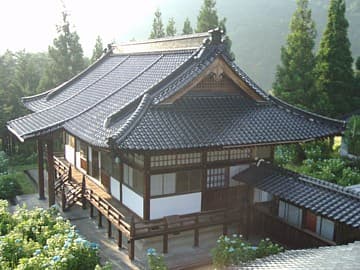
Antai-ji
Antai-ji is a Sōtō Zen Buddhist temple located in northern Hyōgo Prefecture, Japan, known for its emphasis on zazen and self-sufficiency. Originally founded in Kyoto in 1921, it was relocated to its current mountain setting to preserve its practice from urban noise and development.

Chuang Yen Monastery
Chuang Yen Monastery is a significant Buddhist temple located on 225 acres in Kent, New York. It is notable for housing the largest indoor statue of the Buddha Vairocana in the Western Hemisphere. The name "Chuang Yen" translates to "Majestically Adorned," reflecting its grandeur and purpose.