
Bardan Monastery
Bardan Monastery, also known as Bardan Gompa, is a historic Buddhist monastery located in the Zanskar region of Ladakh, northern India. Founded in the 17th century, it has served as a significant religious center and historically managed several smaller hermitages in the surrounding area. The monastery is distinguished by its large assembly hall, the Dukhang, which houses impressive statues of Buddhist deities and numerous small stupas.
Key Facts
- ›Established in the 17th century.
- ›Located approximately 12 kilometers south of Padum in Zanskar, Ladakh.
- ›Situated alongside the Lungnak River.
- ›Operated several smaller hermitages in the vicinity.
- ›Features a large assembly hall (Dukhang) with significant Buddhist statues.
- ›Contains numerous small stupas.
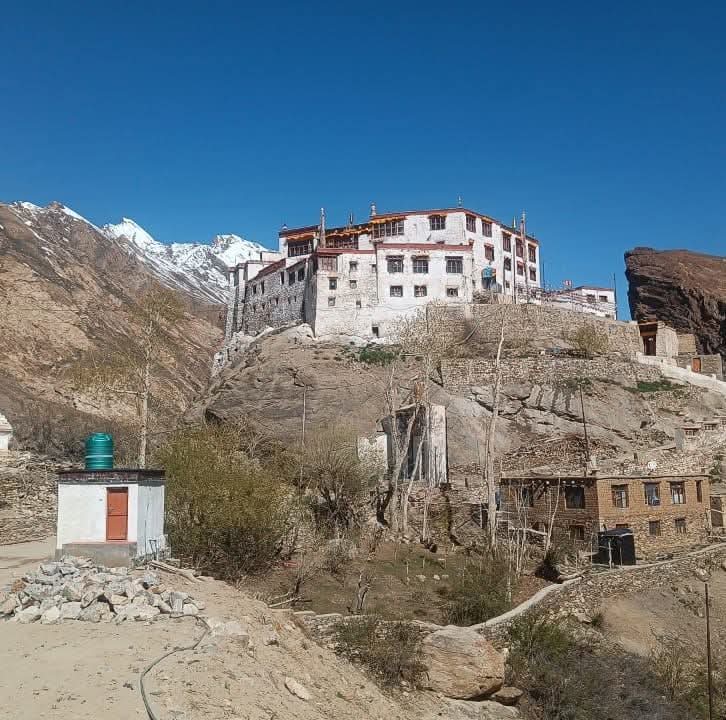
Dukhang, Grand Statues of Buddhist Figures, Several Small Stupas
About Bardan Monastery
Bardan Monastery, also referred to as Bardan Gompa, is a significant Buddhist religious site located in the Zanskar region of Ladakh, northern India. Established in the 17th century, it stands as a testament to the region's rich Buddhist heritage. The monastery is situated in a scenic location along the Lungnak River, approximately 12 kilometers south of the town of Padum.
Historical Context and Features
The monastery's history dates back to the 17th century, marking it as a venerable institution within the Zanskar valley. Historically, Bardan Monastery held administrative and spiritual influence over several smaller hermitages located in the vicinity, underscoring its role as a central religious hub. The architectural complex of Bardan Monastery is notable for its Dukhang, or assembly hall. This central structure houses impressive and grand statues of various Buddhist figures, which are a key attraction for visitors and devotees. In addition to the statues, the monastery complex is adorned with numerous small stupas, traditional Buddhist reliquaries that are integral to the monastic landscape.
Significance
Bardan Monastery serves as an active center for Buddhist practice and contemplation. Its historical presence and the significant religious artifacts within its Dukhang make it an important site for understanding the Buddhist traditions of Ladakh. The monastery continues to be a point of interest for those seeking to explore the spiritual and cultural heritage of the Zanskar region.
Source: Wikipedia ↗
Frequently Asked Questions
When was Bardan Monastery founded?
Bardan Monastery was founded in the 17th century. It has been a significant religious site in the Zanskar region for centuries.
Where is Bardan Monastery located?
Bardan Monastery is situated in Zanskar, Ladakh, northern India. It is located approximately 12 kilometers south of Padum, along the Lungnak River.
What are the main features of Bardan Monastery?
The monastery's primary feature is its large assembly hall, known as the Dukhang. This hall contains grand statues of Buddhist figures and is surrounded by several small stupas.
Did Bardan Monastery have any associated smaller religious sites?
Yes, historical records indicate that Bardan Monastery managed several smaller hermitages in the surrounding area. These likely served as extensions of its religious and administrative functions.
Related Buddhist Temples

Chemrey Monastery
Chemrey Monastery, also known as Chemrey Gompa, is a significant Buddhist monastery located in the Indus River valley of Ladakh, India. Founded in 1664 by Lama Tagsang Raschen and dedicated to King Sengge Namgyal, it belongs to the Drugpa monastic order and is known for its impressive Padmasambhava statue and a valuable collection of scriptures.

Gemur Monastery
Gemur Monastery is a significant Buddhist gompa located above Gemur village in the Lahaul and Spiti district of Himachal Pradesh, India. Dating back to the first half of the 17th century, it serves as a central seat of Tibetan Buddhism in the stod valley and is associated with the Drukpa Kagyu sect. The monastery is known for its ancient artifacts, wall paintings, and the annual Tshechu festival featuring masked dances.
Hanle Monastery
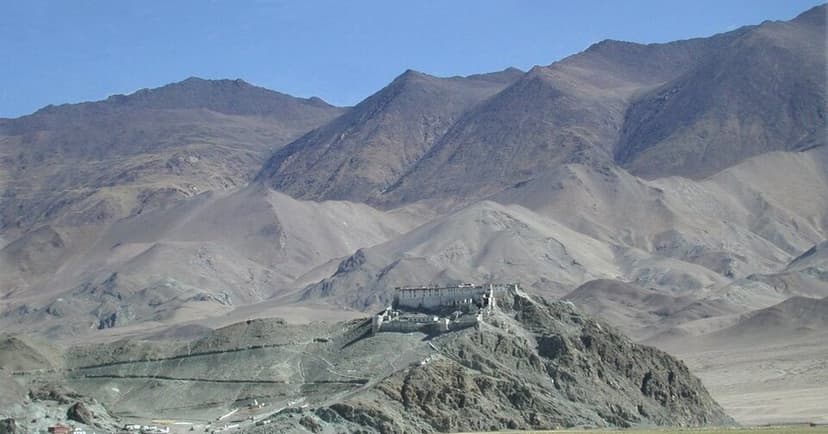
Hanle Monastery is a significant 17th-century gompa belonging to the Drukpa Lineage of Tibetan Buddhism, located in Ladakh, India. It was established under the patronage of Ladakhi King Sengge Namgyal and played a crucial role in the region's religious landscape, serving as a rival to the Gelug school. The monastery is notable for its proximity to the Indian-Chinese border and also houses the Indian Astronomical Observatory.