
Pontifical Basilica of St Michael
The Pontifical Basilica of Saint Michael is a Baroque Catholic church and minor basilica located in Madrid, Spain. It serves as the church of the Apostolic Nunciature to the Kingdom of Spain and is administered by priests of Opus Dei. Pope Pius XI elevated the shrine to the status of a minor basilica in 1930.
Key Facts
- ›Construction began in 1739 on the site of the parish church of Saints Justus and Pastor.
- ›The church was commissioned by Cardinal Infante Luis of Chinchón, Archbishop of Toledo.
- ›The original plans are attributed to Santiago Bonavía, with possible earlier input from Teodoro Ardemans.
- ›The façade features allegorical statues of charity, faith, hope, and fortitude sculpted by Roberto Michel and Nicolás Caresana.
- ›The cupola is decorated with frescos by Bartolomé Rusca depicting the apotheosis of Saints Justus and Pastor.
- ›The Italian composer Luigi Boccherini was formerly buried here until his remains were repatriated to Italy.

Baroque
Michael, Justus, Pastor
Opus Dei
Santiago BonavíA, Teodoro Ardemans, Vigilio Rabaglio
About Pontifical Basilica of St Michael
Pontifical Basilica of Saint Michael
The Pontifical Basilica of Saint Michael, known in Spanish as Basílica Pontificia de San Miguel, is a significant Baroque Catholic church situated in the heart of Madrid, Spain. It holds the status of a minor basilica, a designation bestowed upon it by Pope Pius XI in 1930. The basilica serves a dual role as the church of the Apostolic Nunciature to the Kingdom of Spain and is currently administered by the priests of Opus Dei.
History and Construction
Construction of the Pontifical Basilica of Saint Michael commenced in 1739, on the historical site of the parish church dedicated to Saints Justus and Pastor. The undertaking was commissioned by Cardinal Infante Luis of Chinchón, the Archbishop of Toledo, who generously subsidized the project with 1,421,000 reales. The building work was finalized in 1745. Following the Napoleonic invasion, the church also adopted the advocacy of Saint Michael (San Miguel) after the nearby parish church of San Miguel de los Octoes was demolished.
Architecture and Artistry
The architectural design of the basilica is primarily attributed to Santiago Bonavía, with a potential earlier contribution from Teodoro Ardemans. The construction was ultimately completed by Vigilio Rabaglio. The façade is adorned with allegorical statues representing charity, faith, hope, and fortitude, skillfully sculpted by Roberto Michel and Nicolás Caresana. Caresana also created a panel on the façade that depicts the martyrdom of Saints Justus and Pastor. Inside, the cupola showcases frescos from 1745 by Bartolomé Rusca, illustrating the apotheosis of Saints Justus and Pastor. The interior also houses notable wood sculptures, including the "Cristo de la Fe y del Perdón" by Luis Salvador Carmona.
Source: Wikipedia ↗
Frequently Asked Questions
When was the Pontifical Basilica of Saint Michael designated a minor basilica?
Pope Pius XI raised the shrine to the status of Minor Basilica on September 15, 1930, through his decree Matritensi in Civitate. The decree was signed and notarized by Cardinal Eugenio Pacelli.
Who commissioned the construction of the basilica?
The construction was commissioned by Cardinal Infante Luis of Chinchón, who was the Archbishop of Toledo. He provided significant financial support for the project.
What is the architectural style of the Pontifical Basilica of Saint Michael?
The basilica is built in the Baroque style. The façade includes allegorical statues and a panel depicting a martyrdom.
Are there any notable burials at the basilica?
The Italian composer Luigi Boccherini was buried at the basilica after his death in Madrid. His remains were later repatriated to his hometown in Italy in 1927.
Who administers the Pontifical Basilica of Saint Michael today?
The basilica is currently administered by the priests of Opus Dei. It also serves as the church for the Apostolic Nunciature to the Kingdom of Spain.
Related Basilicas
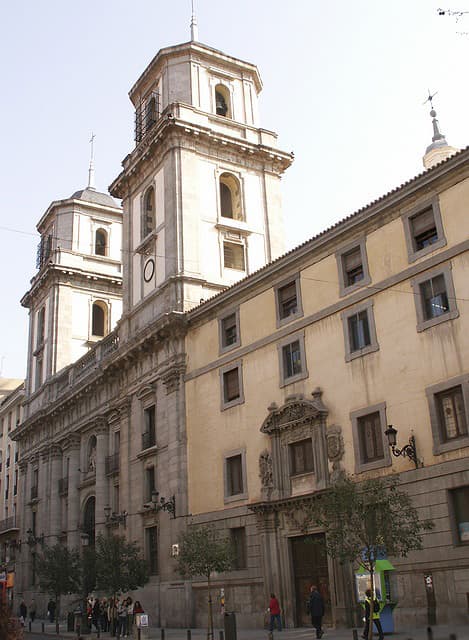
Ex-Cathedral Basilica of St Isidore
The Ex-Cathedral Basilica of St Isidore, also known as the Colegiata, is a Baroque Catholic church located in Madrid, Spain. It is significant for housing the relics of Saint Isidore, the patron saint of Madrid, and his wife, Saint Mary of the Head. The church has held the status of a minor basilica for centuries and played a role as Madrid's pro-cathedral before the completion of Almudena Cathedral.

Royal Basilica of Our Lady of Atocha
The Royal Basilica of Our Lady of Atocha is a prominent church located in central Madrid, Spain, and is administered by the Dominican order. Its history is tied to a lost icon found among tall grasses, giving it its name, and it has undergone significant reconstruction after destruction during the Spanish Civil War.
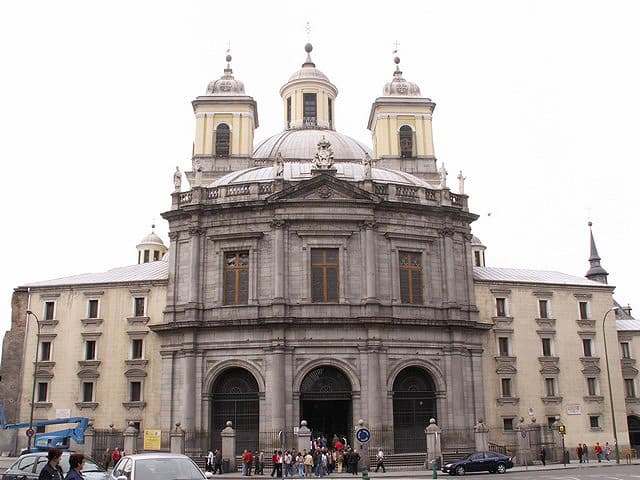
Royal Basilica of St Francis the Great
The Royal Basilica of Saint Francis the Great is a prominent Roman Catholic basilica located in central Madrid, Spain, within the Palacio neighborhood. It forms part of a Franciscan convent and is renowned for its significant Neoclassic architecture, particularly its dome which is among the largest in Europe, and its collection of Spanish art. The basilica has a rich history, having served as a National Pantheon and housing the remains of notable figures.