
Our Lady of the Snows Basilica, Shrine of the Good Lord Jesus of Iguape
Brazil·Iguape
The Basilica of Our Lady of the Snows, also known as the Shrine of the Good Lord Jesus of Iguape, is a Catholic religious building located in Iguape, São Paulo, Brazil. Constructed between the 18th and 19th centuries using Portuguese stone, mortar, and whale oil, it serves as both a parish church and a Catholic sanctuary. It was designated a minor basilica by Pope John XXIII in 1962.
Key Facts
- ›Construction took place between the 18th and 19th centuries.
- ›Built using Portuguese stone, mortar, and whale oil.
- ›Houses images of the patron saints of Iguape: the Virgin of the Snows and the Good Jesus of Iguape.
- ›Features a 'Hall of Miracles' with objects left by devotees.
- ›Holds the triple status of parochial church, Catholic sanctuary, and minor basilica.
- ›Designated a minor basilica on November 29, 1962, during the pontificate of Pope John XXIII.

Virgin of the Snows, Good Jesus of Iguape
About Our Lady of the Snows Basilica, Shrine of the Good Lord Jesus of Iguape
The Basilica of Our Lady of the Snows, also referred to as the Shrine of the Good Lord Jesus of Iguape, is a significant Catholic religious edifice located in the city of Iguape, within the state of São Paulo, Brazil.
Construction and Design
Construction of the basilica spanned from the 18th to the 19th centuries. The building was constructed using traditional Portuguese materials, including stone, mortar, and whale oil, reflecting the architectural practices of the era.
Religious Significance and Features
The basilica is dedicated to the patron saints of Iguape: the Virgin of the Snows and the Good Jesus of Iguape, whose images are displayed within its walls. A notable feature is the Hall of Miracles, where devotees leave objects in gratitude for answered prayers and received graces. The site holds a triple status, serving concurrently as a parochial church, a Catholic sanctuary, and a minor basilica.
Designation as a Minor Basilica
Its status as a minor basilica was officially recognized on November 29, 1962, during the pontificate of Pope John XXIII. This designation highlights its importance within the Catholic Church.
Source: Wikipedia ↗
Frequently Asked Questions
Where is the Basilica of Our Lady of the Snows located?
The basilica is situated in the city of Iguape, in the state of São Paulo, in the southern region of Brazil.
When was the basilica built?
Construction of the basilica occurred between the 18th and 19th centuries.
What materials were used in its construction?
The basilica was built using Portuguese stone, mortar, and whale oil.
What is the significance of the 'Hall of Miracles'?
The Hall of Miracles contains objects left by devotees as tokens of gratitude for graces received.
When was it designated as a minor basilica?
It was declared a minor basilica on November 29, 1962, under Pope John XXIII.
Related Basilicas
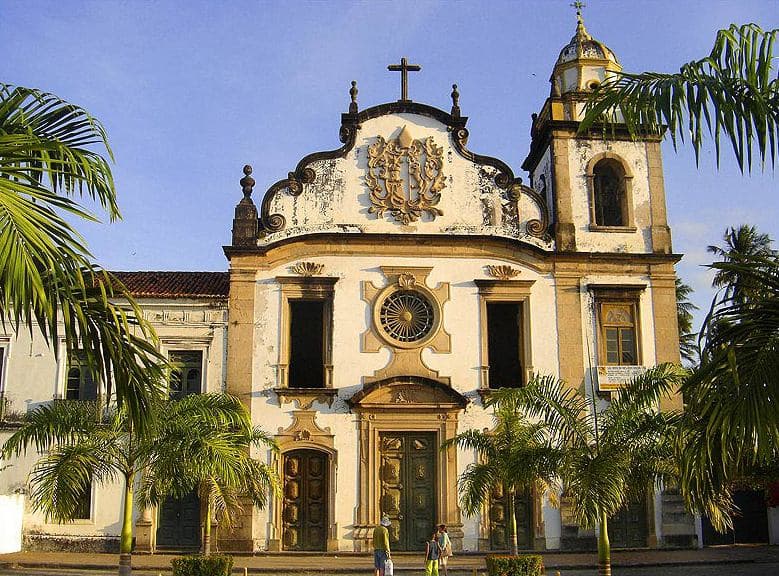
Abbatial Basilica of the Monastery of St Benedict
The Basilica and Monastery of St. Benedict is a significant Baroque architectural complex in Olinda, Pernambuco, Brazil. It is part of the historic center of the city, which is recognized as a UNESCO World Heritage Site. The basilica holds importance for its historical roots in Portuguese colonization and its elevated status as a Minor Basilica.

Basilica of Our Lady of Nazareth of Exile
The Basilica of Our Lady of Nazareth of Exile, also known as the Basilica of Belém, is a minor basilica of the Catholic Church located in Belém, Pará, Brazil. Construction began in 1909 on the site where the image of the Virgin of Nazareth was discovered. The basilica is notable for its Neoclassical design, commissioned by Barnabite priests and inspired by the Basilica of Saint Paul Outside the Walls in Rome, though it controversially lacked steeples in its original plan.

Basilica of the Eternal Divine Father
The Basilica of the Eternal Divine Father, also known as the Basilica of the Divine Eternal Father, is a Catholic shrine and minor basilica located in Trindade, Goiás, Brazil. It holds the distinction of being the world's only minor basilica dedicated to God the Father. The basilica's origins trace back to a small chapel built around 1848, evolving over time through several structures to the current edifice, which was elevated to minor basilica status by Pope Benedict XVI in 2006.