
Our Lady of the Pillar Basilica
Argentina·Buenos Aires
The Basilica of Our Lady of the Pillar in Recoleta, Buenos Aires, is a historic Franciscan church completed in 1732 and dedicated to Our Lady of the Pillar. As the second-oldest church in Buenos Aires, it holds significant historical importance and has functioned as a parish church since the expulsion of the Franciscans in 1821.
Key Facts
- ›Construction was initiated by Jesuit architect Andrés Blanqui and concluded by Juan Bautista Prímoli.
- ›The basilica was completed and dedicated in 1732.
- ›It is recognized as the second-oldest church in Buenos Aires.
- ›Following the expulsion of the Franciscans in 1821, the church began serving as a parish church.
- ›The basilica is an integral part of the former Franciscan monastery in Recoleta.

Franciscan
AndréS Blanqui, Juan Bautista PríMoli
About Our Lady of the Pillar Basilica
Basilica of Our Lady of the Pillar
The Basilica of Our Lady of the Pillar is a significant historical and religious site located in Recoleta, Buenos Aires. Completed in 1732, it was originally constructed as part of a Franciscan monastery and is dedicated to Our Lady of the Pillar. The basilica holds the distinction of being the second-oldest church in Buenos Aires, reflecting its deep historical roots in the city.
History and Function
The construction of the basilica was initiated by the Italian Jesuit architect Andrés Blanqui and was later finished under the direction of Juan Bautista Prímoli. Following the expulsion of the Franciscan order from Buenos Aires in 1821, the church transitioned to serving as a parish church, continuing its role in the spiritual life of the community. Its enduring presence makes it a key landmark in the city's ecclesiastical history.
Source: Wikipedia ↗
Frequently Asked Questions
When was the Basilica of Our Lady of the Pillar built?
The Basilica of Our Lady of the Pillar was completed in 1732. Its construction was begun by Italian Jesuit architect Andrés Blanqui and finished under Juan Bautista Prímoli.
What is the historical significance of this basilica?
It is the second-oldest church in Buenos Aires, originally built as part of a Franciscan monastery. After the Franciscans were expelled in 1821, it continued to serve as a parish church.
Who designed the Basilica of Our Lady of the Pillar?
The construction of the basilica was started by the Italian Jesuit architect Andrés Blanqui. The work was completed by Juan Bautista Prímoli.
What is the basilica dedicated to?
The Basilica of Our Lady of the Pillar is dedicated to Our Lady of the Pillar.
Related Basilicas

Basilica of Our Lady of the Pillar (Santa Cruz Church)
The Minor Basilica of Our Lady of the Pillar, also known as Santa Cruz Parish, is a significant Roman Catholic church in Manila, Philippines. Originally established by the Jesuits in the early 17th century, it has undergone multiple reconstructions, with the current structure completed in 1957. The basilica is notable as the motherhouse of Filipino Sacramentinos and hosts important archdiocesan celebrations, including the Feast of Corpus Christi.

Cathedral Basilica of Our Lady of the Pillar
The Cathedral Basilica of Our Lady of the Pillar, also known as the São João del Rei Cathedral, is a significant Roman Catholic Marian shrine in São João del-Rei, Minas Gerais, Brazil. It is a prime example of Brazilian colonial art, featuring extensive gold decoration, paintings, and statues, and is protected by the Institute of National Artistic Patrimony of Brazil (IPHAN). The shrine was elevated to the status of Minor Basilica by Pope Paul VI in 1964.
Cathedral Basilica of Our Lady of Mercies
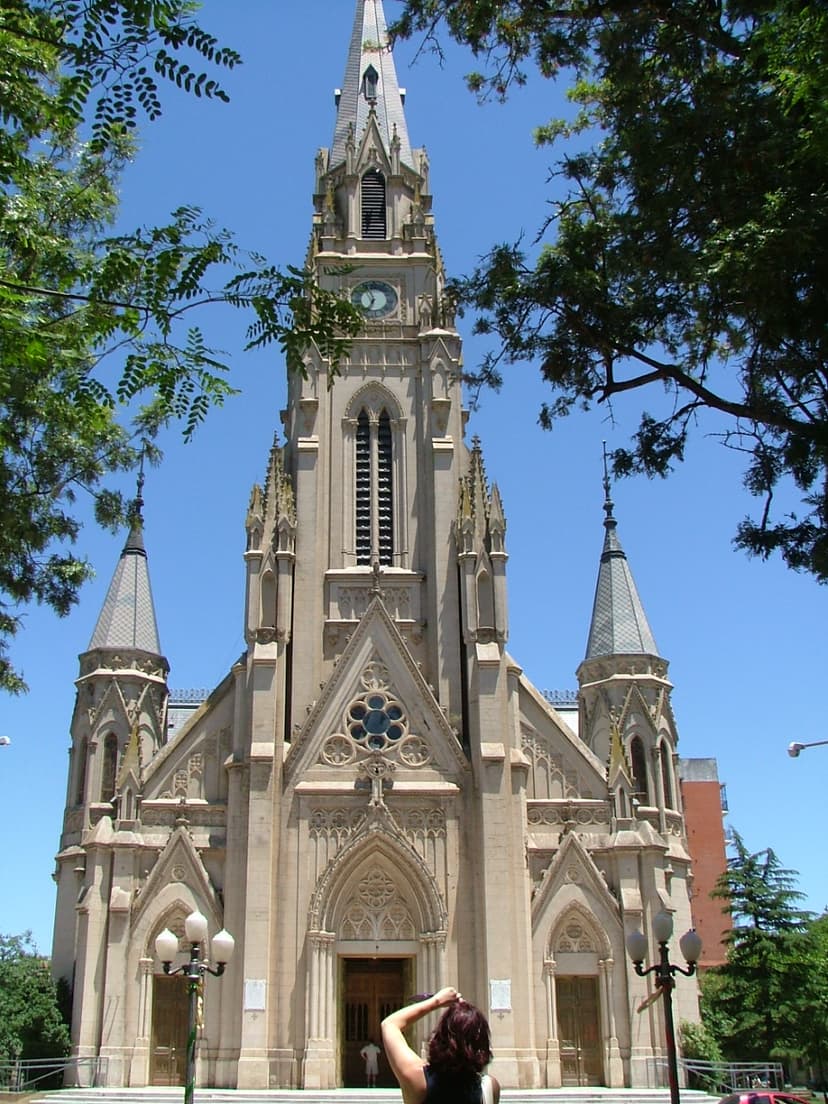
The Cathedral Basilica of Our Lady of Mercies is a Catholic cathedral and minor basilica located in Mercedes, Buenos Aires Province, Argentina. Serving as the seat of the Archdiocese of Mercedes-Luján, it is a significant religious and historical landmark, built in the Gothic Revival style and declared a National Historic Landmark in 2010.