
Cathedral Basilica of Our Lady of the Pillar
Brazil·São João del-Rei·Roman Catholic Diocese of São João del Rei
The Cathedral Basilica of Our Lady of the Pillar, also known as the São João del Rei Cathedral, is a significant Roman Catholic Marian shrine in São João del-Rei, Minas Gerais, Brazil. It is a prime example of Brazilian colonial art, featuring extensive gold decoration, paintings, and statues, and is protected by the Institute of National Artistic Patrimony of Brazil (IPHAN). The shrine was elevated to the status of Minor Basilica by Pope Paul VI in 1964.
Key Facts
- ›The basilica is a significant representative of Brazilian colonial art.
- ›It houses rich decorations of gold, paintings, and statues.
- ›The shrine was officially designated a Minor Basilica by Pope Paul VI on September 24, 1964.
- ›Pope Pius XII crowned the Marian image within the shrine on October 12, 1954.
- ›It is the seat of the Roman Catholic Diocese of São João del Rei, established in 1960.
- ›The current structure replaced an earlier chapel destroyed in the Emboabas War.

Brazilian Colonial Art
About Cathedral Basilica of Our Lady of the Pillar
What is the Cathedral Basilica of Our Lady of the Pillar?
The Cathedral Basilica of Our Lady of the Pillar, also recognized as the São João del-Rei Cathedral, is a prominent Roman Catholic Marian Pontifical shrine located in São João del-Rei, Minas Gerais, Brazil. It stands as a remarkable example of Brazilian colonial art, distinguished by its opulent interior adorned with gold, paintings, and statues. The shrine is held under the protection of the Institute of National Artistic Patrimony of Brazil (IPHAN).
History and Significance
The basilica's history is deeply intertwined with that of São João del-Rei, commencing in the early 18th century. Originally, a chapel constructed between 1703 and 1704 on the Morro da Forca was dedicated to the Virgin of the Pillar. This chapel, the city's first, was unfortunately destroyed by fire during the Emboabas War in 1709. Following this event, the Brotherhood of the Blessed Sacrament, established in 1711 and comprising wealthy white men of the town, resolved to construct a new church in the town's center to replace the destroyed chapel. The authorization for this new construction was granted on September 12, 1721.
Recognition and Designation
The Cathedral Basilica of Our Lady of the Pillar holds significant historical and artistic value, leading to its listing as a historic structure by the National Institute of Historic and Artistic Heritage in 1938, and it is inscribed in the Book of Historical Works. Its religious importance was further recognized when Pope Pius XII crowned the venerated Marian image within the shrine on October 12, 1954. A significant elevation in its status occurred on September 24, 1964, when Pope Paul VI issued a Pontifical decree, "Religione almae," officially raising the shrine to the rank of Minor Basilica. The basilica also serves as the cathedral for the Roman Catholic Diocese of São João del-Rei, which was established in 1960.
Source: Wikipedia ↗
Frequently Asked Questions
What is the history of the Cathedral Basilica of Our Lady of the Pillar?
The history dates back to the early 18th century with the construction of a chapel dedicated to the Virgin of the Pillar between 1703 and 1704. This original chapel was burned down in 1709 during the Emboabas War. A new church was then planned and construction was licensed in 1721.
When was the shrine elevated to a Minor Basilica?
The shrine was elevated to the status of Minor Basilica by Pope Paul VI through a Pontifical decree issued on September 24, 1964.
What is the artistic significance of the basilica?
The basilica is a great representative of Brazilian colonial art, characterized by its rich decoration in gold, paintings, and statues.
What is its connection to the Diocese of São João del Rei?
The Cathedral Basilica of Our Lady of the Pillar serves as the seat of the Roman Catholic Diocese of São João del Rei, which was established in 1960.
Is the basilica protected by any heritage organizations?
Yes, the basilica is under the protection of the Institute of National Artistic Patrimony of Brazil (IPHAN) and was listed as a historic structure by them in 1938.
Related Basilicas

Basilica of Our Lady of the Pillar (Santa Cruz Church)
The Minor Basilica of Our Lady of the Pillar, also known as Santa Cruz Parish, is a significant Roman Catholic church in Manila, Philippines. Originally established by the Jesuits in the early 17th century, it has undergone multiple reconstructions, with the current structure completed in 1957. The basilica is notable as the motherhouse of Filipino Sacramentinos and hosts important archdiocesan celebrations, including the Feast of Corpus Christi.

Our Lady of the Pillar Basilica
The Basilica of Our Lady of the Pillar in Recoleta, Buenos Aires, is a historic Franciscan church completed in 1732 and dedicated to Our Lady of the Pillar. As the second-oldest church in Buenos Aires, it holds significant historical importance and has functioned as a parish church since the expulsion of the Franciscans in 1821.
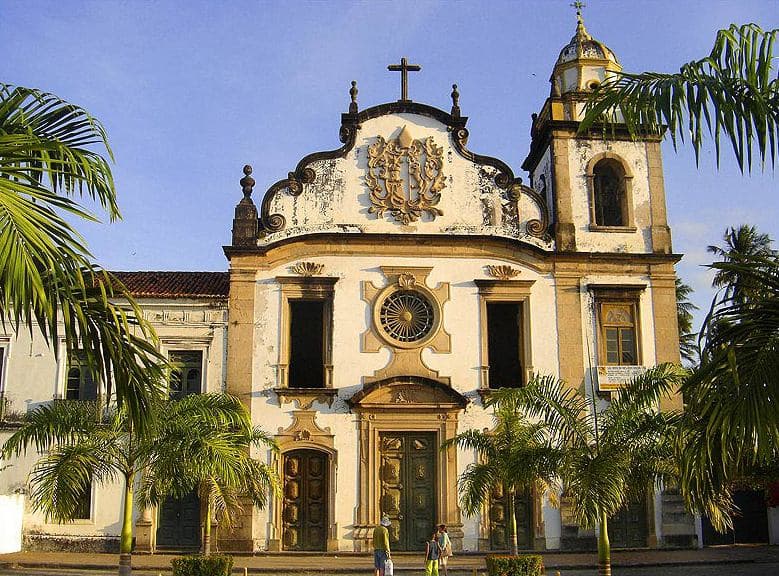
Abbatial Basilica of the Monastery of St Benedict
The Basilica and Monastery of St. Benedict is a significant Baroque architectural complex in Olinda, Pernambuco, Brazil. It is part of the historic center of the city, which is recognized as a UNESCO World Heritage Site. The basilica holds importance for its historical roots in Portuguese colonization and its elevated status as a Minor Basilica.