
Cathedral Basilica of Our Lady of Mercies
The Cathedral Basilica of Our Lady of Mercies is a Catholic cathedral and minor basilica located in Mercedes, Buenos Aires Province, Argentina. Serving as the seat of the Archdiocese of Mercedes-Luján, it is a significant religious and historical landmark, built in the Gothic Revival style and declared a National Historic Landmark in 2010.
Key Facts
- ›Built in 1904 in the Gothic Revival architectural style.
- ›Serves as the cathedral and seat of the Archdiocese of Mercedes-Luján.
- ›Dedicated to our Lady of Mercy.
- ›Houses the remains of its main benefactors, Don Saturnino Unzué and Doña Inés Unzué Dorrego.
- ›Declared a National Historic Landmark in 2010.
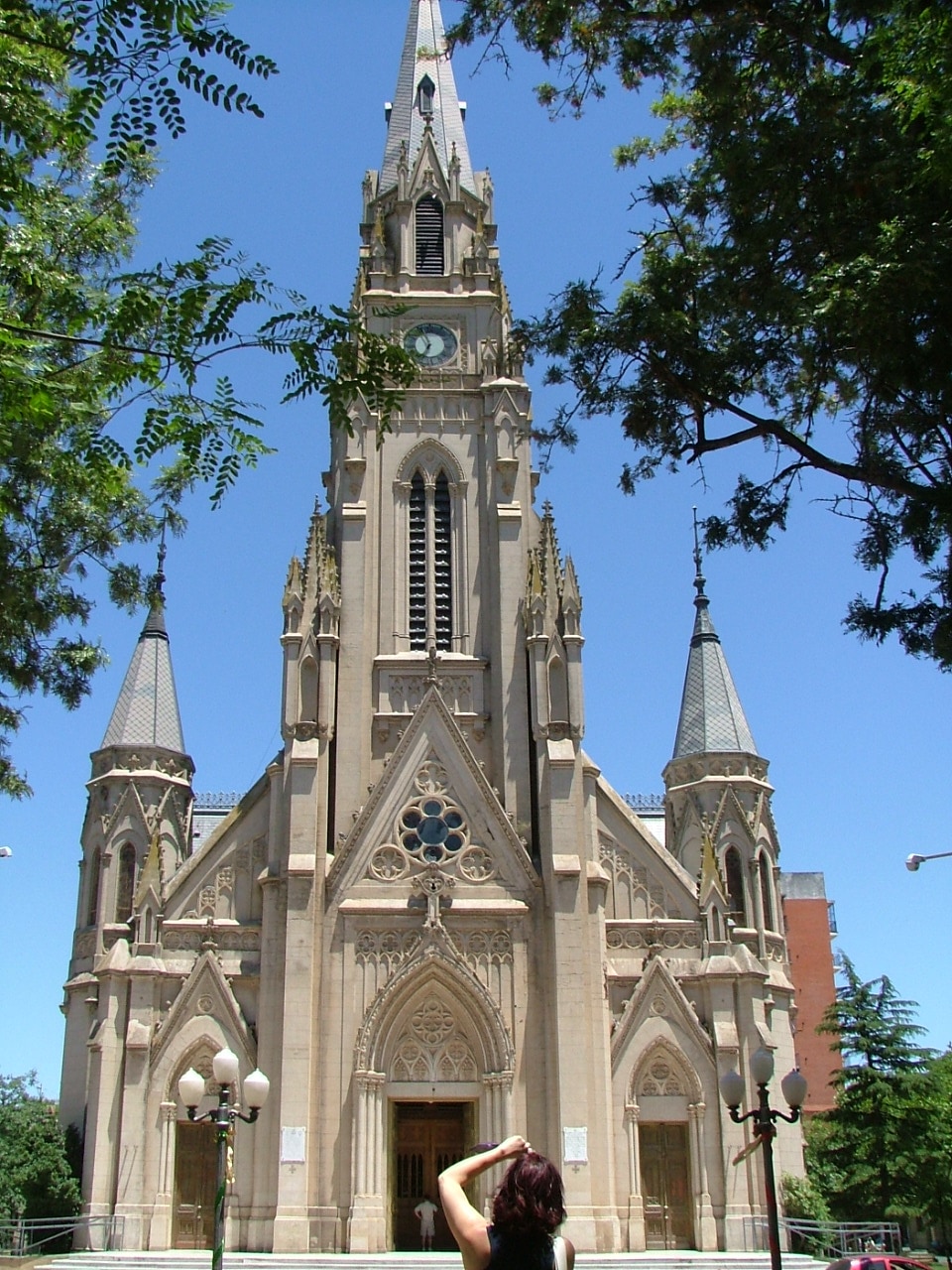
Gothic Revival
About Cathedral Basilica of Our Lady of Mercies
The Cathedral Basilica of Our Lady of Mercies, known in Spanish as Catedral Basílica de Mercedes-Luján, is a prominent Catholic church located in Mercedes, Buenos Aires Province, Argentina. It holds the distinction of being both a cathedral and a minor basilica, serving as the ecclesiastical seat for the Archdiocese of Mercedes-Luján.
History and Architecture
Construction of the basilica was completed in 1904, and it was built in the Gothic Revival style. This architectural approach emphasizes the dramatic verticality and ornate detailing characteristic of Gothic cathedrals, adapted for a later period. The building's historical significance was formally recognized in 2010 when it was declared a National Historic Landmark.
Religious and Benefactor Significance
The basilica is dedicated to Our Lady of Mercy, a significant figure in Catholic devotion. It is notable for housing the remains of Don Saturnino Unzué and Doña Inés Unzué Dorrego, who were the principal benefactors responsible for its construction and endowment. Their contribution underscores the deep connection between prominent families and the development of religious institutions in the region.
Source: Wikipedia ↗
Frequently Asked Questions
What is the Cathedral Basilica of Our Lady of Mercies?
It is a Catholic cathedral and minor basilica located in Mercedes, Buenos Aires Province, Argentina. It is the principal church for the Archdiocese of Mercedes-Luján.
When was the basilica built and in what style?
The basilica was constructed in 1904. Its architectural style is Gothic Revival.
What is the religious significance of the basilica?
It is dedicated to Our Lady of Mercy and serves as the seat of the Archdiocese of Mercedes-Luján, making it a central religious site for the region.
What historical designation does the basilica hold?
In 2010, the building was declared a National Historic Landmark, recognizing its historical and architectural importance.
Who is buried in the basilica?
The remains of Don Saturnino Unzué and Doña Inés Unzué Dorrego, who were the main benefactors of the basilica, are interred within its structure.
Related Basilicas

Our Lady of Luján National Basilica
The National Basilica of Our Lady of Luján is a prominent Catholic church located in Luján, Buenos Aires, Argentina. Dedicated to Our Lady of Luján, the patron saint of Argentina, it is a significant pilgrimage site, hosting an annual event that draws thousands of faithful. The basilica is a testament to Neogothic architecture, constructed over several decades in the late 19th and early 20th centuries.

Basilica of the Mother of God of Mercy
The Basilica of Our Lady of Mercy, also known as Basílica de la Mercè in Catalan and Basílica de la Merced in Spanish, is a notable Baroque basilica located in Barcelona, Catalonia. It holds significant religious importance as it is dedicated to Our Lady of Mercy, the patron saint of Barcelona since 1687. The present structure, built between 1765 and 1775, was recognized as a minor basilica in 1918 by Pope Benedict XV.

Cathedral Basilica of Our Lady of the Valley
The Catedral Basílica de Nuestra Señora del Valle, located in San Fernando del Valle de Catamarca, Argentina, is a significant religious edifice dedicated to the Virgen del Valle. Its architecture features a nave flanked by two chapels, adorned with marble mosaic floors and a Carrara marble altar, presenting a notable example of religious architecture in the region.