
Mission Basilica San Buenaventura
United States·Ventura·Archdiocese of Los Angeles
The Mission Basilica San Buenaventura, originally Mission San Buenaventura, is a historic Catholic parish and basilica located in Ventura, California. Founded in 1782 by Junípero Serra, it was the ninth Spanish mission established in Alta California and the last one he personally dedicated. In 2020, Pope Francis elevated the church to the status of a minor basilica, recognizing its significance in Catholic history.
Key Facts
- ›Founded on March 31, 1782, by Junípero Serra, it was the ninth Spanish mission in Alta California and the last founded by Serra.
- ›Named after St. Bonaventure, a 13th-century Franciscan saint and Doctor of the Church.
- ›The first church, built in 1793, was destroyed by fire; a permanent replacement was not completed until 1812.
- ›The mission was secularized by the Mexican government in 1834 and later illegally sold.
- ›President Abraham Lincoln proclaimed its return to the Catholic Church in 1862.
- ›Elevated to minor basilica status by Pope Francis on June 9, 2020.
St. Bonaventure
Order of Friars Minor, Franciscans
About Mission Basilica San Buenaventura
Mission Basilica San Buenaventura, originally known as Mission San Buenaventura, is a significant Catholic parish and basilica located in the city of Ventura, California. Founded on March 31, 1782, by the venerable Franciscan friar Junípero Serra, it holds the distinction of being the ninth Spanish mission established in Alta California and the final one personally dedicated by Serra during his lifetime. Its founding was delayed from its planned 1770 date due to a scarcity of necessary military escorts.
History and Significance
The mission is named in honor of St. Bonaventure, a celebrated 13th-century Franciscan saint, who was a key leader of the Order and a Doctor of the Church. The mission's history is marked by several significant events. The first church was destroyed by fire in 1793, and a permanent replacement was not completed until 1812. The mission also endured challenges from earthquakes, a seismic sea wave in 1812, and an attempted attack by Argentine pirate Hippolyte de Bouchard in 1818. Following Mexican independence, the mission was secularized in 1834 and later illegally sold, though its church, clergy residence, and cemetery were eventually returned to the Catholic Church by presidential proclamation in 1862.
Significant restorations and modernizations have occurred over the centuries. A major restoration in 1956–1957 aimed to return the church's windows to their original size and uncover the ceiling and floor. In December 1976, the church was solemnly consecrated, and in 1982, the mission celebrated its bicentennial.
Recent Recognition
In a notable recognition of its historical and religious importance, Pope Francis elevated the Mission Basilica San Buenaventura to the status of a minor basilica on June 9, 2020. The official proclamation was made by Archbishop José Gómez of Los Angeles on July 15, 2020, the feast day of its patron saint, St. Bonaventure. This elevation reflects the church's enduring role within the Catholic Church and its historical legacy.
Description and Legacy
Today, Mission Basilica San Buenaventura primarily consists of its church and garden. A small museum within the mission displays Chumash Indian artifacts and items from the mission era. The church remains an active Catholic parish, ministering to approximately 2,000 families, with services continuing to be held within its historic walls. The mission's location in downtown Ventura has allowed the center of business and commerce to remain at its original site, a rarity among California missions.
Source: Wikipedia ↗
Frequently Asked Questions
When was Mission Basilica San Buenaventura founded?
Mission Basilica San Buenaventura was founded on March 31, 1782. This date marked the ninth Spanish mission established in Alta California.
Who founded Mission Basilica San Buenaventura?
The mission was founded by the Franciscan friar Junípero Serra. It was the last of the California missions that he personally dedicated during his lifetime.
What is the significance of the name San Buenaventura?
The mission is named after St. Bonaventure, a prominent 13th-century Franciscan saint. He was one of the early leaders of the Order of Friars Minor and is recognized as a Doctor of the Church.
What is the current status of Mission Basilica San Buenaventura?
Mission Basilica San Buenaventura is an active Catholic parish, serving approximately 2,000 families. It was also elevated to the status of a minor basilica by Pope Francis in 2020.
What remains of the original mission?
Today, only the church and its garden remain of the original mission. The church continues to function as an active parish church.
What notable features were part of the mission's history?
The mission community constructed an extensive aqueduct system between 1805 and 1815, utilizing Chumash labor, to supply water for flourishing orchards and gardens. The mission also housed five bells, some of which were borrowed from Mission Santa Barbara and never returned.
Related Basilicas
Basilica of St Fidelis
The Basilica of St. Fidelis, also known as the Cathedral of the Plains, is a Romanesque-style Catholic parish church located in Victoria, Kansas. It was constructed between 1908 and 1911 and was elevated to the status of a minor basilica in 2014. Its impressive architecture and prominent location have made it a significant landmark in western Kansas.
Basilica of the Sacred Heart of Jesus
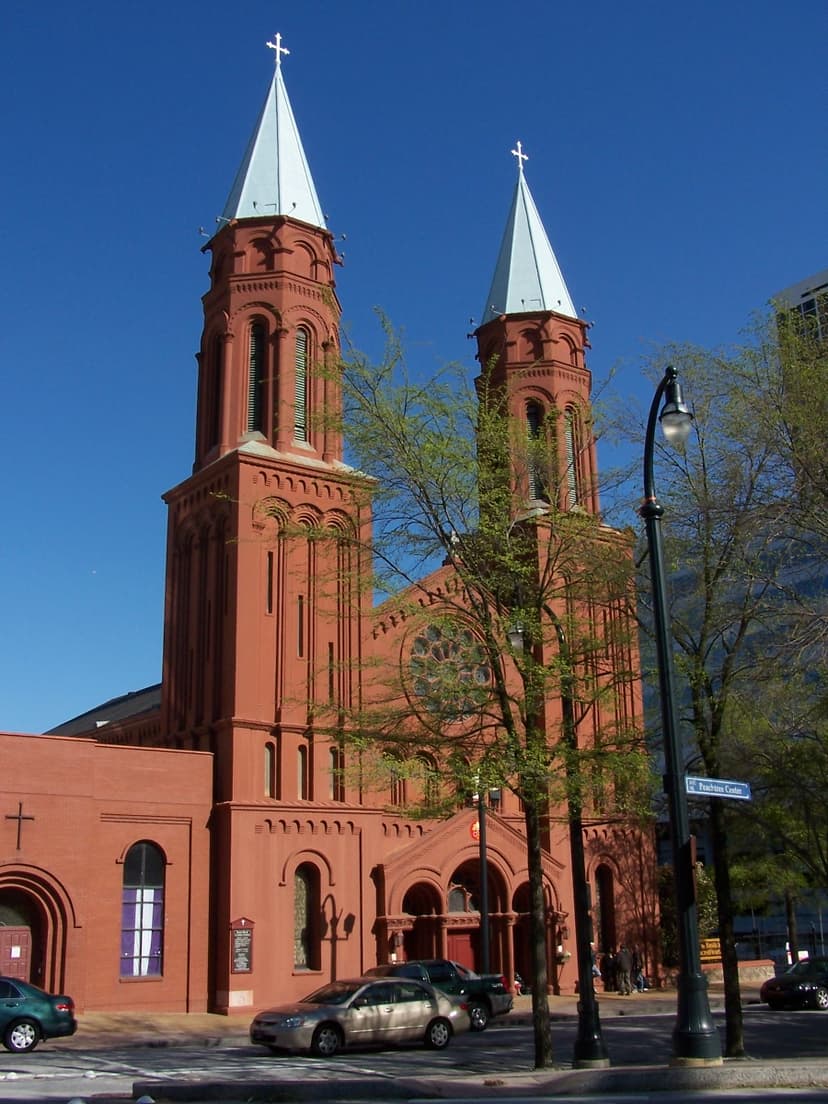
The Basilica of the Sacred Heart of Jesus is a Roman Catholic church located in downtown Atlanta, Georgia. Completed in 1898, it is recognized for its French Romanesque and Romanesque Revival architecture and was designated a minor basilica in 2010. The church holds historical significance as one of the few remaining structures from Atlanta's early 20th-century development and has served its congregation for over a century.
Cathedral Basilica of Our Lady of Peace
The Cathedral Basilica of Our Lady of Peace is the mother church of the Catholic Diocese of Honolulu, Hawaii. Established by early Catholic missionaries, its construction reflects the religious struggles and eventual acceptance of Catholicism in the Hawaiian Kingdom. It holds historical significance as the site of ordinations and ministries of notable figures like Saint Damien de Veuster and Saint Marianne Cope, and is recognized for its unique architectural evolution.