
Cathedral Basilica of Our Lady of Peace
United States·Honolulu·Honolulu
The Cathedral Basilica of Our Lady of Peace is the mother church of the Catholic Diocese of Honolulu, Hawaii. Established by early Catholic missionaries, its construction reflects the religious struggles and eventual acceptance of Catholicism in the Hawaiian Kingdom. It holds historical significance as the site of ordinations and ministries of notable figures like Saint Damien de Veuster and Saint Marianne Cope, and is recognized for its unique architectural evolution.
Key Facts
- ›First Catholic missionaries arrived in Hawaii in 1827, celebrating the first Mass in a grass hut.
- ›The current cathedral was consecrated and dedicated on August 15, 1843.
- ›The church underwent significant architectural changes throughout the late 19th and early 20th centuries, evolving from a simple structure to incorporate European styles.
- ›It was designated a Minor Basilica by Pope Francis on May 10, 2014.
- ›The mortal remains of St. Marianne Cope and a relic of St. Damien de Veuster are enshrined within the basilica.
- ›The Cathedral Basilica of our Lady of Peace is considered the oldest cathedral in continuous use in the United States.
Romanesque Revival
Mortal Remains of St. Marianne Cope, Relic of St. Damien De Veuster
- Congregation of the Sacred Hearts of Jesus and Mary
About Cathedral Basilica of Our Lady of Peace
The Cathedral Basilica of Our Lady of Peace stands as the mother church and cathedral of the Catholic Diocese of Honolulu in Hawaii. Its history is deeply rooted in the early struggles and eventual establishment of Catholicism in the Hawaiian Kingdom, serving as a significant symbol of religious tolerance and growth.
Early History and Persecution
The first Catholic missionaries arrived in Hawaii in 1827, celebrating the first Mass in a humble grass hut. They acquired a royal land grant and erected the first Catholic church on the site of the present-day cathedral in January 1828. However, this early period was marked by significant anti-Catholic persecution between 1829 and 1839, during which priests were expelled, and converts faced torture and imprisonment. The situation dramatically shifted with the Edict of Toleration in June 1839, which guaranteed freedom of religious expression. As reparation, King Kamehameha III provided land and compensation, leading to the construction of a new church dedicated to Our Lady of Peace, whose groundbreaking occurred on July 9, 1840.
Construction and Architectural Evolution
The cornerstone of the new church was laid on August 6, 1840, with construction proceeding through the efforts of native Hawaiian volunteers. The cathedral was consecrated on August 15, 1843. Over the decades, the basilica underwent significant architectural modifications. Bishop Louis Désiré Maigret oversaw the installation of a wooden altar, pulpit, and the first domed bell tower in the Hawaiian Islands. In the 1870s, under his guidance, the roof was raised, a vaulted ceiling with hand-painted gold leaf was added, and stained glass windows were installed, along with a French marble altar. Later renovations introduced a Gothic porch, a concrete bell tower, and a Romanesque revival style with Doric columns and new German stained-glass windows. Post-Vatican II changes included liturgical adaptations and the installation of Koa wood elements, followed by further renovations in the 21st century aimed at restoring earlier appearances and expanding facilities.
Religious and Historical Significance
The Cathedral Basilica of Our Lady of Peace is recognized for its historical importance in Hawaii. It was the site of the ordination of Saint Damien de Veuster to the presbyterate and marked the beginning of Mother Marianne Cope's ministry in Hawaii. The basilica is considered the oldest cathedral in continuous use in the United States and is the oldest existing building in downtown Honolulu. In 2014, it was elevated to the status of a Minor Basilica by Pope Francis, an honor celebrated with an inaugural Mass. The mortal remains of Saint Marianne Cope are enshrined within the basilica, alongside a relic of Saint Damien de Veuster, making it a significant pilgrimage site.
Source: Wikipedia ↗
Frequently Asked Questions
When was the Cathedral Basilica of Our Lady of Peace first established?
The first Catholic missionaries arrived in Hawaii in 1827 and erected the first Catholic church on the site in January 1828. The current cathedral building was consecrated and dedicated on August 15, 1843.
What is the architectural style of the Cathedral Basilica of Our Lady of Peace?
The basilica has evolved architecturally over time. While early plans aimed for Gothic styles, the present-day Romanesque revival style was established in 1926, featuring Doric columns and new stained-glass windows.
What significant religious relics are housed in the basilica?
The mortal remains of Saint Marianne Cope are enshrined within the basilica, and a relic of Saint Damien de Veuster is also present. These are located near the sanctuary.
Why is the Cathedral Basilica of Our Lady of Peace historically significant?
It symbolizes the acceptance of the Catholic Church in Hawaii after periods of persecution and is deeply connected to the ministries of St. Damien de Veuster and St. Marianne Cope. It is also the oldest building in downtown Honolulu and the oldest continuously used cathedral in the United States.
When was the church elevated to the status of a Minor Basilica?
Pope Francis conferred the title of Minor Basilica upon the Cathedral on May 10, 2014. The inaugural Mass celebrating this elevation was held on October 11, 2014.
Who is buried within the Cathedral Basilica of Our Lady of Peace?
The remains of Bishop Louis-Désiré Maigret were discovered and are interred beneath the sanctuary. Bishop John Joseph Scanlan is also buried in an adjacent space, with additional spaces prepared for future prelates.
Related Basilicas
Basilica of Our Lady of Peace
The Basilica of Our Lady of Peace in Yamoussoukro, Ivory Coast, is a Catholic minor basilica recognized by Guinness World Records as the largest church globally. Constructed between 1985 and 1989, its design was inspired by St. Peter's Basilica in Vatican City, featuring a significantly larger dome and extensive stained glass. It was consecrated by Pope John Paul II in 1990.

Cathedral Basilica of the Queen of Peace
The Cathedral Basilica of the Queen of Peace, also known as San Miguel Cathedral, is a significant Catholic church located in San Miguel, El Salvador. Construction began in 1862 with the intention of creating a larger temple to venerate the Virgin Our Lady of Peace, and it officially became a cathedral in 1913. The basilica was declared completed in 1962, a century after its construction commenced.
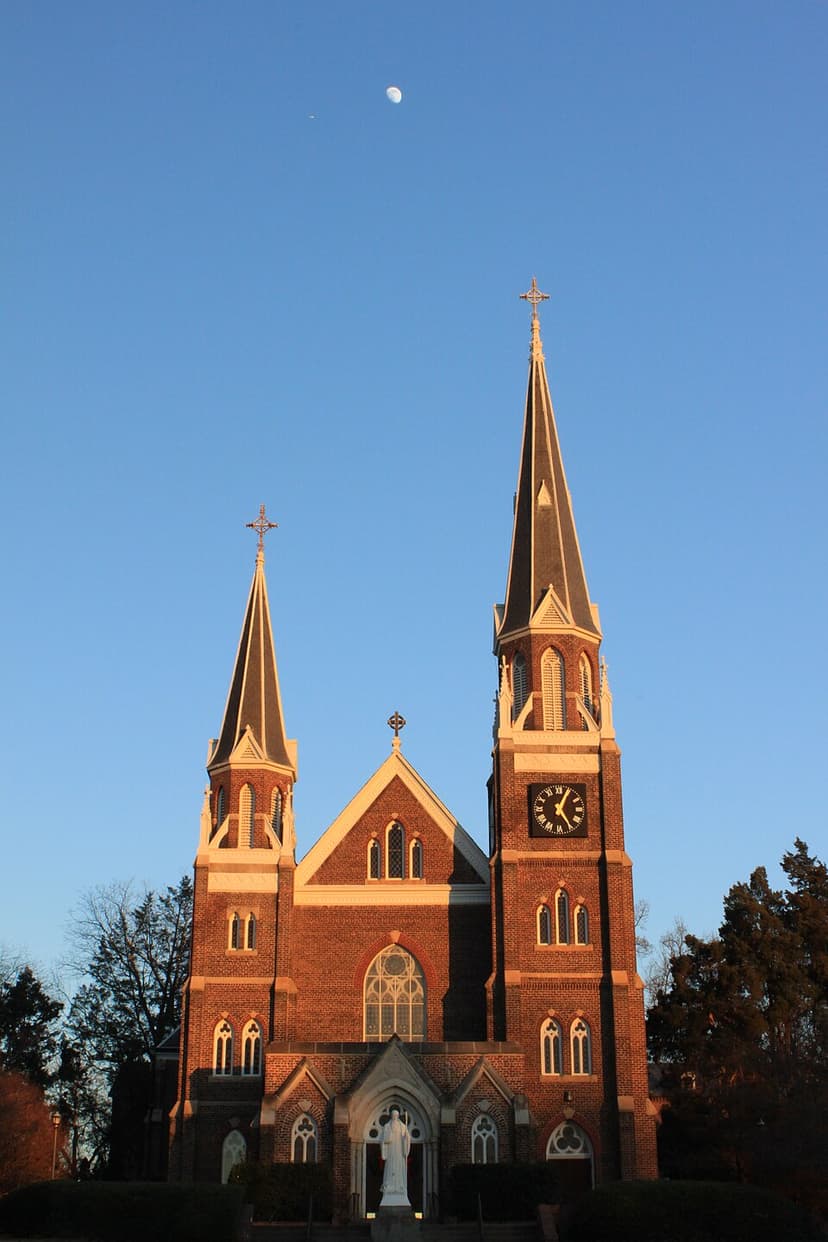
Abbey Basilica of Our Lady Help of Christians (Belmont Abbey)
The Abbey Basilica of Our Lady Help of Christians, located at Belmont Abbey in North Carolina, is a significant Catholic religious site. Originally established as a monastery and educational institution, it was elevated to the status of an abbey and later designated as a minor basilica. The basilica is notable for its Gothic Revival architecture and its historical role in education and religious administration in the region.