
Basilica of the Sacred Heart of Jesus
United States·Atlanta·Archdiocese of Atlanta
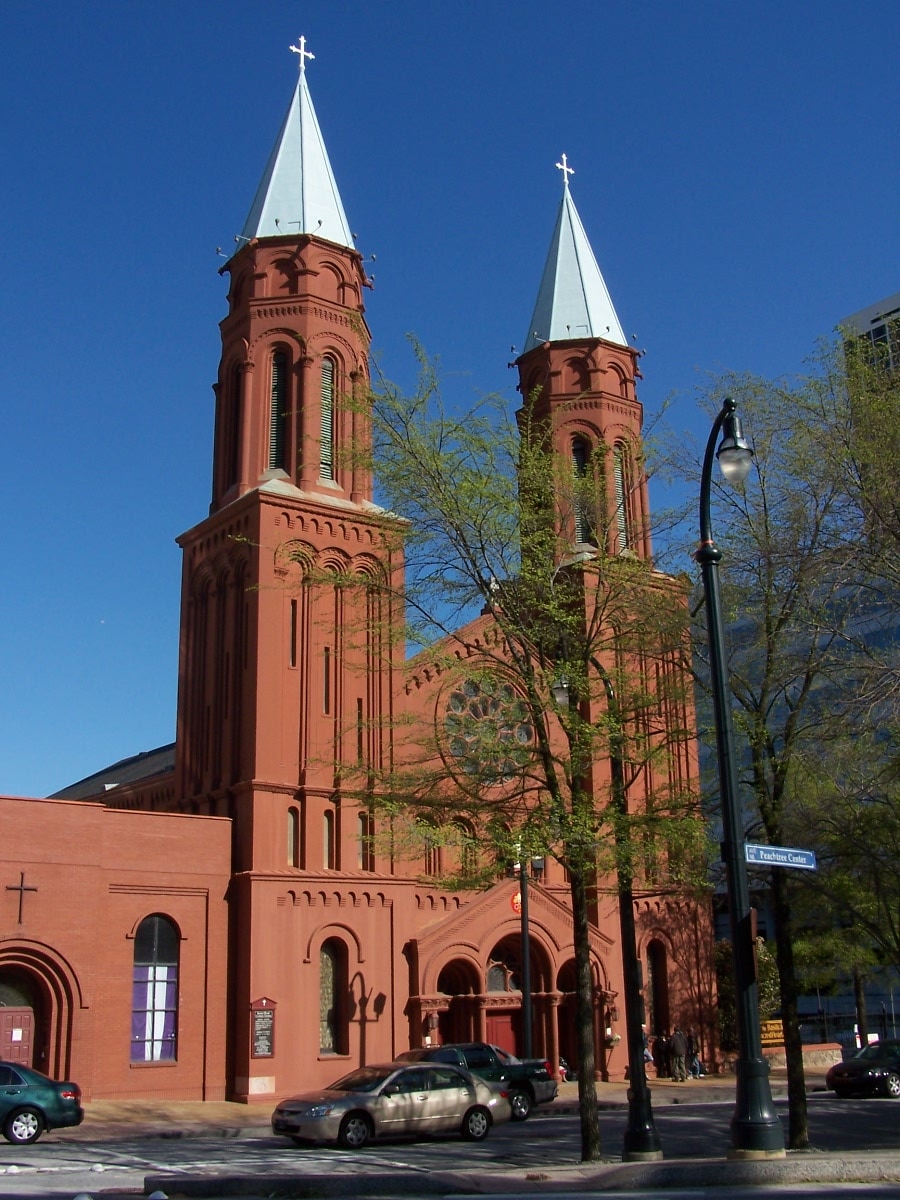
The Basilica of the Sacred Heart of Jesus is a Roman Catholic church located in downtown Atlanta, Georgia. Completed in 1898, it is recognized for its French Romanesque and Romanesque Revival architecture and was designated a minor basilica in 2010. The church holds historical significance as one of the few remaining structures from Atlanta's early 20th-century development and has served its congregation for over a century.
Key Facts
- ›The current building was completed in 1898, designed by Walter T. Downing.
- ›It was designated a minor basilica by the Pope in 2010.
- ›The church is built in the French Romanesque and Romanesque Revival architectural styles.
- ›It was added to the National Register of Historic Places in 1976.
- ›Mother Teresa visited and attended Mass at the church in 1995.
- ›The church traces its origins to the parish of Saints Peter and Paul, established in 1880.
French Romanesque, Romanesque Revival
Marist Fathers, Sisters of Mercy, Sisters of St. Joseph
Walter T. Downing, Pringle and Smith
About Basilica of the Sacred Heart of Jesus
The Basilica of the Sacred Heart of Jesus, located in downtown Atlanta, Georgia, is a significant Roman Catholic church with a rich history and notable architecture. The current structure was completed in 1898 and stands at the intersection of Peachtree Street and Peachtree Center Avenue. Its design, by architect Walter T. Downing, features elements of both French Romanesque and Romanesque Revival styles, making it a distinguished example of religious architecture in the Southern United States.
History and Development
The church's origins trace back to 1880 with the establishment of the parish of Saints Peter and Paul, initially housed in a wooden structure. In 1897, the Marist Fathers assumed responsibility for the parish and initiated the construction of the present-day church. It was dedicated in 1898 as the Church of the Sacred Heart of Jesus, leading to the parish's renaming. The church experienced substantial growth, becoming one of the largest Marist-operated parishes by 1917. In the 1960s, operations were transferred back to the Archdiocese of Atlanta. Despite periods of urban decline in the surrounding area, the church persisted and saw renewed growth in its congregation.
Architectural Significance and Design
The Basilica of the Sacred Heart of Jesus is characterized by its brick and terracotta exterior, adorned with marble ornamentation. The facade includes an arcade with three rounded arch entryways, surmounted by a flat section with a large rose window depicting the Sacred Heart. Flanking the entrance are two octagonal towers, each standing 137 feet tall and topped with belfries and pavilion roofs. Inside, the nave features high arches leading to the sanctuary, which contains a baldachin over the tabernacle. The apse displays a depiction of the Sacred Heart of Jesus, and the arch separating the nave from the sanctuary is adorned with symbolic representations.
Recognition and Status
The church was added to the National Register of Historic Places in 1976, acknowledging its historical importance. In 1990, the government of Atlanta declared it a Landmark Building. A significant milestone in its history occurred in 2010 when it was officially designated a minor basilica by the Holy See, making it the first such designation in the Archdiocese of Atlanta and the state of Georgia. The church continues to be an active place of worship and a cultural landmark, representing a connection to Atlanta's past while serving its present-day community.
Source: Wikipedia ↗
Frequently Asked Questions
When was the Basilica of the Sacred Heart of Jesus built?
The current building for the Basilica of the Sacred Heart of Jesus was completed in 1898. Construction began in September 1897.
What architectural styles are present in the Basilica of the Sacred Heart of Jesus?
The Basilica of the Sacred Heart of Jesus exhibits elements of both French Romanesque and Romanesque Revival architecture. It is noted for its brick and terracotta exterior with marble ornamentation.
What is the significance of the Basilica of the Sacred Heart of Jesus?
The church is significant as one of the few structures from Atlanta's turn of the 20th century that still stands and is in operation. It was designated a minor basilica in 2010, granting it special ecclesiastical privileges.
Who designed the Basilica of the Sacred Heart of Jesus?
The church was designed by Walter T. Downing, an Atlanta-based architect. His design incorporated French Romanesque and Romanesque Revival elements.
When did the Basilica of the Sacred Heart of Jesus become a minor basilica?
The Basilica of the Sacred Heart of Jesus received its designation as a minor basilica in 2010. The process to obtain this status began around 2007.
Related Basilicas
Basilica of the Nativity
The Basilica of the Nativity, located in Bethlehem, West Bank, Palestine, is a profoundly significant Christian pilgrimage site, venerated as the birthplace of Jesus. Commissioned by Emperor Constantine the Great in the 4th century, it stands as the oldest major church in the Holy Land and a continuously used place of Christian worship. Its historical and architectural evolution, marked by reconstructions and additions by Byzantine emperors and Crusaders, underscores its enduring spiritual importance.
Cathedral Shrine of Our Lord and the Virgin of the Miracle
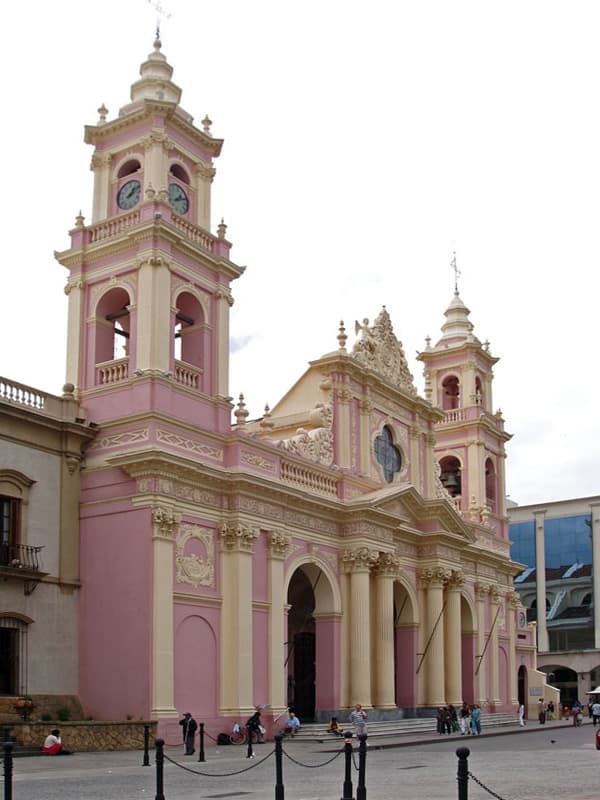
Salta Cathedral, officially the Cathedral Basilica of Salta, is the metropolitan cathedral of the Archbishop of Salta in Argentina. It is dedicated to Jesus Christ as the "Lord of Miracles" and the Blessed Virgin Mary as the "Our Lady of the Miraculous Rosary." The cathedral holds significant religious importance, having received a pontifical coronation for its enshrined images in 1902.
Cathedral of Our Lord Jesus Christ King of the Universe
Landakotskirkja, officially known as the Basilica of Christ the King, is the sole Catholic cathedral in Iceland, located in Reykjavík. Designed by Guðjón Samúelsson and consecrated in 1929, it is a prominent Neo-Gothic landmark in the city.