
Basilica of the Nativity
The Basilica of the Nativity, located in Bethlehem, West Bank, Palestine, is a profoundly significant Christian pilgrimage site, venerated as the birthplace of Jesus. Commissioned by Emperor Constantine the Great in the 4th century, it stands as the oldest major church in the Holy Land and a continuously used place of Christian worship. Its historical and architectural evolution, marked by reconstructions and additions by Byzantine emperors and Crusaders, underscores its enduring spiritual importance.
Key Facts
- ›Commissioned by Emperor Constantine the Great, with construction beginning around 326 AD.
- ›Originally dedicated on May 31, 339 AD, it is the oldest church in the Holy Land.
- ›Rebuilt in the 6th century by Byzantine Emperor Justinian I, with a cruciform transept and three apses.
- ›Repairs and additions were made during the Crusader period, including wall mosaics and paintings.
- ›The site has been managed under the 'Status Quo' agreement since 1852, governing the rights of three religious communities.
- ›Designated a UNESCO World Heritage Site in 2012, it was the first Palestinian site to receive this designation.
Byzantine
the Grotto of the Nativity, Silver Star Marking the Birthplace of Jesus
Catholic, Armenian Apostolic, Greek Orthodox, Franciscan
Constantine the Great, Justinian I, Helena, Makarios of Jerusalem
About Basilica of the Nativity
The Basilica of the Nativity
The Basilica of the Nativity, situated in Bethlehem, West Bank, Palestine, is one of Christianity's most sacred sites, revered globally as the birthplace of Jesus Christ. Its profound spiritual significance is matched by its historical depth, making it the oldest major church in the Holy Land and a continuous site of Christian worship since its inception.
History and Construction
The foundation of the basilica traces back to Emperor Constantine the Great, who commissioned its construction around 326 AD on the traditional site of Jesus' birth, following his mother Helena's visit. The original basilica was dedicated on May 31, 339 AD. It is believed to have been destroyed by fire during the Samaritan revolts of the 6th century, possibly in 529 AD. A subsequent basilica was constructed by Byzantine Emperor Justinian I, who significantly altered the design by adding a cruciform transept with three apses while largely preserving the original basilica's layout, including its nave and side aisles.
Over the centuries, the basilica has undergone numerous repairs and additions, notably during the Crusader period (1099–1187), which saw extensive redecoration, including wall mosaics and paintings, and the addition of bell towers. The surrounding compound has grown to encompass approximately 12,000 square meters, housing three monasteries belonging to Catholic, Armenian Apostolic, and Greek Orthodox communities.
Religious and Administrative Significance
The basilica is central to Christian pilgrimage, with the Grotto of the Nativity beneath it enshrining the precise spot of Jesus' birth. The management of the site is governed by the 'Status Quo,' an agreement first made informal and later codified, which regulates the rights and liturgical use by the three primary Christian communities. Tensions and disputes among these communities have historically been a recurring issue, often requiring intervention to maintain order.
Architectural Evolution and Discoveries
While the Justinianic reconstruction formed the basilica's basic structure, subsequent periods introduced significant changes. The Ottoman period saw the main entrance walled up, creating the 'Door of Humility' to prevent animals from entering. The 19th century brought damage from earthquakes and significant disputes over the possession of sacred artifacts, such as the silver star marking Jesus' birthplace. In the 20th century, a wall separating the nave and choir, erected in 1842, was demolished. Recent restoration efforts, commencing in 2013, have focused on structural repairs, cleaning and conserving art works, and preventing further damage from water leaks, which had led to its placement on UNESCO's List of World Heritage in Danger. Discoveries during these restorations, such as a previously hidden mosaic angel, continue to shed light on the basilica's rich artistic heritage.
World Heritage Status
In 2012, the Church of the Nativity was inscribed as a UNESCO World Heritage Site, marking it as the first Palestinian site to achieve this status. This designation highlights its universal value and the urgent need for its preservation.
Source: Wikipedia ↗
Frequently Asked Questions
Where is the Basilica of the Nativity located?
The Basilica of the Nativity is located in Bethlehem, West Bank, Palestine. It is a central point of pilgrimage for Christians worldwide.
Why is the Basilica of the Nativity significant?
It is considered the birthplace of Jesus Christ and houses the Grotto of the Nativity, a site of immense religious importance. It is also the oldest continuously used place of Christian worship and the oldest major church in the Holy Land.
Who commissioned the original basilica?
The original basilica was commissioned by Emperor Constantine the Great, following his mother Helena's visit to the Holy Land. Construction began around 326 AD.
What is the architectural history of the basilica?
The original Constantinian basilica was built between 330 and 333 AD. It was destroyed by fire and rebuilt in the 6th century by Emperor Justinian I, who largely preserved its original character while adding a cruciform transept.
What is the Status Quo agreement?
The Status Quo is an understanding, official since 1856, that governs the rights and responsibilities of the three main religious communities (Catholic, Armenian Apostolic, and Greek Orthodox) within the basilica.
Is the Basilica of the Nativity a UNESCO World Heritage Site?
Yes, the Church of the Nativity became a UNESCO World Heritage Site in 2012. It was the first Palestinian site to be listed.
Related Basilicas

Basilica of St Stephen
The Basilica of St Stephen, also known as the Church of St. Stephen or Saint-Étienne, is a Catholic church located outside Jerusalem's Old City. An ancient tradition identifies it as the site of Saint Stephen's martyrdom, the deacon mentioned in the Book of Acts.
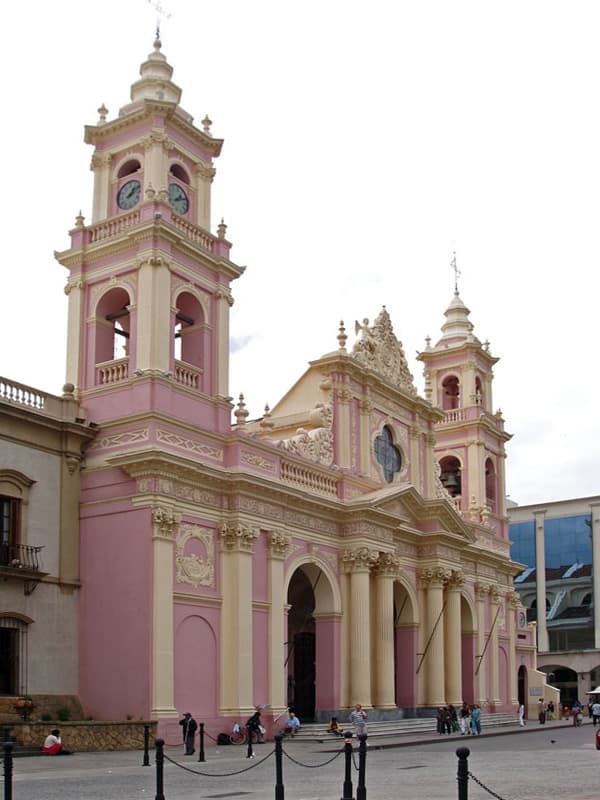
Cathedral Shrine of Our Lord and the Virgin of the Miracle
Salta Cathedral, officially the Cathedral Basilica of Salta, is the metropolitan cathedral of the Archbishop of Salta in Argentina. It is dedicated to Jesus Christ as the "Lord of Miracles" and the Blessed Virgin Mary as the "Our Lady of the Miraculous Rosary." The cathedral holds significant religious importance, having received a pontifical coronation for its enshrined images in 1902.
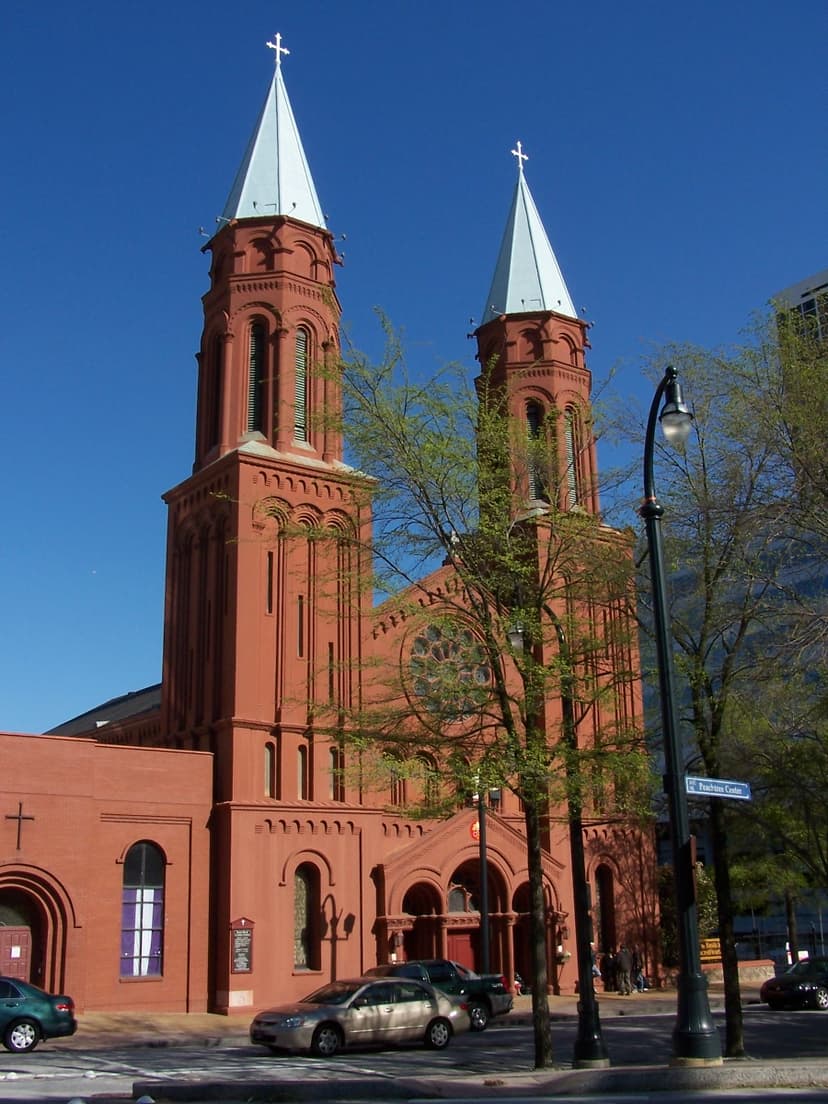
Basilica of the Sacred Heart of Jesus
The Basilica of the Sacred Heart of Jesus is a Roman Catholic church located in downtown Atlanta, Georgia. Completed in 1898, it is recognized for its French Romanesque and Romanesque Revival architecture and was designated a minor basilica in 2010. The church holds historical significance as one of the few remaining structures from Atlanta's early 20th-century development and has served its congregation for over a century.