
Metropolitan Cathedral Basilica of the Good Lord Jesus
Brazil·Cuiabá·Archdiocese of Cuiabá
The Metropolitan Cathedral Basilica of the Good Lord Jesus in Cuiabá, Brazil, stands as a significant religious edifice, built in reinforced concrete to replace its 18th-century predecessor. It was designated a minor basilica in 1974 and serves as the seat of the Archdiocese of Cuiabá.
Key Facts
- ›The first cathedral, dedicated to the Good Lord Jesus, was built in 1723 and rebuilt multiple times before its demolition in 1968.
- ›The current cathedral was constructed of reinforced concrete and inaugurated in 1973.
- ›It was declared a minor basilica on November 15, 1974.
- ›The cathedral has a seating capacity of 800 people in its main nave.
- ›Important 18th-century religious images, including the Good Lord Jesus and the Immaculate Conception, are housed within the current structure.
- ›The crypt contains the remains of notable figures from Mato Grosso's history.

Modern
Good Lord Jesus
Image of the Good Lord Jesus, Image of the Immaculate Conception, Crucifix On the Bishop's Chair
About Metropolitan Cathedral Basilica of the Good Lord Jesus
The Metropolitan Cathedral Basilica of the Good Lord Jesus, also known as Cuiabá Cathedral, is a prominent Catholic church located in Cuiabá, the capital city of Mato Grosso, Brazil. It holds the status of a minor basilica and serves as the cathedral for the Archdiocese of Cuiabá.
History and Construction
The original mother church of Cuiabá, dedicated to the Good Lord Jesus, was first constructed in 1723. This initial structure, made of wattle and daub, underwent rebuilding in rammed earth between 1739 and 1740. Over the centuries, it saw further modifications, including alterations to its tower and facade in 1868 and the addition of a second tower in the 1920s. This first cathedral became the seat of the prelature in 1745 and was elevated to the Diocese of Cuiabá in 1826, eventually becoming an archdiocese on April 5, 1910.
In the 1960s, influenced by modernization efforts, the decision was made to demolish the old cathedral, a move widely criticized due to the extensive use of dynamite and the symbolic loss it represented for the city. The current cathedral was constructed in its place using reinforced concrete. Construction began at the chancel even before the complete demolition of the old church, and the new building was inaugurated on May 24, 1973.
Basilica Designation and Features
The Metropolitan Cathedral Basilica of the Good Lord Jesus was officially declared a minor basilica on November 15, 1974. The contemporary architectural design features a large nave on the ground level with a seating capacity of 800 people. Within the cathedral are significant 18th-century religious artifacts, including the image of the Good Lord Jesus, the image of the Immaculate Conception, and the crucifix that adorns the bishop's chair. The upper floors of the building are utilized for various parish functions, including a laundry and meeting rooms, and also serve as a parish house. The basement houses a crypt containing the remains of many notable figures from Mato Grosso's history, such as the bandeirante Pascoal Moreira Cabral Leme and several Archbishops of Cuiabá.
Source: Wikipedia ↗
Frequently Asked Questions
What is the history of the Metropolitan Cathedral Basilica of the Good Lord Jesus?
The first cathedral was established in 1723 and underwent several reconstructions. The current reinforced concrete structure replaced the original after its demolition in 1968 and was inaugurated in 1973.
When was the current cathedral designated as a basilica?
The current cathedral was declared a minor basilica on November 15, 1974.
What is the capacity of the cathedral?
The main nave of the cathedral has a seating capacity of 800 people.
What notable relics or images are found in the cathedral?
The cathedral houses 18th-century images of the Good Lord Jesus and the Immaculate Conception, as well as a crucifix on the bishop's chair.
Who is buried in the cathedral's crypt?
The crypt holds the remains of numerous historical figures from Mato Grosso, including Pascoal Moreira Cabral Leme, Miguel Sutil de Oliveira, and several Archbishops of Cuiabá.
Related Basilicas
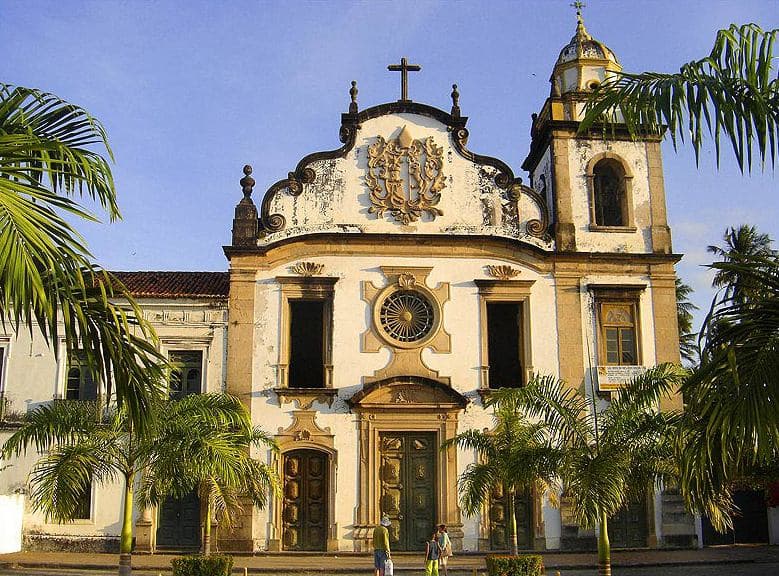
Abbatial Basilica of the Monastery of St Benedict
The Basilica and Monastery of St. Benedict is a significant Baroque architectural complex in Olinda, Pernambuco, Brazil. It is part of the historic center of the city, which is recognized as a UNESCO World Heritage Site. The basilica holds importance for its historical roots in Portuguese colonization and its elevated status as a Minor Basilica.

Basilica of Our Lady of Nazareth of Exile
The Basilica of Our Lady of Nazareth of Exile, also known as the Basilica of Belém, is a minor basilica of the Catholic Church located in Belém, Pará, Brazil. Construction began in 1909 on the site where the image of the Virgin of Nazareth was discovered. The basilica is notable for its Neoclassical design, commissioned by Barnabite priests and inspired by the Basilica of Saint Paul Outside the Walls in Rome, though it controversially lacked steeples in its original plan.

Basilica of the Eternal Divine Father
The Basilica of the Eternal Divine Father, also known as the Basilica of the Divine Eternal Father, is a Catholic shrine and minor basilica located in Trindade, Goiás, Brazil. It holds the distinction of being the world's only minor basilica dedicated to God the Father. The basilica's origins trace back to a small chapel built around 1848, evolving over time through several structures to the current edifice, which was elevated to minor basilica status by Pope Benedict XVI in 2006.