
Cathedral of St Mary
The Cathedral of Braga, also known as Sé de Braga, is a Roman Catholic church in Braga, Portugal, significant for its long history and artistic importance. It serves as the seat of the Archdiocese of Braga and the Primate Archbishop of Portugal and Spain, making it a central religious and historical edifice in the country.
Key Facts
- ›The Diocese of Braga dates back to the 3rd century AD, one of the oldest on the Iberian Peninsula.
- ›Construction of the current cathedral began with Bishop Pedro around 1071, consecrated in 1089.
- ›It was designated an archbishopric in 1107, influencing a large region in Northwestern Iberia.
- ›The cathedral is a blend of architectural styles, including Romanesque, Gothic, Manueline, and Baroque.
- ›It houses the tombs of prominent figures, including Count Henry, Countess Theresa, and Crown Prince D. Afonso.
- ›The Cathedral of Braga has been a National Monument since 1910.
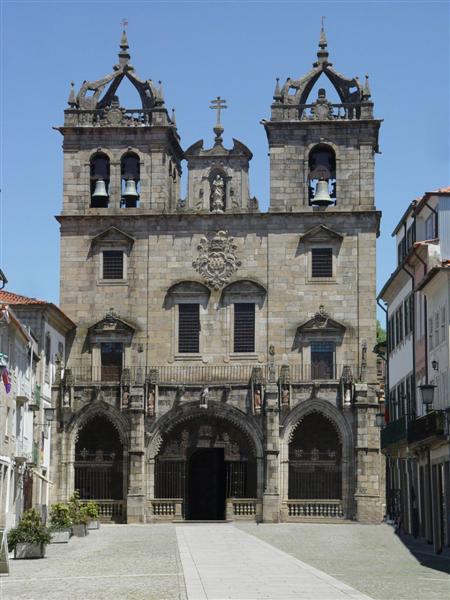
Romanesque, Gothic, Manueline, Baroque, Moorish
Remains of Saint Peter of Rates
JoãO De Castilho
About Cathedral of St Mary
Cathedral of Braga
The Cathedral of Braga (Portuguese: Sé de Braga) stands as one of Portugal's most significant historical and artistic buildings, located in the northern city of Braga. It holds the distinction of being the seat of the Archdiocese of Braga and the Primate Archbishop of Portugal and Spain, underscoring its profound religious importance.
History and Religious Significance
The Diocese of Braga traces its origins to the 3rd century AD, making it one of the oldest on the Iberian Peninsula and a crucial center for the Christianization of Gallaecia (Northwestern Iberia). Tradition holds that Saint Peter of Rates was the first bishop, appointed by Saint James the Great between 45 and 60 AD. During the 6th century, Bishop Martin of Dumio converted the Suebi to Catholicism, further cementing Braga's religious influence.
After a period of diminished importance and the loss of its bishopric during Visigoth and Moorish rule, the bishopric was restored around 1071. Bishop Pedro initiated the construction of the current cathedral, with its eastern chapels consecrated in 1089. In 1107, Braga was elevated to an archbishopric, with the Archbishop of Braga holding authority over a vast territory encompassing much of modern Portugal and parts of Galicia, Spain. The Cathedral of Braga predates the founding of Portugal by several decades and played a vital role in the nation's formation, notably through the advocacy of Archbishop D. Paio Mendes, who supported the cause of Afonso Henriques, the first King of Portugal, and helped secure papal recognition of Portugal's independence.
Architectural Evolution
The cathedral's architectural narrative is one of continuous evolution, resulting in a rich amalgamation of styles. While its foundations lie in the Burgundian Romanesque style, influenced by churches like Cluny, it has been extensively modified over centuries. Key additions include a late Gothic entrance gallery (galilee) built between 1486 and 1501, a Manueline main chapel reconstructed by João de Castilho in 1509, and numerous Baroque alterations to the towers, chapels, and interior decoration. The nave was largely restored to its Romanesque character in the 20th century.
Notable Features and Personalities
Internally, the cathedral features three aisles with a wooden roof, a transept, and five chapels in the apse. The main chapel is Manueline, while others display Baroque and Neoclassical designs. The Chapel of the Glory, built between 1326 and 1348, houses a magnificent tomb for Archbishop Gonçalo Pereira. The Chapel of the Kings contains the tombs of Count Henry and Countess Theresa. The cathedral also preserves the tomb of Crown Prince D. Afonso and features impressive Baroque choir stalls and organs.
The Cathedral of Braga has been a focal point for many important historical and religious figures, including Saint Peter of Rates, Saint Martin of Braga, Paulus Orosius, Count Henry, Countess Theresa, Antipope Gregory VIII, Pope John XXI, Archbishop D. Diogo de Sousa, Saint Ovidius, and Archbishop D. Lourenço Vicente. The Cathedral has been classified as a National Monument since 1910.
Source: Wikipedia ↗
Frequently Asked Questions
When was the Cathedral of Braga built?
Construction of the current cathedral began around 1071 under Bishop Pedro, with its eastern chapels consecrated in 1089. Significant building and modifications continued until the middle of the 13th century and through later centuries.
What is the architectural style of Braga Cathedral?
Braga Cathedral exhibits a mix of styles due to its long construction history. It features Romanesque origins, with later additions in Gothic, Moorish, Manueline, and Baroque styles.
What is the religious significance of the Cathedral of Braga?
It is the seat of the Archdiocese of Braga and the Primate Archbishop of Portugal and Spain, making it a pivotal religious center. It was historically important for the Christianization of Gallaecia and played a role in the formation of Portugal's independence.
Are there any notable relics or tombs in the Cathedral of Braga?
The cathedral is the burial place for several important figures, including Count Henry and Countess Theresa, parents of the first Portuguese King. It also holds the tomb of Crown Prince D. Afonso and a chapel dedicated to Saint Peter of Rates, whose remains are traditionally kept there.
What historical events are associated with Braga Cathedral?
The cathedral's history is linked to the early Christianization of the Iberian Peninsula, the Suebi Kingdom's conversion to Catholicism, and its role in the establishment of Portugal's independence. It was also rebuilt and modified over centuries, with significant events like earthquakes impacting its structure.
Related Basilicas

Sanctuary of Bom Jesus do Monte
The Sanctuary of Bom Jesus do Monte is a significant Portuguese Catholic shrine located in Tenões, near Braga. It is renowned for its monumental Baroque stairway, which climbs 116 meters and features chapels depicting the Passion of Christ and fountains representing the Five Senses and Three Theological Virtues. The site is an important Christian pilgrimage destination and a major tourist attraction, recognized for its unique theological program and influential Baroque and Neoclassic architecture.
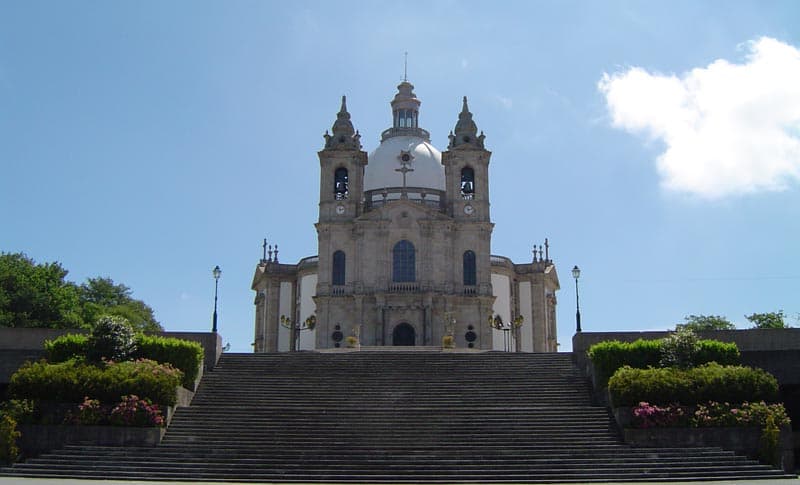
Basilica of Our Lady of Sameiro, Espinho
The Sanctuary of Our Lady of Sameiro (Santuário de Nossa Senhora do Sameiro) is a significant Marian shrine located in Braga, Portugal. It is one of the most frequented sites of Marian devotion in the country, second only in size to the Sanctuary of Fátima, and offers a renowned panoramic view of the city and valley from its hilltop location.
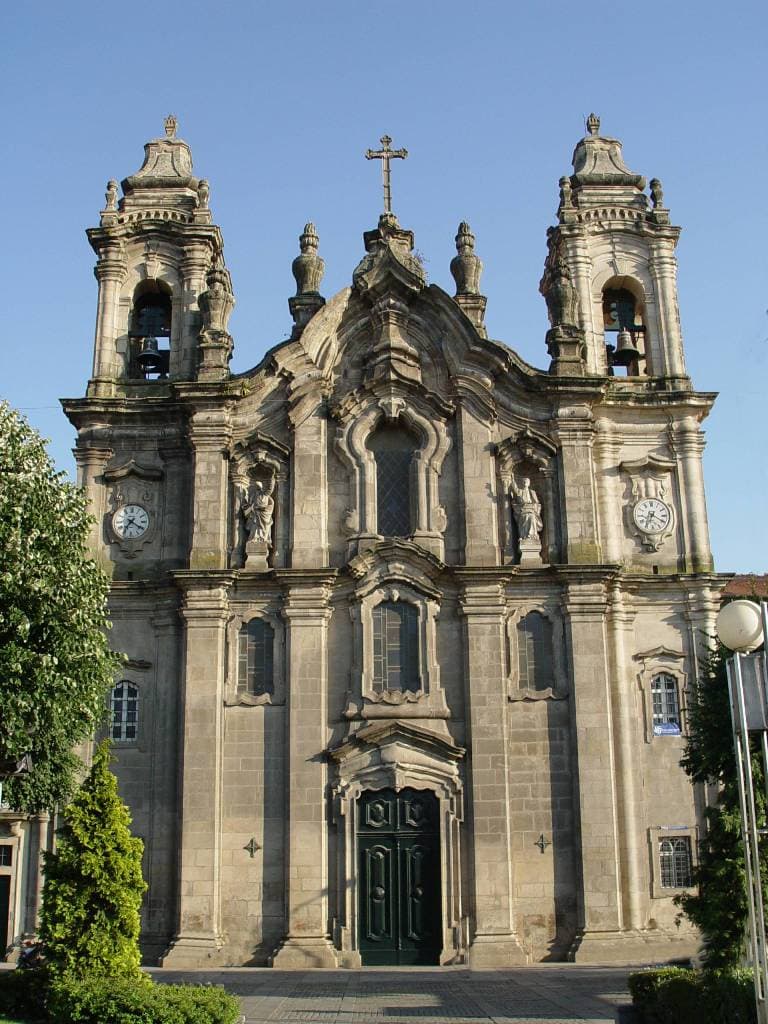
Congregados Basilica
The Congregados Basilica, also known as Basílica dos Congregados, is an 18th-century Baroque church located in Braga, Portugal. Designed by architect André Soares, it is a significant religious and architectural landmark in the city.