
Sanctuary of Bom Jesus do Monte
The Sanctuary of Bom Jesus do Monte is a significant Portuguese Catholic shrine located in Tenões, near Braga. It is renowned for its monumental Baroque stairway, which climbs 116 meters and features chapels depicting the Passion of Christ and fountains representing the Five Senses and Three Theological Virtues. The site is an important Christian pilgrimage destination and a major tourist attraction, recognized for its unique theological program and influential Baroque and Neoclassic architecture.
Key Facts
- ›The sanctuary features a monumental Baroque stairway with 583 steps, climbing 116 meters.
- ›The stairway is divided into three segments dedicated to the Via Crucis, the five Senses, and the three Theological Virtues.
- ›Each sense is represented by a fountain, and each virtue is associated with its own fountain.
- ›The current church was designed in a Neoclassic style by architect Carlos Amarante and consecrated in 1834.
- ›The Bom Jesus do Monte Funicular, the first in the Iberian Peninsula, was built in 1882 to facilitate access to the sanctuary.
- ›It was inscribed as a UNESCO World Heritage Site on July 7, 2019.

Baroque, Neoclassic
Manuel Pinto Vilalobos, André Soares, Carlos Amarante
About Sanctuary of Bom Jesus do Monte
The Sanctuary of Bom Jesus do Monte, meaning 'Good Jesus of the Mount,' is a significant Portuguese Catholic shrine situated in Tenões, near the city of Braga in northern Portugal. It is celebrated as a prime example of a Christian pilgrimage site, distinguished by its monumental Baroque stairway that ascends 116 meters (381 feet). This impressive staircase and the surrounding sanctuary are a vital tourist attraction for Braga and were inscribed as a UNESCO World Heritage Site on July 7, 2019.
History and Development
While the Bom Jesus hill may have been a site of religious devotion since antiquity, the first chapel dedicated to the Holy Cross dates from 1373. This structure underwent rebuilding in the 15th and 16th centuries. By 1629, a pilgrimage church dedicated to Bom Jesus was constructed, accompanied by six chapels focused on the Passion of Christ.
The construction of the current sanctuary commenced in 1722 under the patronage of Archbishop Rodrigo de Moura Telles. His initiative led to the completion of the initial stairway segment, which features chapels adorned with terra cotta sculptures illustrating the Passion of Christ. He also sponsored the subsequent zigzagging stairway dedicated to the Five Senses, with each sense represented by a distinct fountain. A Baroque church, designed by architect Manuel Pinto Vilalobos, was built at the terminus of this section around 1725.
Throughout the 18th century, work continued on the chapels and stairways. In the 1760s, three octagonal chapels were erected in the Terreiro dos Evangelistas, depicting post-Crucifixion events, with their exterior design attributed to Braga architect André Soares. These chapels are surrounded by four Baroque fountains featuring statues of the Evangelists.
Archbishop Gaspar de Bragança initiated the final phase around 1781, adding a third zigzag stairway dedicated to the Three Theological Virtues (Faith, Hope, and Charity), each accompanied by a fountain. The old church was demolished to make way for a new one, designed in a Neoclassic style by architect Carlos Amarante. This new church, begun in 1784, featured an interior decorated in the early 19th century and was consecrated in 1834, with its main altarpiece dedicated to the Crucifixion. The area around the church and stairway was transformed into a park in the 19th century. To enhance accessibility, the Bom Jesus funicular, the first of its kind in the Iberian Peninsula, was built in 1882, connecting Braga to the hill.
Religious and Architectural Significance
The Sanctuary of Bom Jesus do Monte's design, particularly its Baroque character amplified by the zigzag stairways, served as an influence for other sites in Portugal and Brazil. As pilgrims ascended, traditionally encouraged to do so on their knees, they engaged with a theological narrative that juxtaposed the material world's senses with spiritual virtues, while simultaneously contemplating the scenes of Christ's Passion. The journey culminated at the church atop the hill, symbolizing the temple of God. The numerous fountains along the stairways further conveyed the concept of the faithful's purification.
The new church, constructed between 1784 and 1834 by Carlos Amarante, is recognized as one of Portugal's pioneering Neoclassic churches. In recognition of its spiritual importance, the church was elevated to the status of a Minor Basilica on July 5, 2015, by Pope Francis.
Source: Wikipedia ↗
Frequently Asked Questions
What is the significance of the Sanctuary of Bom Jesus do Monte?
The sanctuary is a notable Christian pilgrimage site and tourist attraction, famous for its monumental Baroque stairway. It presents a theological program to pilgrims, contrasting the senses of the material world with the virtues of the spirit while depicting scenes of the Passion of Christ.
What is the history of the Sanctuary of Bom Jesus do Monte?
The site has a history of religious devotion dating back possibly to antiquity. A chapel was first indicated in 1373, rebuilt in the 15th and 16th centuries, and a pilgrimage church was built in 1629. The present sanctuary's construction began in 1722 and extended through the 18th and early 19th centuries.
What architectural styles are present at the Sanctuary of Bom Jesus do Monte?
The sanctuary prominently features Baroque architecture, particularly in its monumental stairway and the exterior design of some chapels attributed to André Soares. The new church, built from 1784 to 1834, exhibits a Neoclassic design by Carlos Amarante.
What are the main features of the stairway at Bom Jesus do Monte?
The 583-step stairway is divided into three sections. The first depicts the Via Crucis with terra cotta sculptures, the second represents the Five Senses with fountains, and the third symbolizes the Three Theological Virtues with fountains.
When was the Sanctuary of Bom Jesus do Monte designated a UNESCO World Heritage Site?
The Sanctuary of Bom Jesus do Monte was inscribed as a UNESCO World Heritage Site on July 7, 2019.
Is the Sanctuary of Bom Jesus do Monte a Minor Basilica?
Yes, the church was elevated to Minor Basilica status on July 5, 2015, by Pope Francis.
Related Basilicas
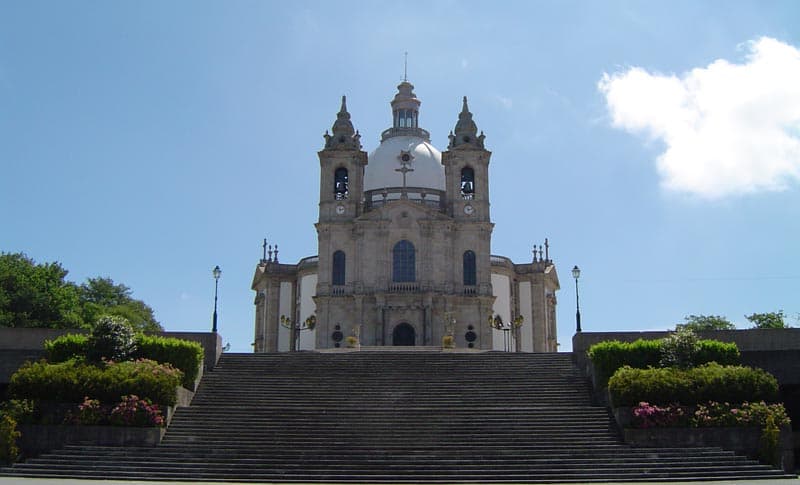
Basilica of Our Lady of Sameiro, Espinho
The Sanctuary of Our Lady of Sameiro (Santuário de Nossa Senhora do Sameiro) is a significant Marian shrine located in Braga, Portugal. It is one of the most frequented sites of Marian devotion in the country, second only in size to the Sanctuary of Fátima, and offers a renowned panoramic view of the city and valley from its hilltop location.
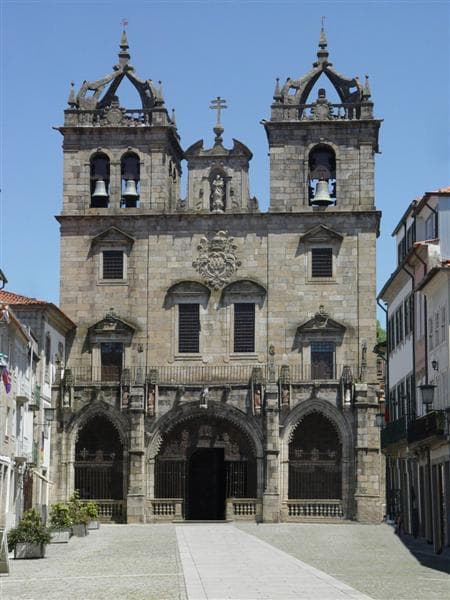
Cathedral of St Mary
The Cathedral of Braga, also known as Sé de Braga, is a Roman Catholic church in Braga, Portugal, significant for its long history and artistic importance. It serves as the seat of the Archdiocese of Braga and the Primate Archbishop of Portugal and Spain, making it a central religious and historical edifice in the country.
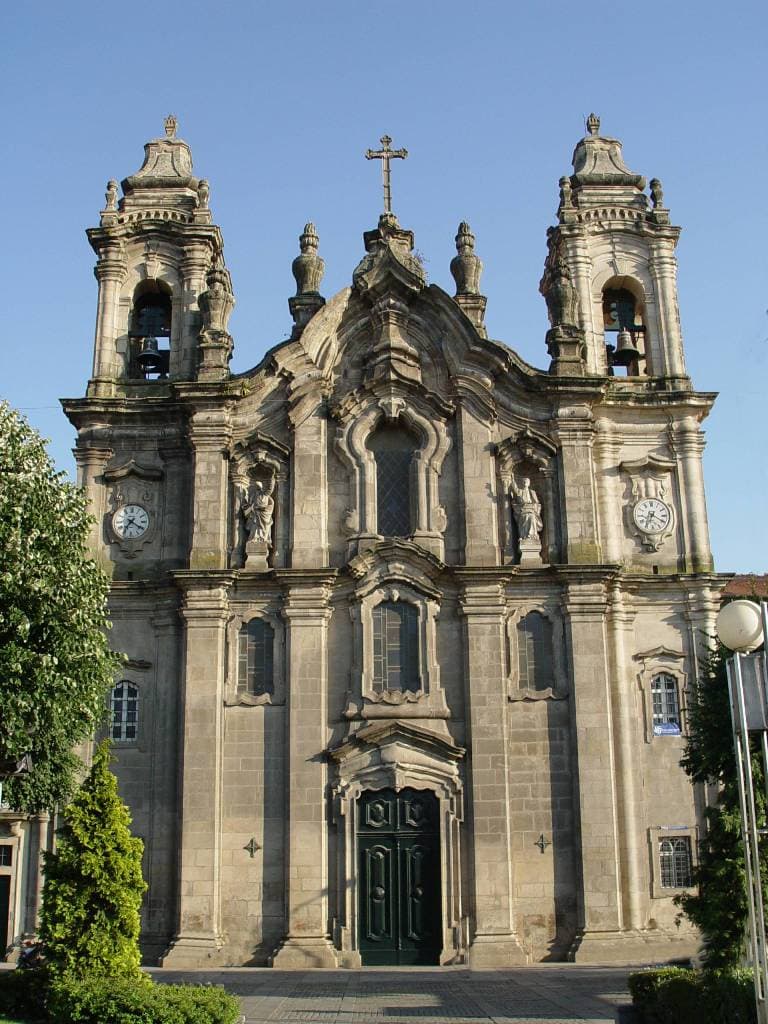
Congregados Basilica
The Congregados Basilica, also known as Basílica dos Congregados, is an 18th-century Baroque church located in Braga, Portugal. Designed by architect André Soares, it is a significant religious and architectural landmark in the city.