
Cathedral Basilica of the Assumption
Mexico·Guadalajara·Archdiocese of Guadalajara
The Guadalajara Cathedral, officially the Cathedral Basilica of the Assumption of Our Lady, is a significant Roman Catholic cathedral and minor basilica in Guadalajara, Jalisco, Mexico. It is one of the oldest cathedrals in the Americas, with a history dating back to the 16th century, and showcases a blend of Spanish Renaissance and Neo-Gothic architectural styles. The basilica is an important religious and historical landmark for the Archdiocese of Guadalajara and the city.
Key Facts
- ›Construction of the current cathedral began in 1561, commissioned by King Felipe II, and was completed in 1618.
- ›The cathedral was consecrated on October 12, 1716, after significant delays.
- ›It was elevated to the rank of a minor basilica by Pope Pius XII.
- ›The towers, rebuilt in the 19th century after earthquake damage, feature neo-Gothic design with Talavera-style yellow and blue mosaic accents.
- ›The cathedral houses the mummified body of Santa Innocencia, as well as the remains of cardinals, bishops, and Fr. Juan Jesús Posadas Ocampo.
- ›Despite its historical significance, the cathedral has been damaged by numerous earthquakes throughout its history and faces ongoing structural challenges.

Spanish Renaissance, Neo-Gothic
Mummified Body of Santa Innocencia, Remains of Three Cardinals, Remains of Several Former Bishops, Remains of Fr. Juan JesúS Posadas Ocampo
MartíN Casillas, Manuel GóMez Ibarra
About Cathedral Basilica of the Assumption
Guadalajara Cathedral
The Cathedral Basilica of the Assumption of Our Lady, commonly known as the Guadalajara Cathedral, stands as a prominent Roman Catholic cathedral and minor basilica located in the Centro district of Guadalajara, Jalisco, Mexico. It holds the distinction of being among the oldest cathedrals in the Americas, with its origins tracing back to the mid-16th century. The architectural style of the basilica is a notable fusion, primarily reflecting the Spanish Renaissance in its main structure, while its distinctive spires were added in the 19th century in a Neo-Gothic style, featuring striking yellow and blue Talavera-style mosaic accents.
History and Significance
The history of the Guadalajara Cathedral is marked by resilience and reconstruction. The first primitive church, built with adobe and a thatched roof in 1541, was elevated to cathedral status in 1548 when the region was declared a diocese. A devastating fire in 1574 led to the commissioning of a new cathedral in 1561, designed by master architect Martín Casillas. This new structure was completed in 1618 but would not be consecrated until October 12, 1716. The basilica has endured multiple earthquakes throughout its existence, with significant collapses in 1818 and 1849 necessitating rebuilding efforts, including the iconic towers designed by Manuel Gómez Ibarra. Pope Pius XII later elevated the cathedral to the rank of a minor basilica.
Architectural Features and Contents
The cathedral occupies an area of approximately 5,660 square meters, with dimensions of 77.8 by 72.75 meters. It follows a basilica plan with three naves, constructed from materials such as adobe, yellow quarry stone, and tezontle. The interior is adorned with altars dedicated to various Marian devotions and saints, including Our Lady of the Assumption, Our Lady of Guadalupe, and Saint Dominic. The central nave features a marble and silver altar, and the interior is decorated with religious paintings. The dome is illuminated by stained glass imported from France. Of particular note, the cathedral houses the mummified body of Santa Innocencia, a young girl venerated for her martyrdom, as well as the remains of several high-ranking clergy and Fr. Juan Jesús Posadas Ocampo.
Ongoing Challenges
Despite its historical and religious importance, the Guadalajara Cathedral continues to face structural challenges. It has been damaged by numerous earthquakes in recent decades, and concerns remain regarding the stability of its north tower and dome. These ongoing issues highlight the continuous need for preservation and structural assessment of this venerable landmark.
Source: Wikipedia ↗
Frequently Asked Questions
What is the official name of the Guadalajara Cathedral?
The official name of the Guadalajara Cathedral is the Cathedral Basilica of the Assumption of Our Lady. It is also commonly known as Catedral de Guadalajara or Catedral de la Asunción de María Santísima in Spanish.
When was the Guadalajara Cathedral first built?
The first cathedral on the site was built in 1541. The current structure's construction began in 1561 and was completed in 1618, though it was not consecrated until 1716.
What architectural styles are present in the Guadalajara Cathedral?
The main building of the cathedral is influenced by Spanish Renaissance architecture. However, its towers are designed in the Neo-Gothic style, and they are adorned with Talavera-style yellow and blue mosaics.
What important relics are housed in the Guadalajara Cathedral?
The cathedral is home to the mummified body of Santa Innocencia, a young girl from the 1700s. It also contains the remains of three cardinals, several former bishops of the archdiocese, and Fr. Juan Jesús Posadas Ocampo.
Has the Guadalajara Cathedral suffered damage over time?
Yes, the cathedral has a history of damage, primarily from earthquakes. Notable collapses occurred in 1818 and 1849, and it has been affected by tremors in 1932, 1957, 1979, 1985, 1995, and 2003.
Related Basilicas

Basilica Shrine of Our Lady of the Assumption
The Minor Basilica and Archdiocesan Shrine of Our Lady of the Assumption, commonly known as Santa Maria Church, is a Roman Catholic basilica located in Santa Maria, Ilocos Sur, Philippines. It is recognized as a UNESCO World Heritage Site as part of the Baroque Churches of the Philippines, celebrated for its unique synthesis of functional, defensive, and religious architectural principles adapted to the local environment. The basilica currently serves as the Pro-Cathedral of the Archdiocese of New Segovia while its main cathedral undergoes repairs.
Basilica of Our Lady of the Assumption, Monastery of St Benedict
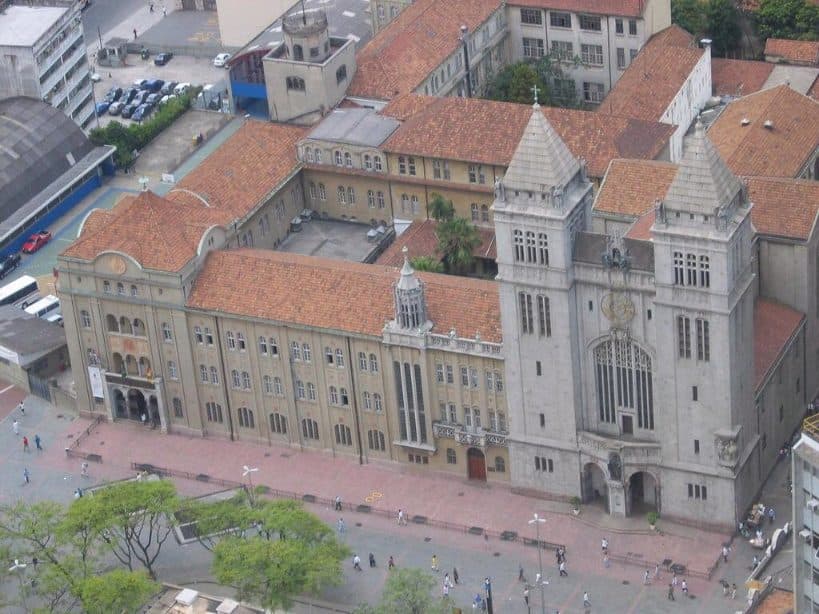
The Basilica of Our Lady of the Assumption, part of the Monastery of Saint Benedict in São Paulo, Brazil, is a significant religious and architectural site. Originally founded in 1598, the current church was constructed between 1910 and 1914 in the Neo-Romanesque style. It is notable for its daily Gregorian chant services and its historical role in events of local importance.

Cathedral Basilica of Our Lady of Guadalupe
The Cathedral Basilica of Our Lady of Guadalupe, also known as Colima Cathedral, is the most important Catholic church in Colima, Mexico. It holds the distinction of being the first church consecrated to the Virgin of Guadalupe in Latin America and was designated a Minor Basilica by Pope John Paul II on October 12, 1998. Its origins date back to 1525, making it one of the oldest cathedrals in Mexico and North America, having been completed in 1540.