
Cathedral Basilica of St Bavo
Netherlands·Haarlem·Haarlem-Amsterdam
The Cathedral Basilica of Saint Bavo is the principal Roman Catholic cathedral for the Diocese of Haarlem-Amsterdam in Haarlem, Netherlands. It was constructed between 1895 and 1930 by Joseph Cuypers to replace an earlier, smaller cathedral. The current structure is notable for its blend of Neo-Romanesque, Byzantine, and Jugendstil architectural influences.
Key Facts
- ›Construction of the Cathedral Basilica of Saint Bavo began in 1895.
- ›The cathedral was consecrated on April 1, 1898, with the choir and radiating chapels completed.
- ›Joseph Cuypers, influenced by his father Pierre Cuypers, designed the cathedral.
- ›The architectural styles include Neo-Romanesque, Byzantine, and Jugendstil.
- ›The former sacristy has been transformed into a small museum, the schatkamer, displaying historical Catholic artifacts from Haarlem.
- ›The cathedral serves as the main ecclesiastical seat for the Roman Catholic Diocese of Haarlem-Amsterdam.

Neo-Romanesque, Byzantine, Jugendstil
Saint Bavo
17th-Century Painting of Saint Bavo, Silver From the Chapel of Louis Napoleon
Joseph Cuypers, Pierre Cuypers Jr.
About Cathedral Basilica of St Bavo
Cathedral Basilica of Saint Bavo
The Cathedral Basilica of Saint Bavo, located in Haarlem, Netherlands, stands as the primary cathedral for the Roman Catholic Diocese of Haarlem-Amsterdam. Its construction, orchestrated by architect Joseph Cuypers, spanned from 1895 to 1930, replacing a prior, smaller cathedral. The present edifice is recognized for its distinctive architectural synthesis, blending Neo-Romanesque principles with influences from Byzantine and Jugendstil aesthetics.
History and Construction
The need for a new cathedral arose as the existing St. Joseph church, which had served as a cathedral since 1853, proved insufficient. Bishop Gaspard Bottemanne initiated plans for a grander structure. While Pierre Cuypers, the elder, was initially considered, his son Joseph ultimately undertook the design. Construction commenced in 1895 with the choir and radiating chapels, leading to a consecration in 1898. The main body of the church, including the transept and nave, was erected between 1902 and 1906. Financial constraints caused a delay in the completion of the towers, which were finished in 1927.
Significance and Collection
Haarlem has a deep Christian history dating back to the 9th century. The original parish church evolved into a cathedral in 1559 but was confiscated and converted to Protestant use in 1578 following the Siege of Haarlem. Much of its art and silver was seized, with surviving pieces now housed in the Frans Hals Museum. The Catholic community went underground, establishing mission stations. The current cathedral's former sacristy has been converted into a small museum, the schatkamer, which safeguards significant artifacts from Haarlem's Catholic heritage. These include a 17th-century painting of the patron saint, Saint Bavo, and valuable silver items originating from the era of Louis Napoleon's residence in the city. Vestments dating back to the early 16th century are also part of this collection.
Source: Wikipedia ↗
Frequently Asked Questions
When was the Cathedral Basilica of Saint Bavo built?
Construction for the Cathedral Basilica of Saint Bavo began in 1895 and continued until 1930. The choir and its chapels were consecrated in 1898, with the nave and transept added between 1902 and 1906. The towers were completed later, in 1927.
What is the architectural style of the Cathedral Basilica of Saint Bavo?
The cathedral's design by Joseph Cuypers evolved from an initial Neo-Gothic concept to a Neo-Romanesque style. It also incorporates influences from Byzantine and Jugendstil architecture.
What is significant about the schatkamer within the cathedral?
The schatkamer, formerly the sacristy, is a small museum within the Cathedral Basilica of Saint Bavo. It houses historical artifacts from Haarlem's Catholic past, including a 17th-century painting of Saint Bavo and silver from the chapel of Louis Napoleon.
What was the previous church on this site?
The Cathedral Basilica of Saint Bavo replaced the St. Joseph church, a Waterstaatskerk built in 1853. This church had, in turn, replaced the Sint-Bavokerk, which was converted to Protestantism in 1578.
What is the religious significance of the Cathedral Basilica of Saint Bavo?
It serves as the principal cathedral for the Roman Catholic Diocese of Haarlem-Amsterdam. The history of Catholicism in Haarlem dates back to the 9th century, with the site of the current cathedral having a long association with Christian worship.
Related Basilicas

Basilica of St Nicholas
The Co-cathedral Basilica of Saint Nicholas in Amsterdam is the city's principal Roman Catholic church, dedicated to its patron saint. Originally constructed in the Neo-Baroque and neo-Renaissance styles, it was elevated to the status of a basilica minor in 2012 and later designated as a co-cathedral for the Diocese of Haarlem-Amsterdam in 2025. The basilica is significant for its prominent location near the main railway station and its role in the city's religious and musical life.
Basilica of St Willibrord
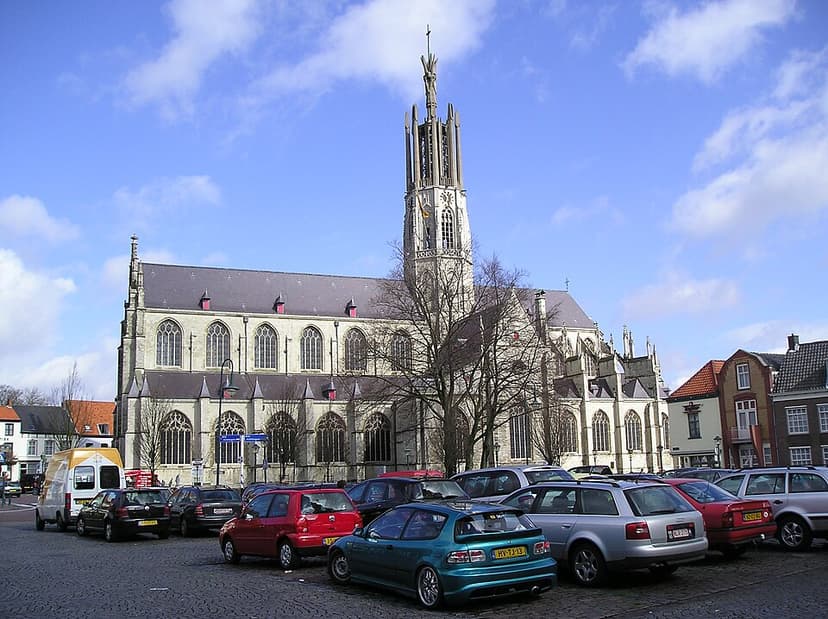
The Basilica of St. Willibrord is a historic Roman Catholic church located in Hulst, Netherlands. Dedicated to St. Willibrord, the apostle of the Benelux countries, the basilica showcases a significant architectural evolution from Romanesque to Brabantine Gothic styles. It holds religious importance as a place of worship and houses notable artistic works, including paintings and a historic organ.

Basilica of St Servatius
The Basilica of Saint Servatius is a significant Roman Catholic church located in the heart of Maastricht, Netherlands. It is a hybrid architectural masterpiece, predominantly Romanesque, built over the tomb of Saint Servatius, an Armenian missionary and bishop. The basilica has been a major pilgrimage site for centuries, drawing visitors to its relics and the saint's grave, and remains a central hub for Catholicism in the region.