
Cathedral Basilica of Our Lady of Glory
Brazil·Maringá
The Cathedral Basilica of Our Lady of Glory, also known as the Cathedral of Maringá, is a prominent Roman Catholic cathedral in Maringá, Paraná, Brazil. Completed in 1972, it stands as the tallest church building in the Americas and is recognized globally as the 18th tallest in the world, a testament to its significant architectural scale.
Key Facts
- ›The cathedral's modernist, conical design was inspired by Soviet Sputnik satellites.
- ›Its construction spanned from July 1959 to May 10, 1972.
- ›The foundation stone was laid on August 15, 1958, and blessed by Pope Pius XII.
- ›It reaches a height of 124 meters (407 ft), making it the tallest church in the Americas.
- ›The design was conceptualized by Archbishop Dom Jaime Luiz Coelho.
- ›The church was completed on the 25th anniversary of the city of Maringá.

Modernist
Our Lady of Glory
José Augusto Bellucci
About Cathedral Basilica of Our Lady of Glory
The Cathedral Basilica of Our Lady of Glory, commonly referred to as the Cathedral of Maringá, is a significant Roman Catholic cathedral situated in the heart of Maringá, Paraná, Brazil. Its completion in 1972 marked the realization of a striking modernist architectural vision that has led to its recognition as the tallest church building in the Americas and the 18th tallest worldwide.
Design and Construction
The cathedral's distinctive, conical shape was conceived by architect José Augusto Bellucci, who drew inspiration from the Soviet Sputnik satellites. This unique design was idealized by Archbishop Dom Jaime Luiz Coelho. Construction commenced in July 1959, with the laying of the foundation stone on August 15, 1958. This important stone was a piece of marble originating from St. Peter's Basilica in Rome, having been blessed by Pope Pius XII. The building process concluded on May 10, 1972, a date chosen to coincide with the 25th anniversary of the city's establishment.
Source: Wikipedia ↗
Frequently Asked Questions
What is the significance of the Cathedral Basilica of Our Lady of Glory's height?
The Cathedral Basilica of Our Lady of Glory is notable for its impressive height, reaching 124 meters (407 ft). This makes it the tallest church building in the Americas and the 18th tallest church in the world, highlighting its architectural prominence.
Who designed the Cathedral Basilica of Our Lady of Glory and what inspired the design?
Architect José Augusto Bellucci designed the cathedral. His modernist, conical shape was inspired by the Soviet Sputnik satellites, a unique influence for a religious structure.
When was the Cathedral Basilica of Our Lady of Glory built?
Construction of the cathedral began in July 1959 and was completed on May 10, 1972. The completion date coincided with the 25th anniversary of the city of Maringá.
What is the origin of the foundation stone for the cathedral?
The foundation stone for the Cathedral Basilica of Our Lady of Glory is a piece of marble from St. Peter's Basilica in Rome. It was blessed by Pope Pius XII before being laid on August 15, 1958.
Related Basilicas
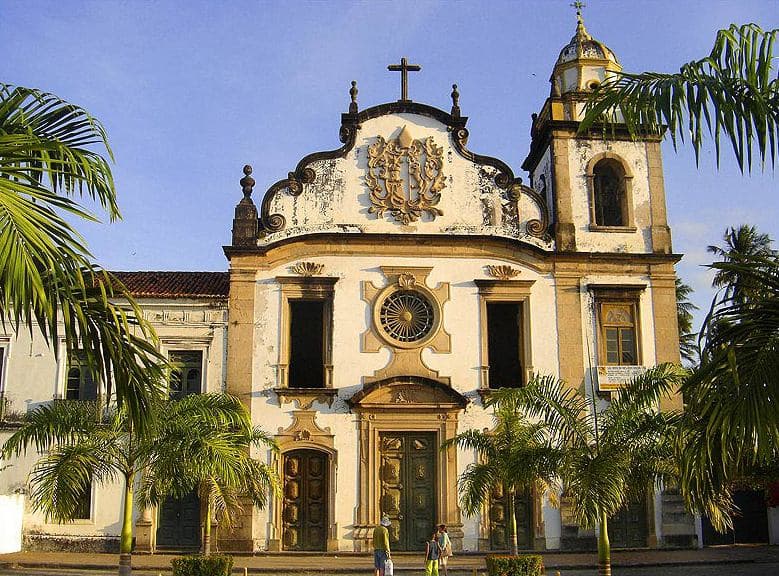
Abbatial Basilica of the Monastery of St Benedict
The Basilica and Monastery of St. Benedict is a significant Baroque architectural complex in Olinda, Pernambuco, Brazil. It is part of the historic center of the city, which is recognized as a UNESCO World Heritage Site. The basilica holds importance for its historical roots in Portuguese colonization and its elevated status as a Minor Basilica.

Basilica of Our Lady of Nazareth of Exile
The Basilica of Our Lady of Nazareth of Exile, also known as the Basilica of Belém, is a minor basilica of the Catholic Church located in Belém, Pará, Brazil. Construction began in 1909 on the site where the image of the Virgin of Nazareth was discovered. The basilica is notable for its Neoclassical design, commissioned by Barnabite priests and inspired by the Basilica of Saint Paul Outside the Walls in Rome, though it controversially lacked steeples in its original plan.

Basilica of the Eternal Divine Father
The Basilica of the Eternal Divine Father, also known as the Basilica of the Divine Eternal Father, is a Catholic shrine and minor basilica located in Trindade, Goiás, Brazil. It holds the distinction of being the world's only minor basilica dedicated to God the Father. The basilica's origins trace back to a small chapel built around 1848, evolving over time through several structures to the current edifice, which was elevated to minor basilica status by Pope Benedict XVI in 2006.