
Cathedral Basilica of Our Lady of Carmel
Spain·Lugo·Lugo
The Cathedral Basilica of Our Lady of Carmel, also known as Lugo Cathedral, is a Roman Catholic church in Lugo, Galicia, Spain. Its construction began in the early 12th century in a Romanesque style, with later additions incorporating Gothic, Baroque, and Neoclassical elements, making it a significant example of architectural evolution.
Key Facts
- ›Construction of the current basilica began in 1129, commissioned by Bishop Peter III.
- ›The basilica features a Latin Cross structure with a length of 85 meters.
- ›Architectural styles present include Romanesque, Gothic, Baroque, Neoclassical, and Renaissance.
- ›The façade is a Neoclassical design inspired by plans for Pamplona Cathedral.
- ›It holds the privilege to permanently expose the Holy Sacrament.
- ›The northern entrance's narthex is in Gothic style, dating from 1510-1530.

Romanesque, Gothic, Baroque, Neoclassical, Renaissance
Raimundo De Monforte, JuliáN SáNchez Bort, Ventura RodríGuez, Gaspar De Arce, Francisco De Moure
About Cathedral Basilica of Our Lady of Carmel
The Cathedral Basilica of Our Lady of Our Lady of Carmel, commonly referred to as Lugo Cathedral, is a significant Roman Catholic church and basilica located in the city of Lugo, Galicia, in northwestern Spain. Its architectural history spans several centuries, beginning with its Romanesque construction in the early 12th century and incorporating elements from Gothic, Baroque, and Neoclassical periods.
History and Construction
The site of the current basilica was previously occupied by a pre-Romanesque church built in 755. By the 11th century, its condition had deteriorated, prompting Bishop Peter III to commission a new Romanesque edifice in 1129 from local architect and builder Raimundo de Monforte. The main construction was completed in 1273. The 14th century saw the replacement of the original apse with a larger Gothic version and the addition of chapels. Later renovations introduced Renaissance elements, such as the retablo at the high altar, which was damaged in the 1755 Lisbon earthquake, with surviving fragments now housed within the church.
Architectural Features
The basilica is designed with a Latin Cross plan, measuring 85 meters in length. It features a nave covered by a barrel vault, flanked by two aisles, and includes an ambulatory with five apse chapels. The triforium is characterized by triple ogival mullioned windows. The façade is a prominent Neoclassical design by Julián Sánchez Bort, based on a plan by Ventura Rodríguez, and its construction was finalized in the late 19th century with the completion of its side towers. The northern entrance boasts a Gothic narthex, dating from 1510-1530, notable for its starred vault and detailed lintel depicting Christ Pantocrator and the Last Supper. Other notable sections include the Gothic Torre Vella (bell tower) with a Renaissance top floor, Baroque sacristy and cloister, and a Renaissance chapel dedicated to St. Froilán. The choir, by Francisco de Moure, is a significant early 17th-century work.
Religious Significance
The Cathedral Basilica of Our Lady of Carmel holds a special religious distinction, having received the privilege from the Pope to permanently expose the Holy Sacrament. This highlights its importance as a center of eucharistic devotion.
Source: Wikipedia ↗
Frequently Asked Questions
When was the Lugo Cathedral built?
The construction of the current basilica began in 1129 in the Romanesque style. The building was completed in 1273, with various additions and renovations occurring in subsequent centuries.
What architectural styles can be found at Lugo Cathedral?
The basilica showcases a mix of styles. Its original Romanesque structure was enhanced with Gothic elements in the 14th century, and later additions include Baroque and Neoclassical features on the façade, as well as Renaissance elements in its altarpiece and chapels.
What is significant about Lugo Cathedral's religious importance?
The basilica has received the privilege from the Pope to permanently expose the Holy Sacrament. This indicates a special status and devotion centered around the Eucharist within the church.
What are some notable architectural features of the basilica?
Key features include its 85-meter Latin Cross structure, a nave covered by a barrel vault, and an ambulatory with five apse chapels. The northern entrance's Gothic narthex with its starred vault and the Neoclassical façade are also prominent.
Related Basilicas

Basilica Co-cathedral of St. Mary
The Co-Cathedral of Saint Mary of Vigo, also known locally as A Colexiata, is a Spanish Baroque/Neoclassical Catholic temple serving as a co-cathedral for the Diocese of Tui-Vigo. Its current structure was largely rebuilt in the 19th century following damage from historical events, including an explosion in 1809, and it was designated a basilica by the Vatican in 2020.
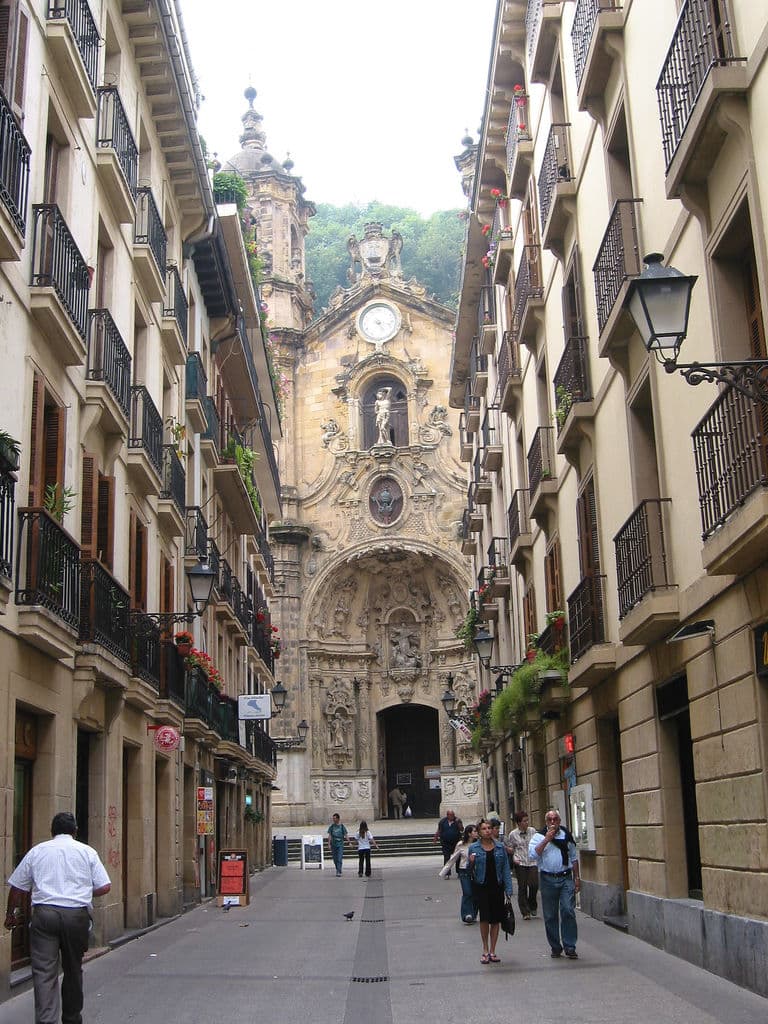
Basilica of St Mary of the Chorus
The Basilica of Saint Mary of Coro is a Baroque Roman Catholic parish church and minor basilica located in the Old Town of San Sebastián, Spain. Completed in 1774, it is distinguished by its altarpiece-like main entrance adorned with the figure of Saint Sebastian and symbols of its basilica status.
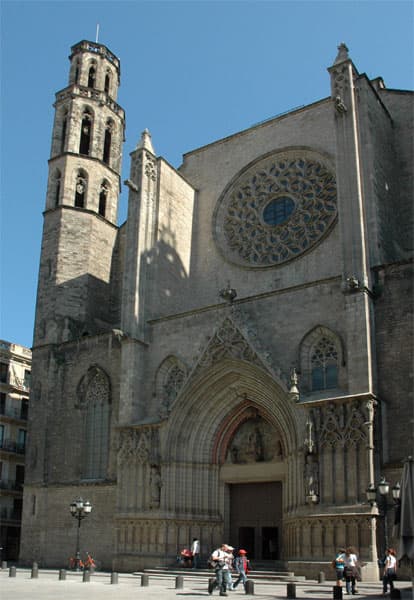
Basilica of St Mary of the Sea
The Basilica of St Mary of the Sea, known in Catalan as Santa Maria del Mar, is a prominent church in Barcelona, Spain, constructed between 1329 and 1383. It stands as a remarkable example of Catalan Gothic architecture, distinguished by its stylistic purity and unity. The basilica holds significance as a testament to the maritime and mercantile power of the Principality of Catalonia during the medieval period, and notably, its construction was supported by the common people rather than the nobility.