
Cathedral and Abbey Church of the Assumption
Austria·Seckau
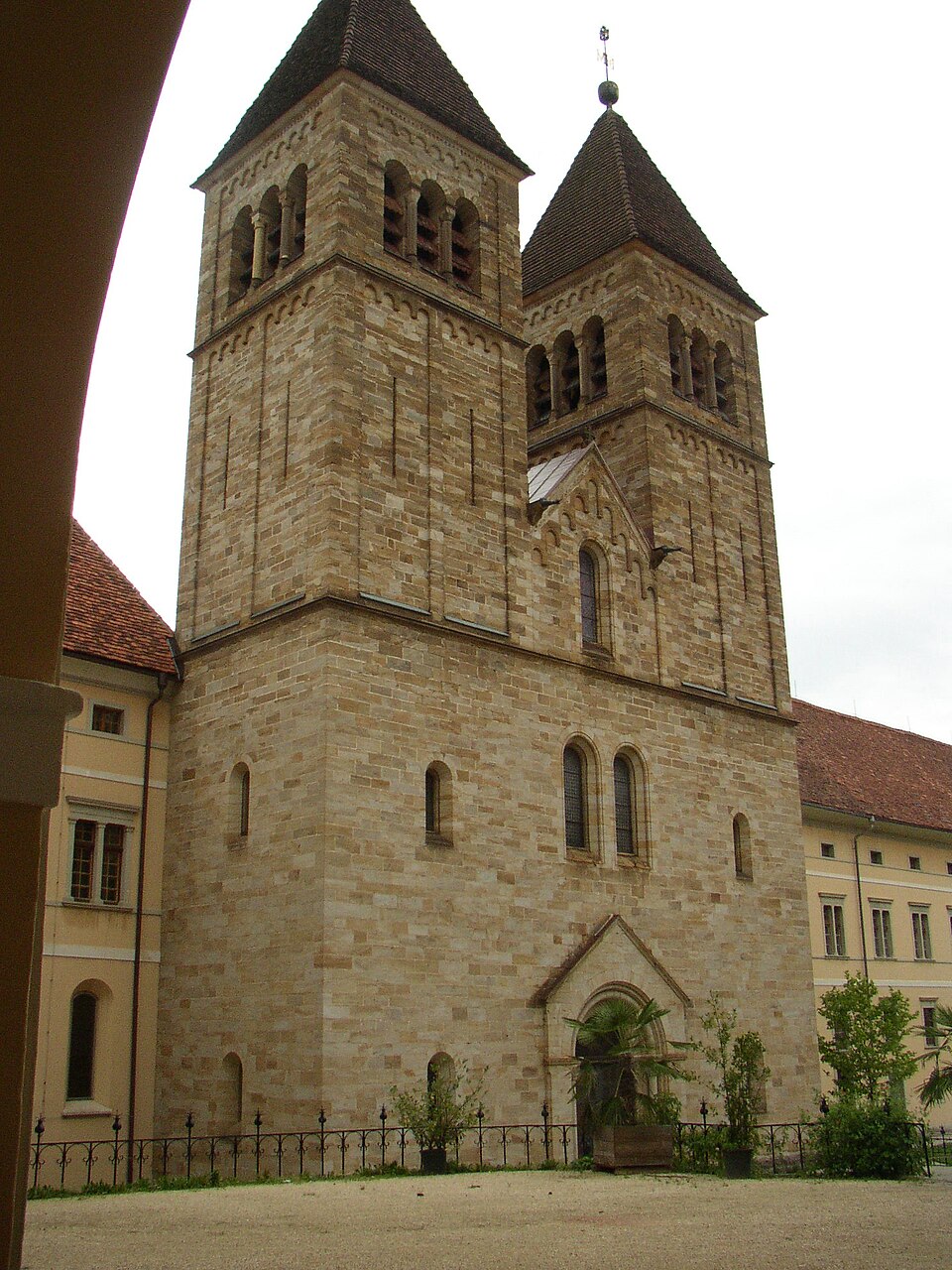
Seckau Abbey, officially known as the Abbey Church of Our Dear Lady, is a Benedictine monastery and Co-Cathedral located in Seckau, Styria, Austria. Originally founded as an Augustinian canonry in the 12th century, it transitioned to Benedictine rule in the late 19th century. The abbey church itself is a significant example of Romanesque basilica architecture and has served as a burial site for a line of the Habsburgs.
Key Facts
- ›Founded in 1140 by Augustinian canons, with a community moved to Seckau in 1142.
- ›The Romanesque basilica was constructed between 1143 and 1164 and consecrated in 1164.
- ›It served as the burial place for the Inner Austrian line of the Habsburgs for centuries.
- ›The monastery was resettled by Benedictines from Beuron Archabbey in 1883.
- ›Declared a minor basilica in 1930.
- ›The abbey maintains a secondary school and provides pastoral care for the local parish.
Romanesque
Our Dear Lady
Benedictines, Augustinian Canons
About Cathedral and Abbey Church of the Assumption
Seckau Abbey
Seckau Abbey, also known by its German name Abtei Unserer Lieben Frau, is a significant Benedictine monastery and Co-Cathedral situated in Seckau, Styria, Austria. Its origins trace back to 1140 when it was endowed as a monastery for Augustinian canons. The community was officially established at Seckau in 1142, with papal institution following in March 1143. The abbey church, a notable example of Romanesque basilica architecture, was constructed between 1143 and 1164 and consecrated in September 1164. For many centuries, this church served as the necropolis for the Inner Austrian line of the powerful Habsburg dynasty.
Transition to Benedictine Rule
In 1883, Seckau Abbey experienced a significant change when it was resettled by Benedictine monks from Beuron Archabbey in Germany, who had been displaced due to the Kulturkampf. The monastery faced further disruption in 1940 when the monks were evicted by the Gestapo and the buildings were confiscated. However, they were able to return in 1945. Today, Seckau Abbey continues its monastic traditions and also serves the local community, maintaining a secondary school (Gymnasium) and carrying out pastoral care duties for the parish. It is an integral part of the Beuronese Congregation within the broader Benedictine Confederation. In recognition of its historical and religious importance, the abbey church was declared a minor basilica in 1930.
Source: Wikipedia ↗
Frequently Asked Questions
When was Seckau Abbey founded?
Seckau Abbey was endowed in 1140 by Augustinian canons. A community from Sankt Marein bei Knittelfeld was moved to Seckau in 1142, and its founding was officially instituted by Pope Innocent II on March 12, 1143.
What is the architectural style of the abbey church?
The abbey church is a Romanesque basilica, with construction taking place between 1143 and 1164.
What is the religious order affiliation of Seckau Abbey?
Seckau Abbey is a Benedictine monastery. It is part of the Beuronese Congregation within the Benedictine Confederation.
Has Seckau Abbey always been Benedictine?
No, Seckau Abbey was originally founded by Augustinian canons. It was resettled by Benedictines from Beuron Archabbey in 1883.
What is the significance of Seckau Abbey for the Habsburgs?
For centuries, the abbey church served as the burial place for the Inner Austrian line of the Habsburgs.
When was the abbey church designated as a basilica?
The abbey church was declared a minor basilica in 1930.
Related Basilicas

Basilica of Our Lady, Geras Abbey
The Basilica of Our Lady, Geras Abbey, is a Premonstratensian monastery church located in Geras, Lower Austria. Originally a Romanesque basilica, it was significantly reworked in the Baroque style in the 18th century. It was elevated to the status of a minor basilica in 1953 and remains an active religious and cultural site, often hosting classical music recitals.

Basilica of Our Lady, Klosterneuburg Monastery
The Basilica of Our Lady, Klosterneuburg Monastery, also known as Stift Klosterneuburg, is a significant Augustinian monastery and basilica located in Lower Austria. Founded in 1114, it is renowned for its historical depth, architectural evolution from Romanesque to Baroque and Neo-Gothic styles, and its housing of the celebrated Verduner Altar.

Basilica of the Nativity of Mary
The Mariazell Basilica, also known as Basilica Mariä Geburt, is Austria's most significant Christian pilgrimage site and a major European shrine. It houses a venerated miraculous wooden image of the Virgin Mary and was elevated to the status of a minor basilica by Pope Pius X in 1907. The basilica is also recognized as the national shrine for all German-speaking countries.