
Basilica of Our Lady, Geras Abbey
Austria·Geras
The Basilica of Our Lady, Geras Abbey, is a Premonstratensian monastery church located in Geras, Lower Austria. Originally a Romanesque basilica, it was significantly reworked in the Baroque style in the 18th century. It was elevated to the status of a minor basilica in 1953 and remains an active religious and cultural site, often hosting classical music recitals.
Key Facts
- ›Founded in 1153 as a daughter house of Seelau Abbey.
- ›The church is a Romanesque basilica with significant Baroque alterations.
- ›Architect Josef Munggenast and fresco painter Paul Troger were involved in the 18th-century Baroque reworkings.
- ›Elevated to the status of a minor basilica in 1953.
- ›Survived the monastery closures enacted during the reforms of Emperor Joseph II.
- ›Today, the abbey is a venue for classical music recitals.

Romanesque, Baroque
Premonstratensian
Josef Munggenast
About Basilica of Our Lady, Geras Abbey
The Basilica of Our Lady, Geras Abbey, located in Geras, Lower Austria, is a significant Premonstratensian monastery with a rich history dating back to its founding in 1153. Originally established as a daughter house of Seelau Abbey by Ekbert and Ulrich of Pernegg, the abbey church itself is a Romanesque basilica that underwent substantial architectural transformation during the 18th century.
Architectural Evolution
Under the direction of architect Josef Munggenast, the basilica was re-envisioned in the Baroque style. This renovation also saw the notable contributions of fresco painter Paul Troger, who adorned the interiors. The church's architectural journey reflects a transition from its Romanesque origins to the elaborate aesthetics of the Baroque period.
Religious and Cultural Significance
Despite the challenges posed by Emperor Joseph II's reforms in the late 18th century, which led to the closure of many monasteries, Geras Abbey was able to survive and continues to operate to this day. Its enduring presence was further recognized in 1953 when the church was elevated to the status of a minor basilica by papal decree. Beyond its religious functions, the abbey premises are frequently utilized as a venue for classical music recitals, underscoring its role as a vibrant cultural center.
Source: Wikipedia ↗
Frequently Asked Questions
What is the history of Geras Abbey?
Geras Abbey was founded in 1153 by Ekbert and Ulrich of Pernegg as a daughter house of Seelau Abbey and settled by canons. It successfully navigated the reforms and monastery closures of Emperor Joseph II and continues to operate today.
What architectural styles are present at Geras Abbey?
The abbey church was originally a Romanesque basilica. In the 18th century, it underwent significant reworking in the Baroque style by architect Josef Munggenast and fresco painter Paul Troger.
When was Geras Abbey designated as a basilica?
The church of Geras Abbey was elevated to the status of a minor basilica in 1953.
Is Geras Abbey still an active monastery?
Yes, Geras Abbey remains in operation as a Premonstratensian monastery. It is also utilized as a venue for classical music recitals.
What is the connection between Geras Abbey and Pernegg Abbey?
Pernegg Abbey was also founded by Ekbert and Ulrich of Pernegg and was initially a Premonstratensian nunnery. It was dissolved in 1783, and its premises were acquired by Geras Abbey in the mid-19th century, now serving as a retreat and seminar center.
Related Basilicas

Basilica of Our Lady, Klosterneuburg Monastery
The Basilica of Our Lady, Klosterneuburg Monastery, also known as Stift Klosterneuburg, is a significant Augustinian monastery and basilica located in Lower Austria. Founded in 1114, it is renowned for its historical depth, architectural evolution from Romanesque to Baroque and Neo-Gothic styles, and its housing of the celebrated Verduner Altar.

Basilica of the Nativity of Mary
The Mariazell Basilica, also known as Basilica Mariä Geburt, is Austria's most significant Christian pilgrimage site and a major European shrine. It houses a venerated miraculous wooden image of the Virgin Mary and was elevated to the status of a minor basilica by Pope Pius X in 1907. The basilica is also recognized as the national shrine for all German-speaking countries.
Cathedral and Abbey Church of the Assumption
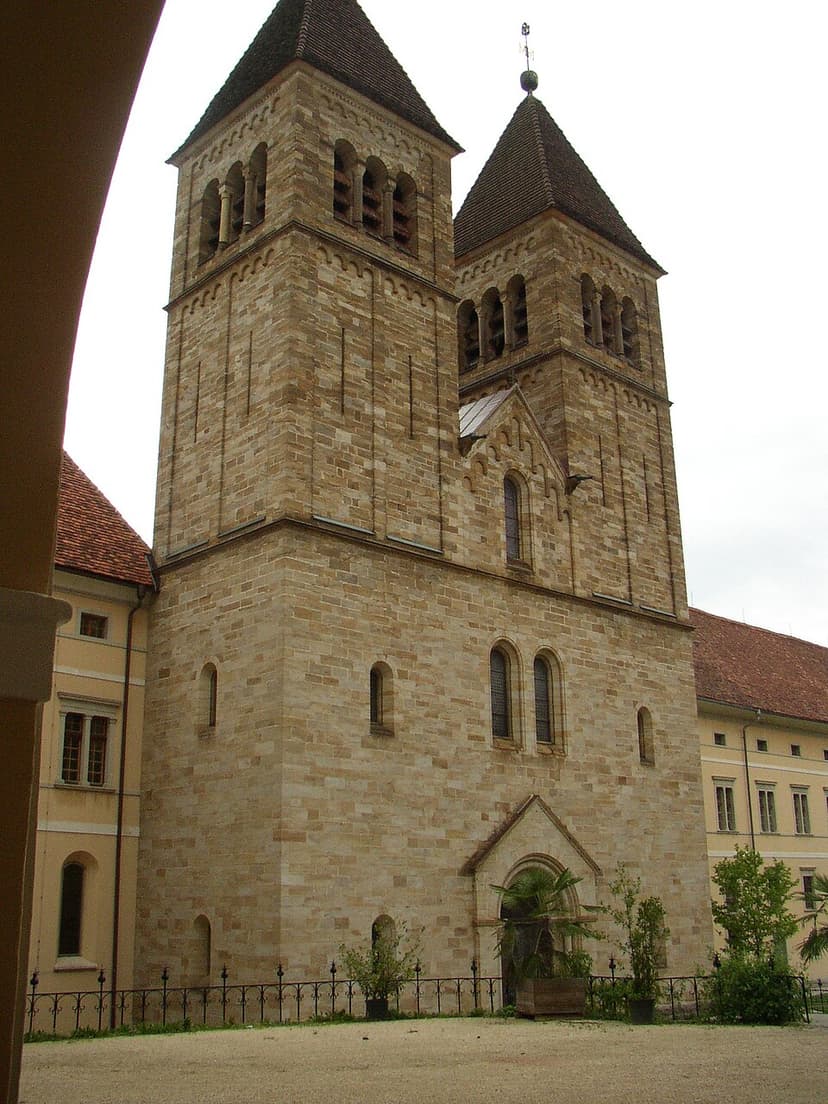
Seckau Abbey, officially known as the Abbey Church of Our Dear Lady, is a Benedictine monastery and Co-Cathedral located in Seckau, Styria, Austria. Originally founded as an Augustinian canonry in the 12th century, it transitioned to Benedictine rule in the late 19th century. The abbey church itself is a significant example of Romanesque basilica architecture and has served as a burial site for a line of the Habsburgs.