
Basilica of St Ulrich and St Afra
Switzerland·Kreuzlingen
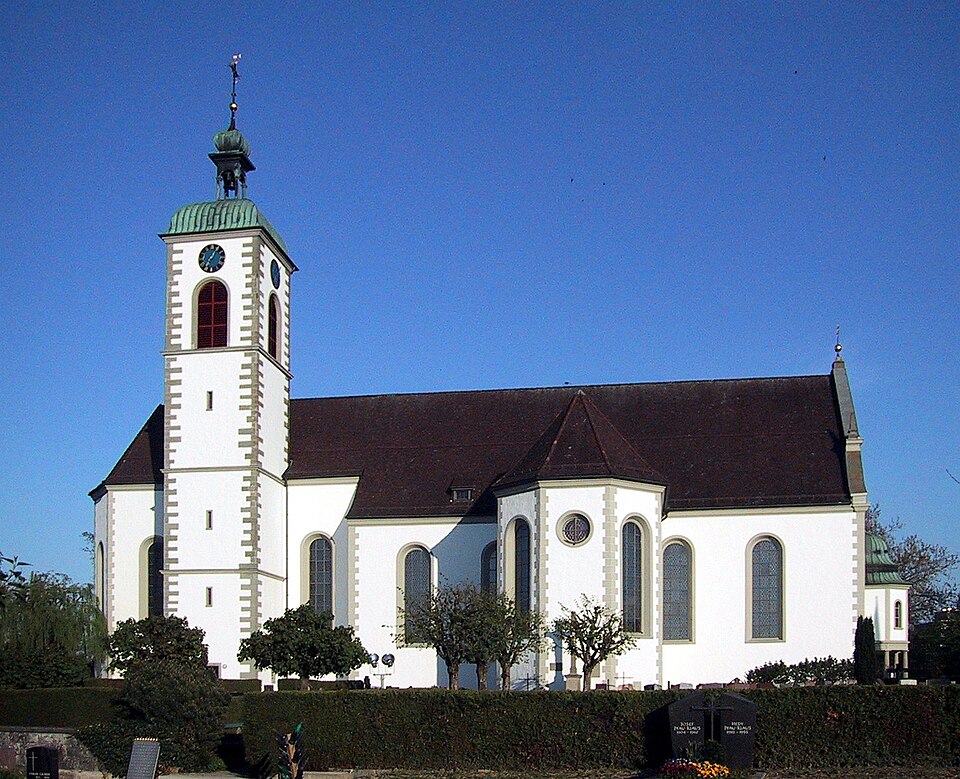
The Basilica of St Ulrich and St Afra in Kreuzlingen, Switzerland, originated as an Augustinian Canons' monastery founded around 1125. After several destructions and rebuildings, the current Baroque church was consecrated in 1653 and later remodelled in Rococo style. Although the monastery was dissolved in 1848, the church was preserved and now serves as a basilica minor, having undergone significant renovation after a fire in 1963.
Key Facts
- ›Founded around 1125 by Ulrich I, Bishop of Constance, as a house of Augustinian Canons.
- ›The church was rebuilt after being burned down by the inhabitants of Constance in 1499 and rededicated in 1509.
- ›The current premises were constructed between 1650 and 1653, with a remodelling in Rococo style starting in 1760.
- ›The monastery was dissolved by the Canton of Thurgau in 1848, but the church was preserved.
- ›The church suffered a major fire in 1963 and was rebuilt by 1967.
- ›It is now designated as a basilica minor.
Baroque, Rococo
Ulrich of Augsburg, Afra of Augsburg
Augustinian Canons
Michael Beer, Stephan Gunertsreiner, Melchior Gruber
About Basilica of St Ulrich and St Afra
The Basilica of St Ulrich and St Afra, located in Kreuzlingen, Switzerland, has a history deeply intertwined with its former role as an Augustinian Canons' monastery. Founded around 1125 by Ulrich I, Bishop of Constance, the institution was dedicated to Saints Ulrich and Afra.
History and Development
The monastery's existence was marked by periods of destruction and rebuilding. It was first burned down in 1499 by the inhabitants of Constance following political tensions and was subsequently rebuilt, with its new church rededicated in 1509. The current structure for the church of Saints Ulrich and Afra was constructed between 1650 and 1653, with renovations in the Rococo style occurring from 1760 onwards.
The monastery faced significant restrictions from 1798 and was ultimately dissolved in 1848 by the Canton of Thurgau. While some buildings were demolished, the church was preserved for the town's use and later designated as a basilica minor.
The Church
In the early 1960s, the church underwent a total renovation. Tragically, a fire in July 1963 destroyed much of the building, though external walls, the choir screen, and parts of the interior survived. Thanks to extensive conservation efforts and contributions, the church was rebuilt by 1967 under the direction of Hans Burkard.
The interior of the basilica features ceiling paintings by Franz Ludwig Herrmann depicting scenes from the monastic life of Saint Augustine of Hippo. The choir screen, created by Johann Jakob Hoffner in 1737, is a notable element, as are the larger-than-life statues of Saints Ulrich and Afra carved by Hans Christoph Schenk. A point of particular interest is the Chapel of the Mount of Olives, which houses a crucifix and a Calvary scene with approximately 250 original statuettes carved out of Swiss stone pine wood.
Source: Wikipedia ↗
Frequently Asked Questions
When was the Basilica of St Ulrich and St Afra founded?
The Basilica of St Ulrich and St Afra originated as a monastery founded around 1125. This foundation was established by Ulrich I, the Bishop of Constance.
What happened to the monastery?
The monastery was dissolved in 1848 by the government of the Canton of Thurgau. Some of its buildings were demolished, while the remaining ones were repurposed.
What is the architectural style of the church?
The church is decorated in the Baroque style. Parts of the church and monastery were later remodelled in the Rococo style in the 1760s.
Has the church always been a basilica?
The church was formerly the abbey church of an Augustinian Canons' monastery. It was preserved after the monastery's dissolution and is now designated as a basilica minor.
What significant events have affected the church?
The church and monastery were destroyed by fire multiple times, notably in 1499 and again in 1633 during the Thirty Years' War. It also suffered a major fire in 1963, following which it was rebuilt.
Are there any notable artworks or features within the church?
The church features ceiling paintings by Franz Ludwig Herrmann depicting scenes from the monastic life of Saint Augustine. The choir screen, made in 1737 by Johann Jakob Hoffner, is also noteworthy, as are the statues of Saints Ulrich and Afra by Hans Christoph Schenk.
Related Basilicas
Basilica of Our Lady of Valère
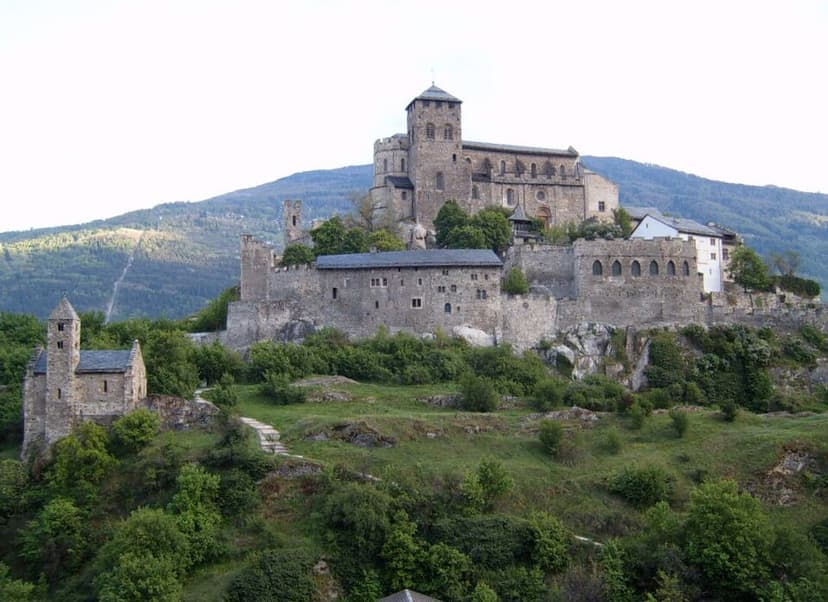
The Basilica of Our Lady of Valère is a fortified Roman Catholic church located atop Valère hill in Sion, Switzerland. It is a significant Swiss heritage site of national importance, serving as a historical seat of the cathedral chapter and a symbol of the spiritual and secular power of the Prince-Bishops of Sion.
Basilica of St Mary, Mariastein Abbey
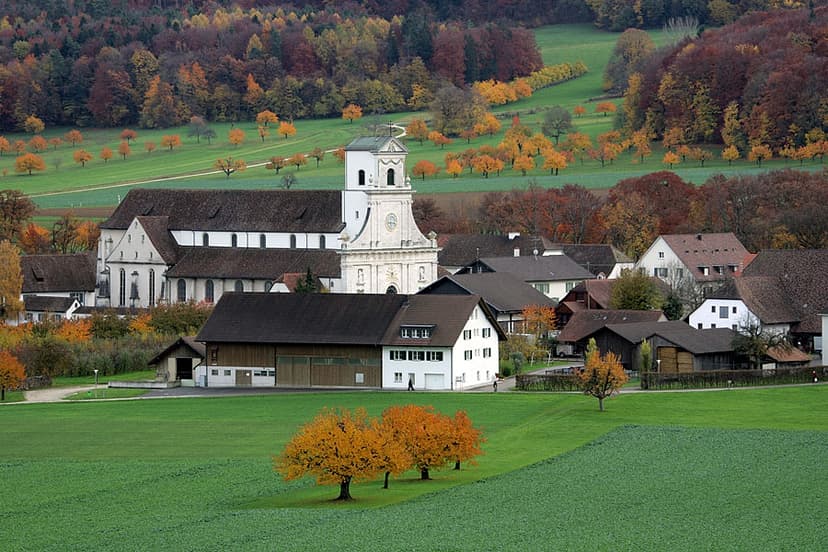
The Basilica of St Mary, Mariastein Abbey is a significant pilgrimage site in Switzerland, second only to Einsiedeln. It originated in the late 14th century around a legend of a miracle of the Blessed Virgin Mary, with a stone chapel first mentioned in 1434. The current late Gothic basilica, with a Baroque interior and classicist facade, stands over the Chapel of Grace and houses a Benedictine monastery re-established in 1648.

Abbatial Cathedral of St Maurice, Abbey of St Maurice
The Abbey of Saint Maurice, Agaunum, is a historic Swiss monastery of canons regular located in Saint-Maurice, Canton of Valais. Dating back to the 6th century, it is renowned for its association with the martyrdom of the Theban Legion, its former practice of perpetual psalmody, and its significant collection of art and antiquities. It is recognized as a Swiss heritage site of national significance.