
Abbatial Cathedral of St Maurice, Abbey of St Maurice
Switzerland·Saint-Maurice
The Abbey of Saint Maurice, Agaunum, is a historic Swiss monastery of canons regular located in Saint-Maurice, Canton of Valais. Dating back to the 6th century, it is renowned for its association with the martyrdom of the Theban Legion, its former practice of perpetual psalmody, and its significant collection of art and antiquities. It is recognized as a Swiss heritage site of national significance.
Key Facts
- ›The abbey is built on the ruins of a 1st-century B.C. Roman shrine dedicated to Mercury.
- ›It was established as a church of a monastery in 515 under King Sigismund of Burgundy.
- ›The abbey was known for its practice of perpetual psalmody (laus perennis) from 522/523 until the 9th century.
- ›The current church was built in the 17th century, while its Romanesque tower dates to the 11th century.
- ›In 1840, Pope Gregory XVI conferred the title of the See of Bethlehem in perpetuity upon the abbey.
- ›The abbey operates a highly ranked secondary school, the Lycée-collège de L'Abbaye de Saint-Maurice.

Romanesque, Gothic
Maurice of Agaunum, Theban Legion
Ewer of Saint-Maurice D'Agaune
Canons Regular, Augustinians
About Abbatial Cathedral of St Maurice, Abbey of St Maurice
What is the Abbey of Saint Maurice?
The Abbey of Saint Maurice, Agaunum, also known as Abbaye de Saint-Maurice d'Agaune or Saint-Maurice-en-Valais, is a historic monastery of canons regular situated in Saint-Maurice, Canton of Valais, Switzerland. Its origins trace back to the 6th century, though it is built upon the site of a Roman shrine dating to the 1st century B.C.
Historical Significance and Religious Practices
The abbey holds profound historical and religious importance, primarily due to its association with the martyrdom of Saint Maurice and the Theban Legion, believed to have occurred in the vicinity. It was formally established as a church of a monastery in 515 by King Sigismund of Burgundy. A distinctive feature of its early history was the practice of "laus perennis" or perpetual psalmody, a continuous cycle of chanted prayers performed day and night by rotating choirs, which persisted until the 9th century. Today, the abbey is home to approximately 40 canons who serve the spiritual needs of the territorial abbacy and surrounding parishes.
Architecture and Heritage
The abbey complex showcases a long architectural evolution, with evidence of construction and rebuilding spanning at least 15 centuries. Excavations have uncovered a 4th-5th century baptistry and a series of Carolingian era churches. The current church was constructed in the 17th century, while its prominent Romanesque tower, dating to the 11th century, was reconstructed in 1945 after rockfall damage. The abbey is recognized as a Swiss heritage site of national significance and is noted for its collection of art and antiquities.
Education and Modern Ventures
Beyond its religious and historical roles, the Abbey of Saint Maurice is also known for its educational institution, the Lycée-collège de l'Abbaye de Saint-Maurice, which has been educating students since its modern establishment in 1806. In recent years, the abbey has also diversified its revenue streams by launching its own beer production, utilizing yeast from a 14th-century parchment.
Source: Wikipedia ↗
Frequently Asked Questions
What is the historical significance of the Abbey of Saint Maurice?
The abbey is significant for its connection to the martyrdom of the Theban Legion and its historical role as a center for perpetual psalmody. It has been a continuously inhabited monastic site since the 6th century and is a Swiss heritage site of national importance.
What is the architectural history of the Abbey of Saint Maurice?
The abbey has undergone extensive rebuilding over at least 15 centuries. Excavations reveal earlier structures including a 4th-5th century baptistry and Carolingian era churches. The current church dates to the 17th century, with an 11th-century Romanesque tower.
What is the 'laus perennis' practiced at the Abbey of Saint Maurice?
Laus perennis, meaning perpetual psalmody, was a form of continuous chanted prayer performed day and night by rotating choirs. This practice was a notable feature of the abbey from the early 6th century until the 9th century.
Is the Abbey of Saint Maurice part of a Catholic diocese?
No, the Abbey of Saint Maurice is a territorial abbacy and is not part of any diocese. However, the canonical community serves the spiritual needs of its territory and five parishes in the Diocese of Sion.
What relics are housed at the Abbey of Saint Maurice?
The abbey is known for its collection of art and antiquity, including treasures such as the Ewer of Saint-Maurice d'Agaune. While specific relics are not detailed, its historical association with Saint Maurice and the Theban Legion suggests a connection to early Christian relics.
Related Basilicas
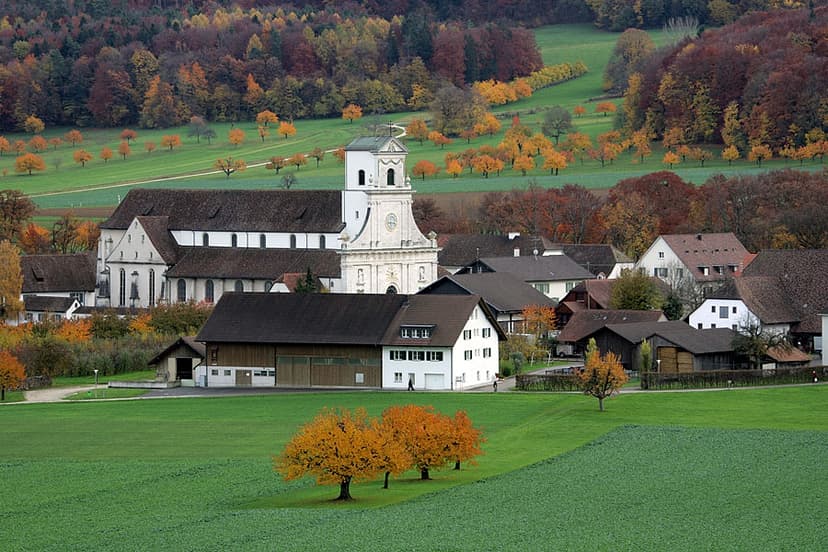
Basilica of St Mary, Mariastein Abbey
The Basilica of St Mary, Mariastein Abbey is a significant pilgrimage site in Switzerland, second only to Einsiedeln. It originated in the late 14th century around a legend of a miracle of the Blessed Virgin Mary, with a stone chapel first mentioned in 1434. The current late Gothic basilica, with a Baroque interior and classicist facade, stands over the Chapel of Grace and houses a Benedictine monastery re-established in 1648.
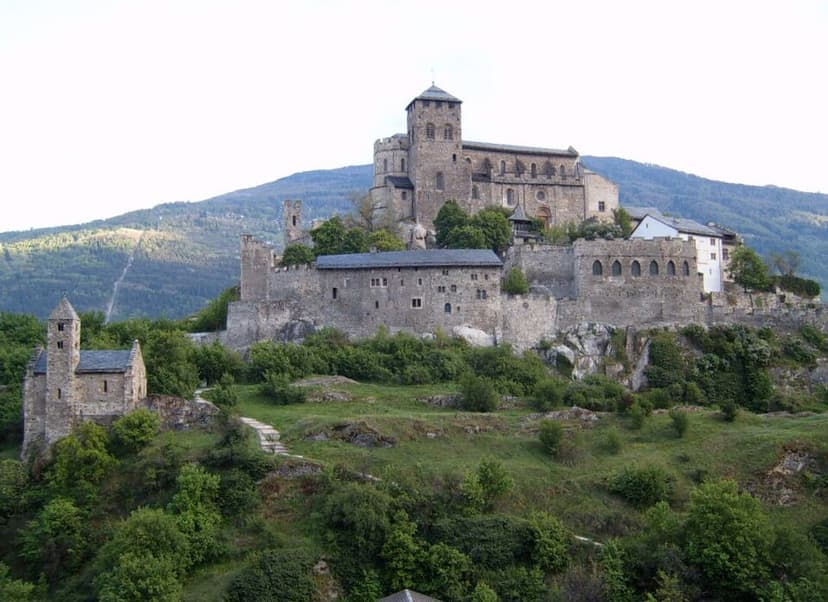
Basilica of Our Lady of Valère
The Basilica of Our Lady of Valère is a fortified Roman Catholic church located atop Valère hill in Sion, Switzerland. It is a significant Swiss heritage site of national importance, serving as a historical seat of the cathedral chapter and a symbol of the spiritual and secular power of the Prince-Bishops of Sion.
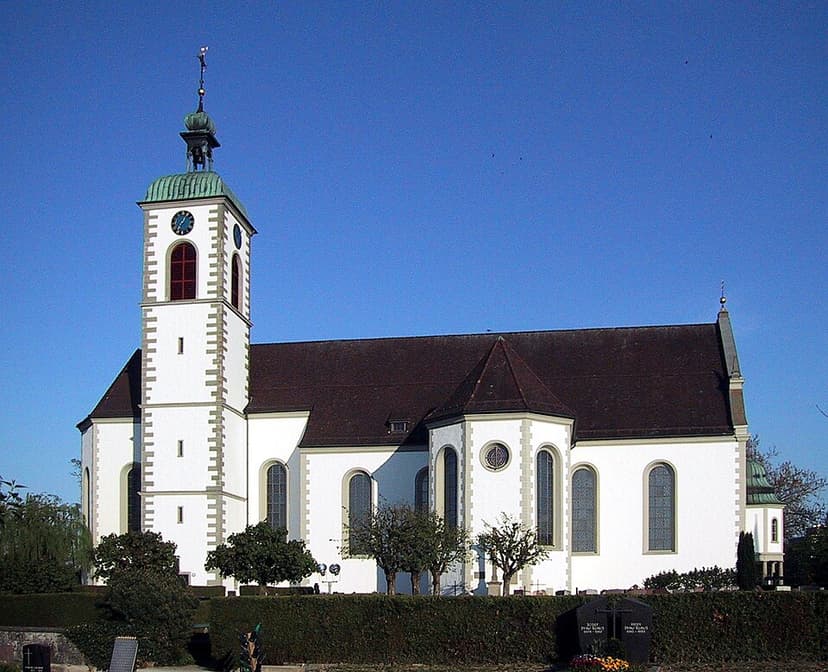
Basilica of St Ulrich and St Afra
The Basilica of St Ulrich and St Afra in Kreuzlingen, Switzerland, originated as an Augustinian Canons' monastery founded around 1125. After several destructions and rebuildings, the current Baroque church was consecrated in 1653 and later remodelled in Rococo style. Although the monastery was dissolved in 1848, the church was preserved and now serves as a basilica minor, having undergone significant renovation after a fire in 1963.