
Basilica of Our Lady of Valère
Switzerland·Sion·Sion
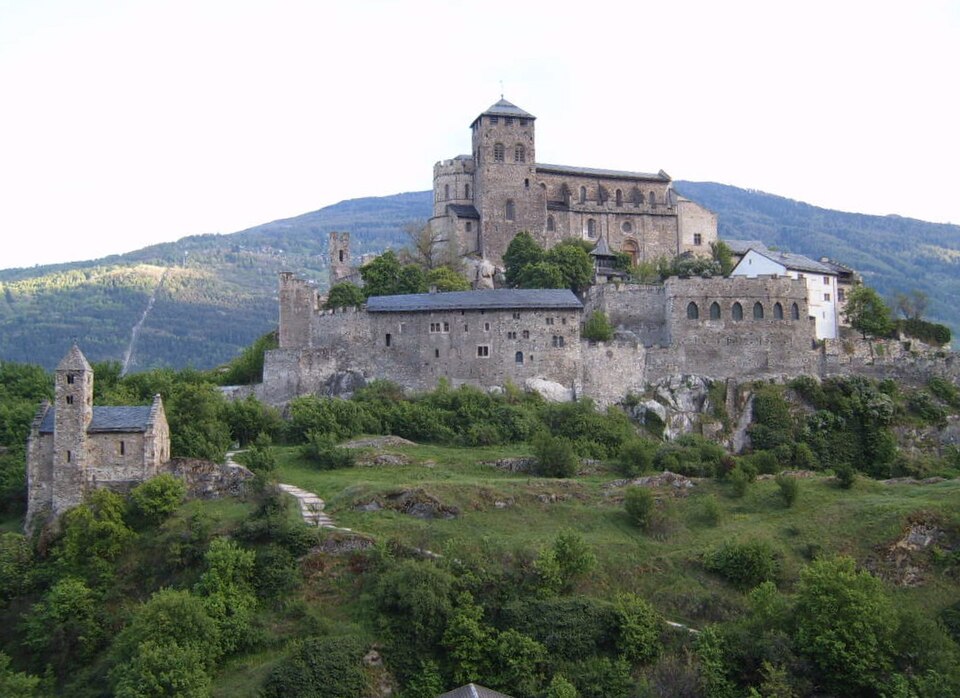
The Basilica of Our Lady of Valère is a fortified Roman Catholic church located atop Valère hill in Sion, Switzerland. It is a significant Swiss heritage site of national importance, serving as a historical seat of the cathedral chapter and a symbol of the spiritual and secular power of the Prince-Bishops of Sion.
Key Facts
- ›The basilica is situated on Valère hill, overlooking the town of Sion.
- ›Its first parts were constructed between 1100 and 1130 in the Romanesque style.
- ›Later construction phases incorporated Gothic architectural elements, including expanded nave and ribbed vaults.
- ›The basilica houses one of the world's oldest functioning pipe organs, built around 1430-1435.
- ›It was granted the rank of minor basilica on October 7, 1987, by Pope John Paul II.
- ›The site is recognized for its protected fauna and flora, contributing to its inclusion in the Federal Inventory of Sites and Monuments of National Importance.
Romanesque, Gothic
About Basilica of Our Lady of Valère
The Basilica of Our Lady of Valère, also referred to as Valère castle, is a significant fortified Roman Catholic church located in Sion, within the Swiss canton of Valais. Perched atop Valère hill at 615 meters above sea level, it stands as a prominent Swiss heritage site of national significance, offering commanding views over the town and facing the Château de Tourbillon on the opposite hill.
History and Architecture
The origins of religious presence at Valère trace back to the early 4th century when the Diocese was founded in Octodurum (modern Martigny). The see was transferred to Sion in 589 due to inundations. By the 12th century, the powerful Prince-Bishops of Sion began constructing impressive churches and castles to assert their authority. Valère became a key administrative center, housing the cathedral chapter.
The first elements of the church were erected between 1100 and 1130 in the Romanesque style. Subsequent construction phases extended the basilica, incorporating the new Gothic style. Between 1235 and 1267, the nave was expanded with two aisles, and the choir was embellished with a Gothic ribbed vault. A rood screen was installed during the 13th century to separate the chancel from the nave.
Notable Features
One of the most remarkable features of the Basilica of Our Lady of Valère is its 15th-century pipe organ. Believed to have been built around 1430-1435, it is recognized as one of the oldest functioning organs globally. The organ's unique design, with pipes arranged to outline a church, and its modification in the 1700s for Baroque music, contribute to its historical importance. The basilica also features murals dating from around 1435 and a 15th-century Gothic marble statue of the Madonna and Child above the high altar.
Religious Significance and Designation
In recognition of its historical and religious importance, the church was officially granted the rank of minor basilica on October 7, 1987, during a visit by Pope John Paul II. The Valère hill itself is noted for its rich biodiversity, hosting a large number of protected species, which has led to its inclusion in the Federal Inventory of Sites and Monuments of National Importance since 1977.
Source: Wikipedia ↗
Frequently Asked Questions
Where is the Basilica of Our Lady of Valère located?
The Basilica of Our Lady of Valère is situated on Valère hill in Sion, in the canton of Valais, Switzerland. It is a fortified church that dominates the town of Sion.
What is the history of the Valère Basilica?
The first parts of the church were built between 1100 and 1130 in the Romanesque style. Subsequent construction phases expanded the church and introduced Gothic architectural elements, with the nave being enlarged between 1235 and 1267.
What makes the organ in the Valère Basilica special?
The pipe organ on the west side of the basilica, believed to have been built in 1435, is one of the oldest functioning organs in the world. Its pipes are uniquely arranged to resemble a church outline.
When did the Valère Basilica become a minor basilica?
The church obtained the rank of minor basilica in the Roman Catholic tradition on October 7, 1987. This designation occurred during the visit of Pope John Paul II.
Is the Valère Basilica a historical administrative center?
Yes, Valère was one-third of the administrative center of the powerful Diocese of Sion, serving as the residence of the cathedral chapter. This role emerged as Prince-Bishops combined spiritual and secular power.
Related Basilicas
Basilica of St Mary, Mariastein Abbey
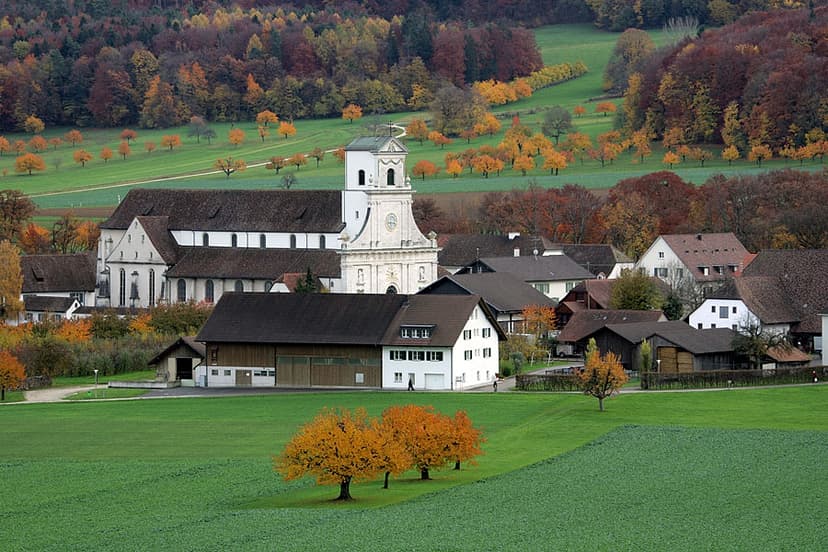
The Basilica of St Mary, Mariastein Abbey is a significant pilgrimage site in Switzerland, second only to Einsiedeln. It originated in the late 14th century around a legend of a miracle of the Blessed Virgin Mary, with a stone chapel first mentioned in 1434. The current late Gothic basilica, with a Baroque interior and classicist facade, stands over the Chapel of Grace and houses a Benedictine monastery re-established in 1648.

Abbatial Cathedral of St Maurice, Abbey of St Maurice
The Abbey of Saint Maurice, Agaunum, is a historic Swiss monastery of canons regular located in Saint-Maurice, Canton of Valais. Dating back to the 6th century, it is renowned for its association with the martyrdom of the Theban Legion, its former practice of perpetual psalmody, and its significant collection of art and antiquities. It is recognized as a Swiss heritage site of national significance.

Basilica of Saint Francis
The Basilica and Convent of San Francisco in Lima, Peru, is a significant religious and architectural complex, described as "the largest and noblest monument that the conquest erected in these prodigious lands." It is a prime example of viceregal-era architecture, featuring a blend of Baroque and Neoclassical styles, and forms part of the UNESCO World Heritage site of the Historic Centre of Lima.