
Basilica of St Plechelm
Netherlands·Oldenzaal·Utrecht
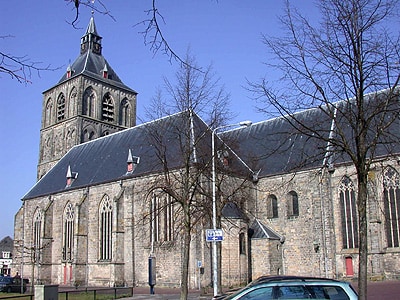
The Basilica of St Plechelmus in Oldenzaal, Netherlands, is a Catholic church dedicated to the 8th-century Irish monk Saint Plechelm. It holds significant historical and religious importance, with its origins tracing back to the missionary work of Plechelm himself and later development by the bishop of Utrecht. The basilica is a site of annual pilgrimage and was officially designated a basilica minor by Pope Pius XII.
Key Facts
- ›The church is dedicated to Saint Plechelm, an 8th-century Irish monk.
- ›Its history dates back to the 8th century when Plechelm founded the first church on the site.
- ›The oldest surviving parts of the current building date from the 12th century.
- ›In 954, the church was expanded and restored, and relics of Saint Plechelm were transferred there.
- ›The basilica was granted the honorary title of basilica minor by Pope Pius XII on May 13, 1950.
- ›The basilica was granted a coat of arms by Queen Beatrix of the Netherlands in 2009.
Plechelm
Relics of Saint Plechelm
About Basilica of St Plechelm
Basilica of St Plechelmus
The Basilica of St Plechelmus, known in Dutch as the Sint-Plechelmusbasiliek, is a significant Catholic church located in the town of Oldenzaal in the Netherlands. It is dedicated to Saint Plechelm, an 8th-century Irish monk whose festival is still celebrated annually on July 15th, a date that has been on the calendar of the medieval diocese of Utrecht since his canonisation in the 10th century.
History and Significance
The history of the church on this site stretches back to the 8th century when Saint Plechelm, a traveling missionary, founded the initial structure, the Silvester Church. This church was later rededicated to Plechelm himself before 954. In that same year, bishop Balderic of Utrecht established a chapter in Oldenzaal, undertaking an expansion and restoration of the 8th-century church. This restoration allowed for the transfer of Plechelm's relics, used during his canonisation, to the church. Consequently, the Plechelmus Church of Oldenzaal gained considerable esteem, with its chapter being one of only four outside Utrecht that held the right to participate in the election of the bishop of Utrecht during the Middle Ages.
The oldest existing parts of the current basilica date from the mid to late 12th century. A significant ecclesiastical recognition came on May 13, 1950, when the church was awarded the honorary title of basilica minor by Pope Pius XII. Further affirming its status, by royal decree on March 17, 2009, Queen Beatrix granted the basilica a coat of arms.
Source: Wikipedia ↗
Frequently Asked Questions
Who is Saint Plechelm?
Saint Plechelm was an 8th-century Irish monk and traveling missionary who founded the first church on the site of the current basilica in Oldenzaal. His festival is celebrated annually on July 15th.
When was the Basilica of St Plechelmus built?
While the history of the church on the site goes back to the 8th century, the oldest parts of the existing building date from the middle and second half of the 12th century.
What is the significance of the Basilica of St Plechelmus?
The basilica is significant as the site where the relics of Saint Plechelm were transferred in 954, making it a place of veneration. It was also one of the few chapters outside Utrecht that could participate in electing the bishop of Utrecht during the Middle Ages and holds the title of basilica minor.
When was the church officially recognized as a basilica?
The church was awarded the honorary title of basilica minor by Pope Pius XII on May 13, 1950.
Related Basilicas

Basilica of St Nicholas
The Co-cathedral Basilica of Saint Nicholas in Amsterdam is the city's principal Roman Catholic church, dedicated to its patron saint. Originally constructed in the Neo-Baroque and neo-Renaissance styles, it was elevated to the status of a basilica minor in 2012 and later designated as a co-cathedral for the Diocese of Haarlem-Amsterdam in 2025. The basilica is significant for its prominent location near the main railway station and its role in the city's religious and musical life.
Basilica of St Willibrord
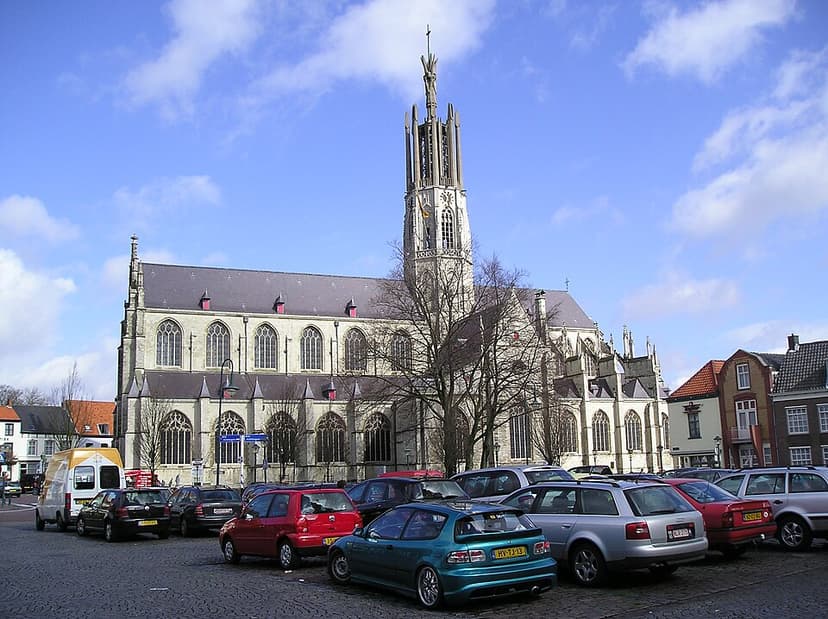
The Basilica of St. Willibrord is a historic Roman Catholic church located in Hulst, Netherlands. Dedicated to St. Willibrord, the apostle of the Benelux countries, the basilica showcases a significant architectural evolution from Romanesque to Brabantine Gothic styles. It holds religious importance as a place of worship and houses notable artistic works, including paintings and a historic organ.

Basilica of St Servatius
The Basilica of Saint Servatius is a significant Roman Catholic church located in the heart of Maastricht, Netherlands. It is a hybrid architectural masterpiece, predominantly Romanesque, built over the tomb of Saint Servatius, an Armenian missionary and bishop. The basilica has been a major pilgrimage site for centuries, drawing visitors to its relics and the saint's grave, and remains a central hub for Catholicism in the region.