
Basilica of St Paul
United States·Daytona Beach·Orlando
The Basilica of St. Paul in Daytona Beach, Florida, is a Roman Catholic minor basilica and parish church. It holds significance as one of the earliest Catholic institutions on Florida's East Coast, originating from a small mission and growing into a substantial church and school complex. Its elevation to minor basilica status in 2006 by Pope Benedict XVI further marks its religious importance.
Key Facts
- ›The first Catholic Mass in Daytona Beach was celebrated by traveling priests in 1881.
- ›The current church building was completed in 1927, with construction costing approximately $250,000.
- ›The school, opened in 1925, was the only Catholic school between St. Augustine and West Palm Beach at the time.
- ›The basilica was elevated to the status of a minor basilica by Pope Benedict XVI on January 20, 2006.
- ›The current cupola and cross were installed in 2006, replacing those damaged by hurricanes in 2004.
- ›The architecture is in the Mission Revival style, designed by Gerald a. Barry.

Mission Revival
Gerald A. Barry
About Basilica of St Paul
Basilica of St. Paul
The Basilica of St. Paul, located in Daytona Beach, Florida, is a significant Roman Catholic church and a designated minor basilica. Its history traces back to the arrival of the first Catholics in the area in 1881, who initially gathered for Mass in private homes. The church evolved from a mission of St. Teresa Church in Titusville, becoming a dedicated parish with its first resident priest in 1895. The current structure was completed in 1927, representing a substantial investment and a landmark in the region's Catholic development.
History and Development
Early Catholic services in Daytona Beach were infrequent, with priests traveling to the area. By 1886, it had become a mission, and Mass was regularly held in public venues. The establishment of a resident priest in 1895 marked a pivotal moment, leading to the purchase of land and the construction of an initial church in 1898. Under the guidance of Rev. William J. Mullally, who arrived in 1923, plans for a school and a new, larger church were realized. The school opened in 1925, serving as the sole Catholic educational institution on Florida's East Coast between St. Augustine and West Palm Beach at that time. The present church was completed in 1927 at a cost of approximately $250,000. The cupola and cross atop the basilica, installed in 2006, are replacements for those damaged by hurricanes in 2004.
Religious Designation and Architecture
On January 20, 2006, Pope Benedict XVI decreed the elevation of St. Paul's church to the status of a minor basilica. This prestigious designation was formally solemnized by Bishop Thomas G. Wenski on the Feast of the Conversion of St. Paul in the same year. The basilica's architecture is in the Mission Revival style, conceived by Chicago architect Gerald A. Barry. Upon its completion, it was noted as the tallest building on the mainland and was among the first structures in the vicinity to feature central heating and air-conditioning. A notable artistic element within the basilica is a fresco above the altar that illustrates the conversion of St. Paul.
Source: Wikipedia ↗
Frequently Asked Questions
When was the Basilica of St. Paul established as a parish?
The first resident priest arrived in Daytona Beach in 1895, and a church was built on property purchased at that time. The current church building was completed in 1927.
What is the architectural style of the Basilica of St. Paul?
The basilica is designed in the Mission Revival style. It was notable upon its construction for being the tallest building on the mainland and one of the first in the area with central heating and air conditioning.
When was the Basilica of St. Paul officially designated as a basilica?
Pope Benedict XVI elevated St. Paul's church to the status of a minor basilica on January 20, 2006. The solemnization of this designation took place on the Feast of the Conversion of St. Paul in the same year.
Are there any notable features within the basilica?
Above the altar, there is a fresco depicting the conversion of St. Paul. The cupola and cross, dating from 2006, adorn the top of the building.
Related Basilicas
Cathedral Basilica of Saints Peter and Paul
The Cathedral Basilica of Saints Peter and Paul serves as the principal church of the Archdiocese of Philadelphia. This grand structure, completed in 1864, is the largest Catholic church in Pennsylvania and was designated a minor basilica by the Vatican in 1976. It is renowned for its impressive Roman-Corinthian architecture, featuring a dome and facade inspired by Italian Renaissance churches, and has hosted papal masses by Pope John Paul II and Pope Francis.
Basilica of St Fidelis
The Basilica of St. Fidelis, also known as the Cathedral of the Plains, is a Romanesque-style Catholic parish church located in Victoria, Kansas. It was constructed between 1908 and 1911 and was elevated to the status of a minor basilica in 2014. Its impressive architecture and prominent location have made it a significant landmark in western Kansas.
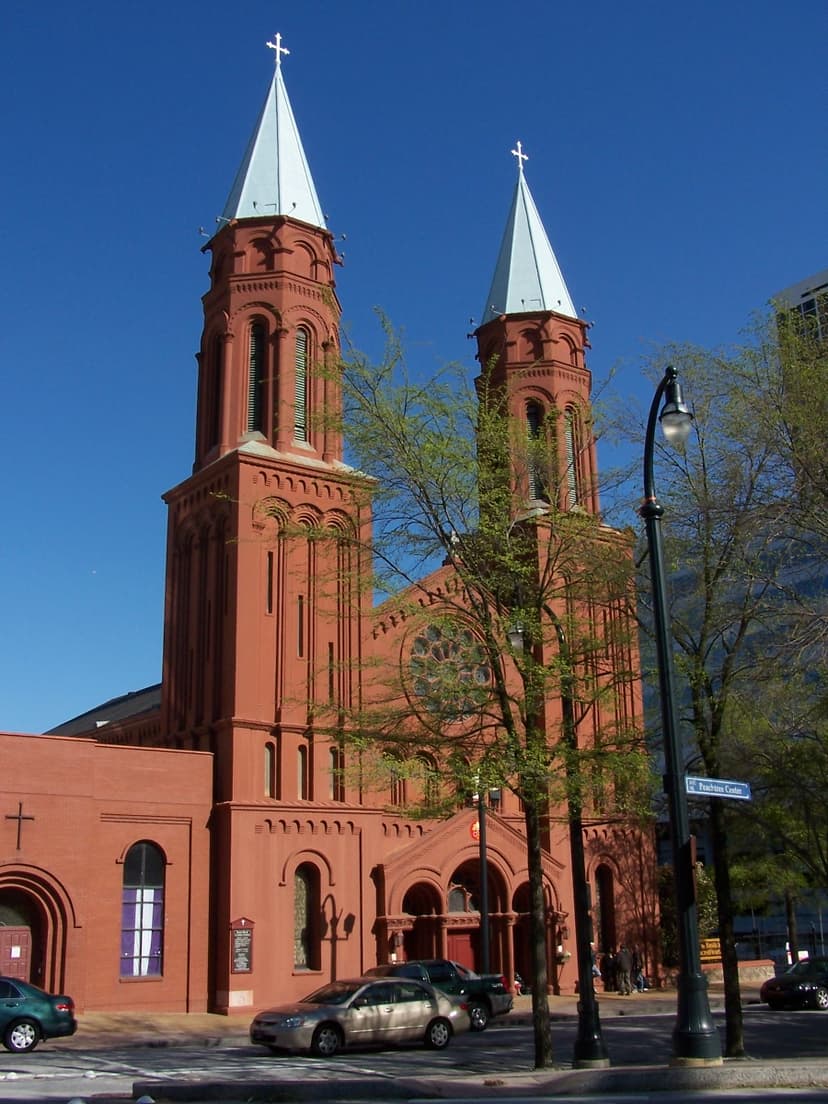
Basilica of the Sacred Heart of Jesus
The Basilica of the Sacred Heart of Jesus is a Roman Catholic church located in downtown Atlanta, Georgia. Completed in 1898, it is recognized for its French Romanesque and Romanesque Revival architecture and was designated a minor basilica in 2010. The church holds historical significance as one of the few remaining structures from Atlanta's early 20th-century development and has served its congregation for over a century.