
Basilica of St Louis, King of France (Old Cathedral)
United States·St. Louis·Roman Catholic Archdiocese of St. Louis
The Basilica of Saint Louis, King of France, also known as the Old Cathedral, is a historic Catholic church in St. Louis, Missouri. It holds the distinction of being the first cathedral west of the Mississippi River and served as the sole parish church in St. Louis until 1844. Despite being surrounded by Gateway Arch National Park, the basilica was preserved due to its significant historical importance, making it a popular site for weddings and a notable tourist destination.
Key Facts
- ›It was the first Catholic cathedral established west of the Mississippi River.
- ›The current structure was built between 1831 and 1834.
- ›The basilica is named after King Louis IX of France, the namesake of the city of St. Louis.
- ›It was designated a basilica by Pope John XXIII on January 27, 1961.
- ›The church is built in the Greek Revival style.
Greek Revival
Saint Louis Ix of France
- Painting of Saint Louis Venerating the Crown of Thorns
- Copy of Diego VeláZquez's Crucifixion
Laveille and Morton
About Basilica of St Louis, King of France (Old Cathedral)
Basilica of Saint Louis, King of France (Old Cathedral)
The Basilica of Saint Louis, King of France, colloquially known as the Old Cathedral, stands as a significant historical and religious landmark in St. Louis, Missouri. It holds the distinction of being the first Catholic cathedral established west of the Mississippi River and served as the sole parish church in the city until 1844. Though now surrounded by Gateway Arch National Park, the basilica was deliberately preserved due to its immense historical importance, ensuring its continued presence amidst the modern park.
History and Construction
The origins of the site trace back to the establishment of St. Louis, with land dedicated for Catholic purposes. Early structures, beginning with a log house in 1770, preceded the current edifice. Under Bishop Louis William Valentine Dubourg, a brick structure was erected starting in 1818, designed by Gabriel Paul. Following the establishment of the Diocese of St. Louis in 1826, Bishop Joseph Rosati initiated the construction of the present cathedral to mark the diocese's growth. The cornerstone was laid on August 1, 1831, and the church, designed and built by Laveille and Morton, was completed and consecrated on October 26, 1834. The church was later designated a basilica by Pope John XXIII on January 27, 1961, receiving its current name.
Architectural Features and Significance
The basilica is primarily designed in the Greek Revival style. Notable internal features include marble altars and significant artworks such as a painting of Saint Louis venerating the Crown of Thorns, a gift from Louis XVIII of France, and a copy of Diego Velázquez's Crucifixion. Inscriptions in Latin and Hebrew adorn the main entrance. The church basement houses artifacts from the Roman Catholic Archdiocese of Saint Louis, and Bishop Joseph Rosati is interred in a vault beneath the sanctuary. Despite a smaller number of active parishioners, the basilica remains a popular site for marriage ceremonies due to its picturesque location near the Mississippi River and the Gateway Arch, and it continues to be a significant tourist destination.
Source: Wikipedia ↗
Frequently Asked Questions
What is the historical significance of the Basilica of Saint Louis, King of France?
This basilica was the first Catholic cathedral west of the Mississippi River and served as the only parish church in St. Louis until 1844. Its historical importance led to its preservation amidst the construction of Gateway Arch National Park.
When was the current structure of the Basilica of Saint Louis, King of France built?
The current church structure was built between 1831 and 1834. The cornerstone was laid on August 1, 1831, and the cathedral was consecrated on October 26, 1834.
Who is the Basilica of Saint Louis, King of France named after?
The basilica is named after King Louis IX of France, who is also the namesake of the city of St. Louis. He was canonized as Saint Louis.
What architectural style is the Basilica of Saint Louis, King of France?
The church is primarily built in the Greek Revival style. It also features historically accurate glass in a Gothic design following a 2015 restoration.
What notable artifacts are housed in the Basilica of Saint Louis, King of France?
The basilica features marble altars, a painting of Saint Louis venerating the Crown of Thorns, and a copy of Diego Velázquez's Crucifixion. The basement contains artifacts from the Archdiocese of Saint Louis, including a bell donated by the governor of the Louisiana territory.
Is the Basilica of Saint Louis, King of France part of Gateway Arch National Park?
No, the basilica is located near Gateway Arch National Park and is surrounded by it, but it is not part of the park. It was intentionally left intact during the park's construction due to its historical significance.
Related Basilicas
Cathedral Basilica of St Louis
The Cathedral Basilica of Saint Louis, also known as the New Cathedral, is the mother church of the Archdiocese of St. Louis. Completed in 1914, it is renowned for its extensive mosaic installations, considered one of the largest in the Western Hemisphere, and its burial crypts for archdiocesan leaders. It was designated a basilica by Pope John Paul II in 1997.
Basilica of St Fidelis
The Basilica of St. Fidelis, also known as the Cathedral of the Plains, is a Romanesque-style Catholic parish church located in Victoria, Kansas. It was constructed between 1908 and 1911 and was elevated to the status of a minor basilica in 2014. Its impressive architecture and prominent location have made it a significant landmark in western Kansas.
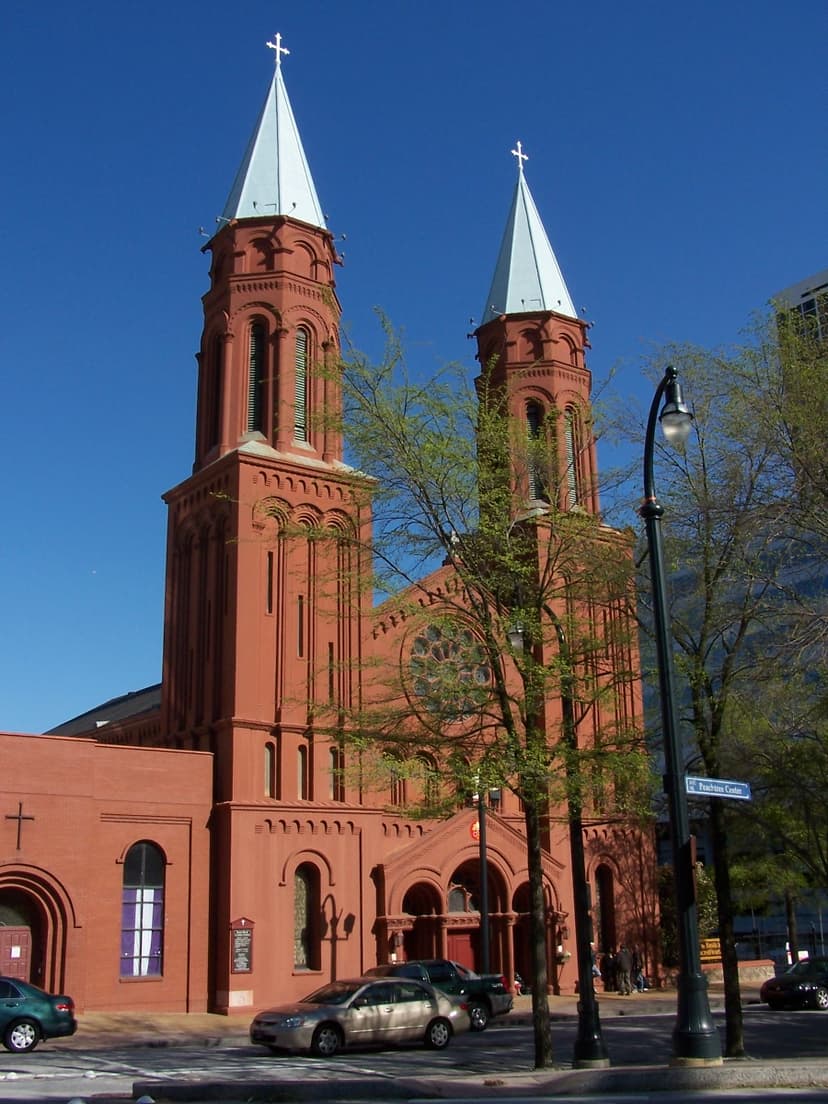
Basilica of the Sacred Heart of Jesus
The Basilica of the Sacred Heart of Jesus is a Roman Catholic church located in downtown Atlanta, Georgia. Completed in 1898, it is recognized for its French Romanesque and Romanesque Revival architecture and was designated a minor basilica in 2010. The church holds historical significance as one of the few remaining structures from Atlanta's early 20th-century development and has served its congregation for over a century.