
Basilica of St Isidore of León
The Basilica of St Isidore of León is a significant Catholic church in León, Spain, with Christian roots dating back to the 10th century. Originally a monastery, it was rededicated in 1063 to Saint Isidore of Seville, whose relics were brought there for interment on Christian soil. The basilica is renowned for its Romanesque architecture, the Royal Pantheon housing Leonese royalty, and its role as a site of historical parliamentary significance.
Key Facts
- ›Christian presence on the site began in the 10th century with a monastery for Saint John the Baptist.
- ›Rededicated in 1063 to Saint Isidore of Seville, whose relics were transferred to León.
- ›The Royal Pantheon serves as the burial site for eleven kings, numerous queens, and many nobles of León.
- ›Hosted the Cortes of León in 1188, recognized as a precursor to modern parliamentarism.
- ›Exhibits a blend of architectural styles, predominantly Romanesque with Gothic and Renaissance additions.
- ›Houses important medieval art, including the Chalice of Doña Urraca, and significant manuscripts in its museum and library.

Romanesque, Gothic, Renaissance
Isidore of Seville
Relics of Saint Isidore of Seville
Benedictine Sisters, Canons
About Basilica of St Isidore of León
The Basilica of St Isidore of León, located in the city of León, Castile and León, Spain, is a significant Catholic church with a history stretching back to the early 10th century. Its origins lie on the site of an ancient Roman temple, later developing into a monastery dedicated to Saint John the Baptist. The church was rededicated in 1063 to Saint Isidore of Seville, a prominent archbishop and theologian of Visigothic Spain. This rededication was part of an effort to bring Isidore's relics to León for interment on Christian soil, a move facilitated by the Muslim ruler of Seville.
History and Religious Significance
The original structure was built in the pre-Arab period over the ruins of a Roman temple. In the 10th century, the kings of León established a community of Benedictine sisters on the site. The first church was destroyed during the conquest by Al-Mansur Ibn Abi Aamir, but a new church and monastery were established in the 11th century by Alfonso V of León. The basilica played a crucial role in the royal lineage of León, with Queen Sancha choosing it as the site for the royal burial chapel. Today, eleven kings, numerous queens, and many nobles are interred beneath the vaults of the medieval "royal pantheon." A community of canons was established in 1063 to maintain the monastery and safeguard the relics of Saint Isidore, and the canons' office continues to be celebrated daily.
Architectural and Artistic Heritage
The Basilica of St Isidore is predominantly built in the Romanesque style, though it incorporates elements from subsequent centuries, including Gothic and Renaissance additions. The convergence of these styles creates a harmonious whole. Notable architectural features include the arches of the transept crossing, which bear a resemblance to Islamic art, and the carved tympanum of the Puerta del Cordero, a Romanesque depiction of the sacrifice of Abraham created before 1100.
Royal Pantheon
The Pantheon of the Kings of León is a remarkable funeral chapel and a prime example of surviving Romanesque art. Its columns are adorned with rare Visigothic capitals featuring floral or historic designs. The 12th-century painted murals are exceptionally well-preserved, depicting New Testament subjects alongside scenes of contemporary rural life.
Museum and Library
The basilica's museum houses a rich collection of early medieval art, including jeweled chalices and works in ivory and precious metal. The library is a repository of 300 medieval works, numerous manuscripts, and significant texts such as a Mozarabic Bible dating from 960 and a seventh-century Latin version of the Visigothic law code. The Chalice of Doña Urraca is a particularly important artifact within the museum's collection.
Historical Parliamentarism
Beyond its religious and artistic importance, the Basilica of St Isidore of León holds a significant place in the history of democracy. In 1188, the Cortes of León were held within its walls. This event is recognized by UNESCO and historians like John Keane as the first instance of modern parliamentarism in European history.
Source: Wikipedia ↗
Frequently Asked Questions
What is the historical significance of the Basilica of St Isidore of León?
The basilica is historically significant for hosting the Cortes of León in 1188, considered by UNESCO as the first example of modern parliamentarism in Europe. It also serves as the royal burial chapel for the kings of León.
When were the relics of Saint Isidore of Seville moved to León?
The relics of Saint Isidore of Seville were transferred to León and the basilica was rededicated in his honor in 1063. This was arranged with the Muslim ruler of Seville to ensure his relics could be interred on Christian soil.
What architectural styles can be found in the Basilica of St Isidore of León?
The basilica is primarily built in the Romanesque style, but it features significant additions from later centuries, including Gothic elements in the apse and transept, and Renaissance influences. The arches of the transept crossing also show influences from Islamic art.
What is the Royal Pantheon?
The Royal Pantheon, also known as the Pantheon of the Kings of León, is a funeral chapel within the basilica. It is one of the most important examples of surviving Romanesque art and contains the tombs of eleven kings, numerous queens, and many nobles of León.
What notable artifacts are housed in the museum of the Basilica of St Isidore?
The museum contains numerous examples of early medieval art, including jeweled chalices, works of ivory and precious metal. The Chalice of Doña Urraca is considered one of the most important pieces. The library also holds significant manuscripts, including a Mozarabic Bible from 960.
Related Basilicas
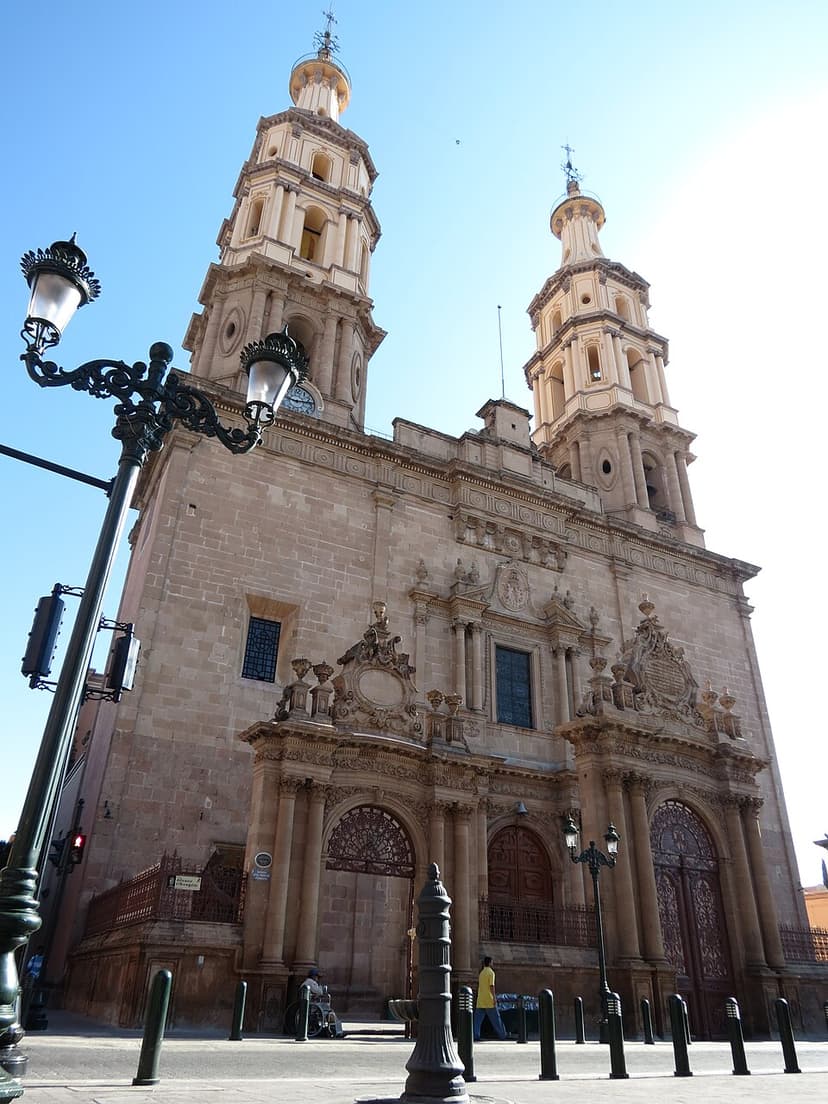
Cathedral Basilica of Our Lady of the Light
The Cathedral Basilica of Our Lady of the Light, also known as León Cathedral, is a significant Catholic church located in the historic center of León, Mexico. It serves as the headquarters of the Metropolitan Archdiocese of León and was consecrated in 1866. Its construction spanned several decades, beginning in the mid-18th century and resuming in the mid-19th century under the direction of Bishop José María de Jesús Diez de Sollano.
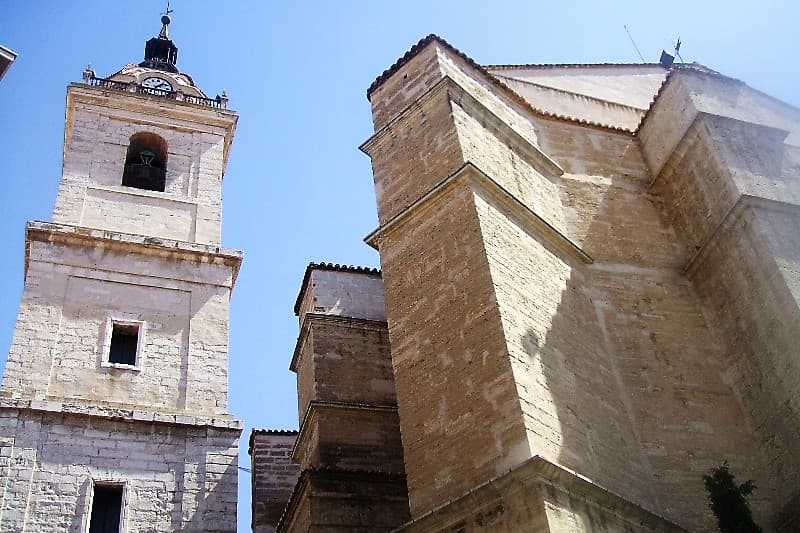
Cathedral Basilica of St Mary of the Meadow
The Holy Priory Church Cathedral Basilica of the Military Orders of Our Lady Saint Mary of the Prado, commonly known as the Cathedral of Saint Mary of the Prado, is a significant religious and architectural landmark in Ciudad Real, Spain. Its construction, spanning centuries and incorporating Gothic, Renaissance, and Baroque elements, makes it a rich historical monument. Since 1875, it has served as the priory for four of Spain's military orders, underscoring its enduring importance.
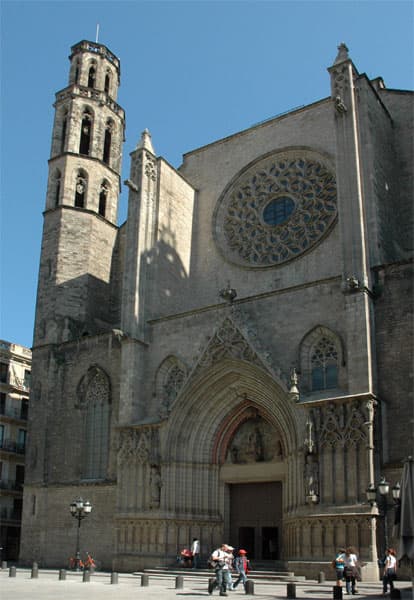
Basilica of St Mary of the Sea
The Basilica of St Mary of the Sea, known in Catalan as Santa Maria del Mar, is a prominent church in Barcelona, Spain, constructed between 1329 and 1383. It stands as a remarkable example of Catalan Gothic architecture, distinguished by its stylistic purity and unity. The basilica holds significance as a testament to the maritime and mercantile power of the Principality of Catalonia during the medieval period, and notably, its construction was supported by the common people rather than the nobility.