
Basilica of St Ignatius of Loyola
Spain·Azpeitia
The Sanctuary of Loyola, also known as the Shrine and Basilica of Loyola, is a complex of buildings constructed in the Churrigueresque Baroque style. It was built around the birthplace of Saint Ignatius of Loyola, the founder of the Society of Jesus. The sanctuary is a significant pilgrimage site and a testament to the veneration of Ignatius after his death.
Key Facts
- ›Built in the Churrigueresque Baroque architectural style.
- ›Located in the neighborhood of Loyola in Azpeitia, Basque Country, Spain.
- ›Constructed around the birthplace of Saint Ignatius of Loyola.
- ›The birthplace house was given to the Society of Jesus in the 17th century.
- ›Features an altar commissioned in 1900 with metalwork by Plácido Zuloaga.
- ›The altar depicts scenes from the life of St. Ignatius and includes works by José Felipe Artamendi.

Churrigueresque Baroque
Ignatius of Loyola
Society of Jesus
PláCido Zuloaga, José Felipe Artamendi
About Basilica of St Ignatius of Loyola
What is the Sanctuary of Loyola?
The Sanctuary of Loyola, also referred to as the Shrine and Basilica of Loyola, is a significant religious complex located in Azpeitia, Basque Country, Spain. It is constructed in the ornate Churrigueresque Baroque style and is built around the very birthplace of Saint Ignatius of Loyola, the revered founder of the Society of Jesus.
Historical Significance and Construction
Following the death of Saint Ignatius of Loyola, his birthplace became a site of veneration for pilgrims. In the 17th century, the house where he was born was gifted to the Society of Jesus. The Order subsequently erected the Sanctuary of Loyola adjacent to this hallowed spot. A notable addition to the sanctuary was an altar commissioned in 1900, crafted by the renowned metalwork artist Plácido Zuloaga. This altar features intricate damascening techniques, with panels illustrating key moments in the life of Saint Ignatius, complemented by works from the workshop of José Felipe Artamendi.
Source: Wikipedia ↗
Frequently Asked Questions
Where is the Sanctuary of Loyola located?
The Sanctuary of Loyola is situated in the neighborhood of Loyola, within the municipality of Azpeitia, in the Basque Country of Spain. It is located along the Urola river.
What is the architectural style of the Sanctuary of Loyola?
The sanctuary is built in the Churrigueresque Baroque style. This ornate style is characterized by elaborate sculptural decoration.
Why is the Sanctuary of Loyola significant?
It is significant because it is built around the birthplace of Saint Ignatius of Loyola, the founder of the Society of Jesus. His birthplace became a place of veneration after his death.
Who commissioned the altar within the sanctuary?
An altar for the sanctuary was commissioned in 1900 by the Society of Jesus. The metalwork artist Plácido Zuloaga was employed for its creation.
What is depicted on the altar?
The iron structure of the altar, created by Plácido Zuloaga, features panels that depict the life of Saint Ignatius of Loyola. It also supports a crucifix and candlesticks made using damascening techniques.
Related Basilicas
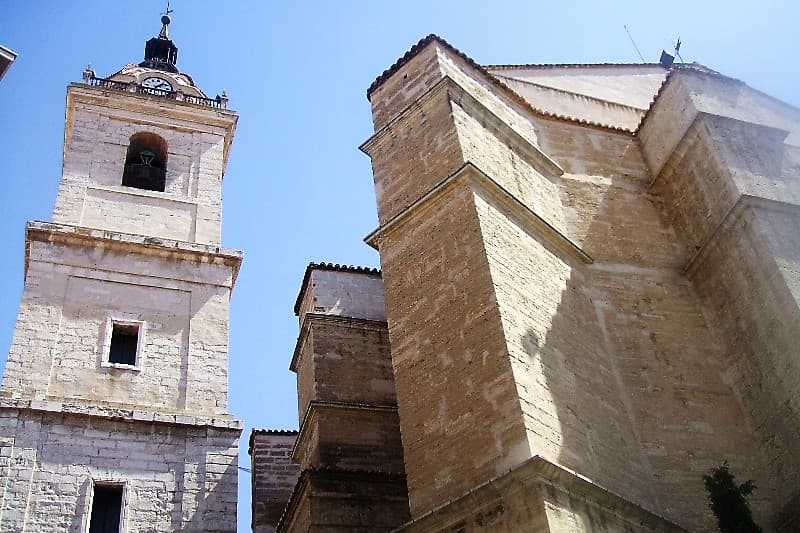
Cathedral Basilica of St Mary of the Meadow
The Holy Priory Church Cathedral Basilica of the Military Orders of Our Lady Saint Mary of the Prado, commonly known as the Cathedral of Saint Mary of the Prado, is a significant religious and architectural landmark in Ciudad Real, Spain. Its construction, spanning centuries and incorporating Gothic, Renaissance, and Baroque elements, makes it a rich historical monument. Since 1875, it has served as the priory for four of Spain's military orders, underscoring its enduring importance.

Basilica of St Mary of the Pine
The Basilica of St Mary of the Pine, known in Catalan as Santa Maria del Pi, is a significant 15th-century Gothic church located in Barcelona, Spain. It stands as a prominent example of Catalan Gothic architecture, characterized by its single nave and minimal ornamentation. The basilica has a long history marked by damage from earthquakes, wars, and fires, necessitating several reconstructions and restorations throughout the centuries.
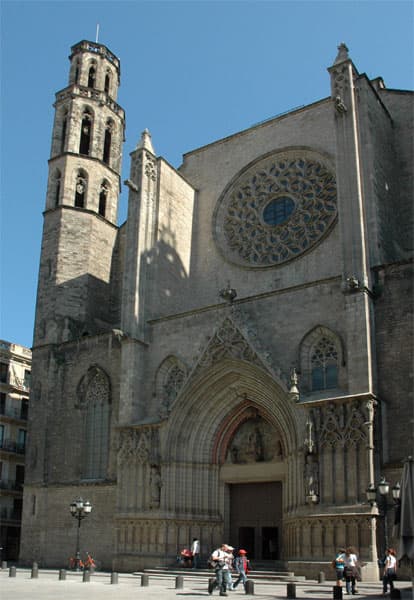
Basilica of St Mary of the Sea
The Basilica of St Mary of the Sea, known in Catalan as Santa Maria del Mar, is a prominent church in Barcelona, Spain, constructed between 1329 and 1383. It stands as a remarkable example of Catalan Gothic architecture, distinguished by its stylistic purity and unity. The basilica holds significance as a testament to the maritime and mercantile power of the Principality of Catalonia during the medieval period, and notably, its construction was supported by the common people rather than the nobility.