
Basilica of St Gregory the Great, Downside Abbey
United Kingdom·Stratton-on-the-Fosse
The Basilica of St Gregory the Great, Downside Abbey, is a significant Gothic Revival church in Somerset, England. Originally the Abbey Church of St Gregory the Great, it was consecrated in 1935 and elevated to the rank of a minor basilica by Pope Pius XI, making it the first in England. The church is a Grade I listed building, renowned for its scale and architectural ambition, designed to rival medieval English cathedrals.
Key Facts
- ›Construction of the Abbey Church of St Gregory the Great began in 1873.
- ›The church was consecrated in 1935 and simultaneously raised to the rank of a minor basilica by Pope Pius XI.
- ›It is the first minor basilica established in England.
- ›The church is built in the Gothic Revival style, designed to be comparable in size to medieval English cathedrals.
- ›It houses the relics of St Oliver Plunkett, an Irish martyr.
- ›The church is a Grade I listed building and is one of only four minor basilicas in the United Kingdom.

Gothic Revival
Gregory the Great
Relics of St Oliver Plunkett, Skull of St Thomas De Cantilupe
Benedictines, English Benedictine Congregation
Archibald Matthias Dunn, Edward Joseph Hansom, Giles Gilbert Scott, Thomas Garner, Sir Ninian Comper
About Basilica of St Gregory the Great, Downside Abbey
The Basilica of St Gregory the Great, Downside Abbey, located in Stratton-on-the-Fosse, Somerset, England, is a prominent example of Gothic Revival ecclesiastical architecture. Its history is intertwined with the English Benedictine Congregation, which was founded in 1607 in Flanders and later re-established in England.
History and Significance
The community that would become Downside Abbey was founded in 1607 at Douai in Flanders, under the patronage of St Gregory the Great. This community was the first English Benedictine house to renew conventual life after the Reformation, making it the senior community of the English Benedictine Congregation. Following the French Revolution, the monastic community was expelled and permitted to settle in England in 1795, eventually finding a permanent home at Downside, Somerset, in 1814.
The Abbey Church
The construction of the Abbey Church of St Gregory the Great commenced in 1873, with the transepts and Lady Chapel being the earliest parts. The church was designed in the Gothic Revival style by architects such as Archibald Matthias Dunn and Edward Joseph Hansom, with later contributions from Giles Gilbert Scott and Sir Ninian Comper. Its scale was intended to rival that of medieval English cathedrals. The church was consecrated in 1935 and, on the same occasion, was elevated to the rank of a minor basilica by Pope Pius XI. This designation made it the first minor basilica in England and granted the Abbot the right to wear the Cappa Magna. The church is a Grade I listed building and is recognized as one of only four minor basilicas in the United Kingdom.
Notable Features and Relics
The Basilica of St Gregory the Great is noted for its architectural ambition and its liturgical significance. It houses important relics, including those of St Oliver Plunkett, an Irish martyr executed in 1681. The Lady Chapel, considered a masterpiece by Sir Ninian Comper, features a reliquary containing the skull of St Thomas de Cantilupe. The church also boasts a significant organ by John Compton, built in 1931, with a unique casework designed by Giles Gilbert Scott.
Current Status
While the Abbey Church remains a significant religious site, the Benedictine monastic community departed Downside Abbey in 2022. They relocated first to Devon and subsequently to Belmont Abbey in Herefordshire in 2025. Consequently, the monastic buildings on the Downside site are now largely vacant, though parts, such as the refectory, have been repurposed by Downside School.
Source: Wikipedia ↗
Frequently Asked Questions
When was the Abbey Church of St Gregory the Great built?
Construction of the Abbey Church of St Gregory the Great began in 1873 with the transepts and Lady Chapel. The nave remained unfinished for many years.
What is the architectural style of the Basilica of St Gregory the Great, Downside Abbey?
The basilica is designed in the Gothic Revival style. It was built with the intention of rivaling the scale of medieval English cathedrals.
Is the Basilica of St Gregory the Great, Downside Abbey a minor basilica?
Yes, the Abbey Church of St Gregory the Great was raised to the rank of a minor basilica by Pope Pius XI in 1935, making it the first in England.
What notable relics are housed in the Basilica of St Gregory the Great, Downside Abbey?
The church houses the relics of St Oliver Plunkett, an Irish martyr who was executed in 1681. It also contains a reliquary with the skull of St Thomas de Cantilupe in the Lady Chapel.
What is the current status of the monastic community at Downside Abbey?
The Benedictine monastic community left Downside Abbey in 2022, moving first to Devon and then to Belmont Abbey in Herefordshire in 2025. The monastic buildings on the Downside site are largely vacant.
Related Basilicas
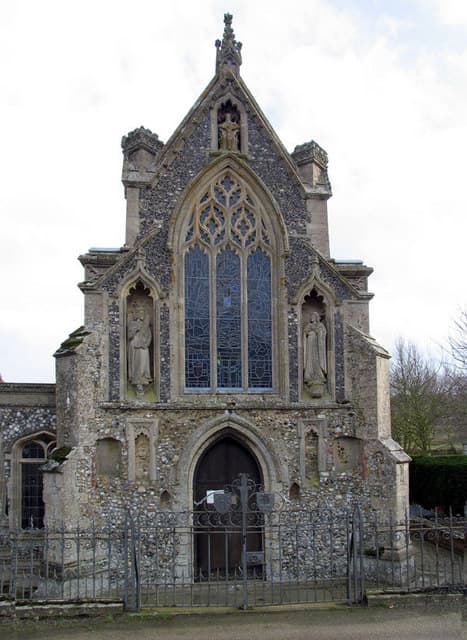
Minor Basilica of Our Lady of Walsingham
The Catholic National Shrine and Basilica of Our Lady, located at Houghton Saint Giles near Walsingham, England, is a significant site of Marian devotion. It incorporates the historic Slipper Chapel, dating back to around 1340, which was once the final stop on a medieval pilgrimage route. The entire site was elevated to the status of a Minor Basilica by Pope Francis in 2015, recognizing its importance as a national shrine and pilgrimage destination.
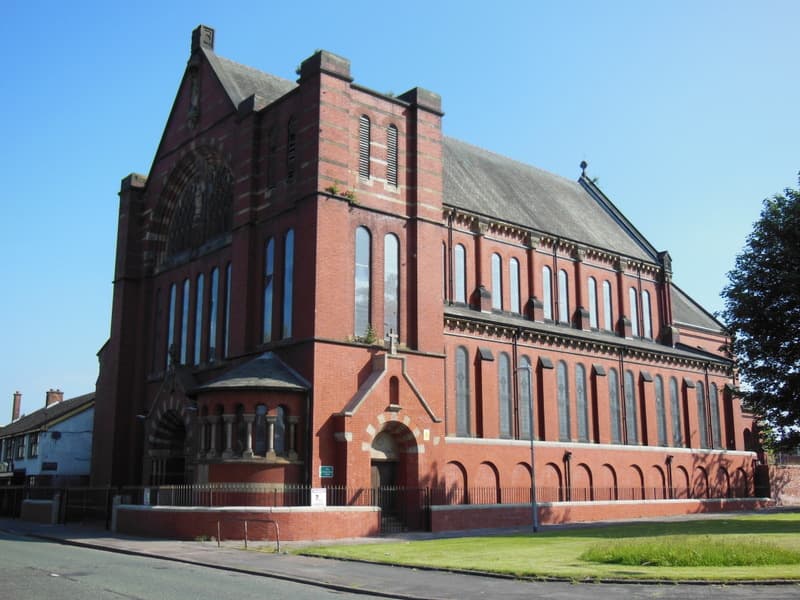
Corpus Christi Basilica, Miles Platting
Corpus Christi Basilica in Miles Platting, Manchester, was a Catholic church established by Premonstratensian canons regular. Designed by William Telford Gunson, its construction began in 1906 and it opened in 1907. The basilica served as a significant religious center until escalating repair costs led to its closure in 2007.

Basilica of Saint Francis
The Basilica and Convent of San Francisco in Lima, Peru, is a significant religious and architectural complex, described as "the largest and noblest monument that the conquest erected in these prodigious lands." It is a prime example of viceregal-era architecture, featuring a blend of Baroque and Neoclassical styles, and forms part of the UNESCO World Heritage site of the Historic Centre of Lima.