
Minor Basilica of Our Lady of Walsingham
United Kingdom·Walsingham
The Catholic National Shrine and Basilica of Our Lady, located at Houghton Saint Giles near Walsingham, England, is a significant site of Marian devotion. It incorporates the historic Slipper Chapel, dating back to around 1340, which was once the final stop on a medieval pilgrimage route. The entire site was elevated to the status of a Minor Basilica by Pope Francis in 2015, recognizing its importance as a national shrine and pilgrimage destination.
Key Facts
- ›The Slipper Chapel was originally built around 1340 as the final chapel on the pilgrimage route to the Priory of our Lady of Walsingham.
- ›Following the English Reformation, the Slipper Chapel fell into disuse and was repurposed for agricultural and domestic use before its restoration.
- ›In 1934, the venerated Marian image of our Lady of Walsingham was moved to the Slipper Chapel, establishing it as the Catholic National Shrine.
- ›Pope Pius XII granted a canonical coronation to the image of our Lady of Walsingham on August 15, 1954.
- ›The site was officially elevated to the status of a Minor Basilica by Pope Francis on December 27, 2015.
- ›The Slipper Chapel is so named because pilgrims traditionally removed their shoes to walk the final 'holy mile' barefoot.
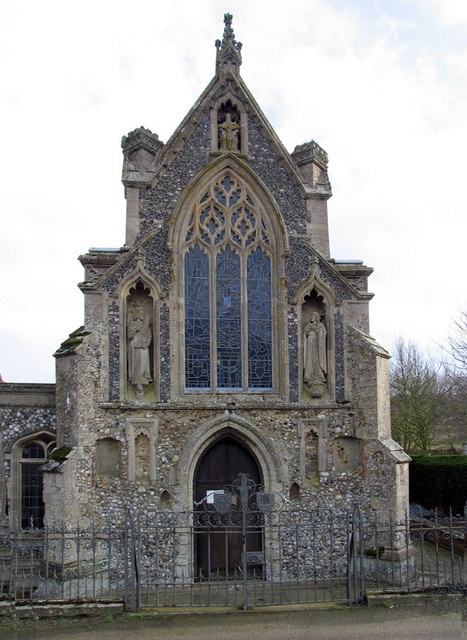
Our Lady of Walsingham
- Venerated Wooden Image of Our Lady of Walsingham
Thomas Garner
About Minor Basilica of Our Lady of Walsingham
The Catholic National Shrine and Basilica of Our Lady of Walsingham
The Catholic National Shrine and Basilica of Our Lady, situated at Houghton Saint Giles near Walsingham in Norfolk, England, is a prominent center for Marian devotion and pilgrimage. The site's historical heart is the Slipper Chapel, originally known as the Chapel of Saint Catherine of Alexandria, which dates back to approximately 1340. This chapel served as the final stopping point on the medieval pilgrimage route to the Priory of Our Lady of Walsingham, a journey that traditionally involved pilgrims removing their shoes for the last mile, thus giving the chapel its distinctive name.
Following the English Reformation, the Slipper Chapel fell into neglect and was repurposed for various secular uses, including as a poorhouse, forge, cowshed, and barn. Its rediscovery and restoration began in the late 19th century, spearheaded by Charlotte Pearson Boyd, a convert to Catholicism. In 1896, she purchased the building and, after its restoration, donated it to Downside Abbey for Catholic worship. The chapel underwent further restoration in 1904 under the architect Thomas Garner.
The modern revival of the shrine began in earnest in 1934 when the venerated Marian image of Our Lady of Walsingham was transferred to the Slipper Chapel. This event marked the chapel's establishment as the Catholic National Shrine, a focal point for Marian devotion. The image itself, a wooden statue carved in the late 19th century and blessed by Pope Leo XIII, was canonically crowned by papal mandate on August 15, 1954, by Pope Pius XII. The event drew an estimated 15,000 pilgrims and was marked by a significant procession along the "holy mile."
In recognition of its enduring spiritual importance, Pope Francis elevated the Shrine to the status of a Minor Basilica on December 27, 2015. The complex has since expanded to include the Chapel of Our Lady of Reconciliation, completed in 1982, which can accommodate up to 400 worshippers and can be opened to the pilgrimage area for larger ceremonies. The site also features amenities such as a picnic area, gift shop, and tea room, catering to the many pilgrims and visitors it receives annually.
Source: Wikipedia ↗
Frequently Asked Questions
Where is the Catholic National Shrine and Basilica of Our Lady of Walsingham located?
The basilica is located at Houghton Saint Giles, one mile outside the village of Walsingham in Norfolk, England. It is often referred to as being at Walsingham due to its historical connection to the priory.
What is the significance of the Slipper Chapel?
The Slipper Chapel, built around 1340, was the last chapel on the medieval pilgrimage route to the Priory of Our Lady of Walsingham. Pilgrims traditionally removed their shoes here to walk the final mile barefoot, earning it its name.
When was the site designated as a Minor Basilica?
The Catholic National Shrine and Basilica of Our Lady was elevated to the status of a Minor Basilica by Pope Francis on December 27, 2015.
What is the history of the venerated image of Our Lady of Walsingham?
The venerated wooden image of Our Lady of Walsingham, carved in Germany in the late 19th century, was blessed in Rome by Pope Leo XIII. It was translated to the Slipper Chapel in 1934 and received a canonical coronation by Pope Pius XII in 1954.
What has happened to the Slipper Chapel since its original construction?
After falling into disuse during the English Reformation and being repurposed for various uses, the Slipper Chapel was identified and purchased by Charlotte Pearson Boyd in the late 19th century. It was restored and donated for Catholic devotion, becoming the National Shrine in 1934.
Related Basilicas

Basilica of St Gregory the Great, Downside Abbey
The Basilica of St Gregory the Great, Downside Abbey, is a significant Gothic Revival church in Somerset, England. Originally the Abbey Church of St Gregory the Great, it was consecrated in 1935 and elevated to the rank of a minor basilica by Pope Pius XI, making it the first in England. The church is a Grade I listed building, renowned for its scale and architectural ambition, designed to rival medieval English cathedrals.
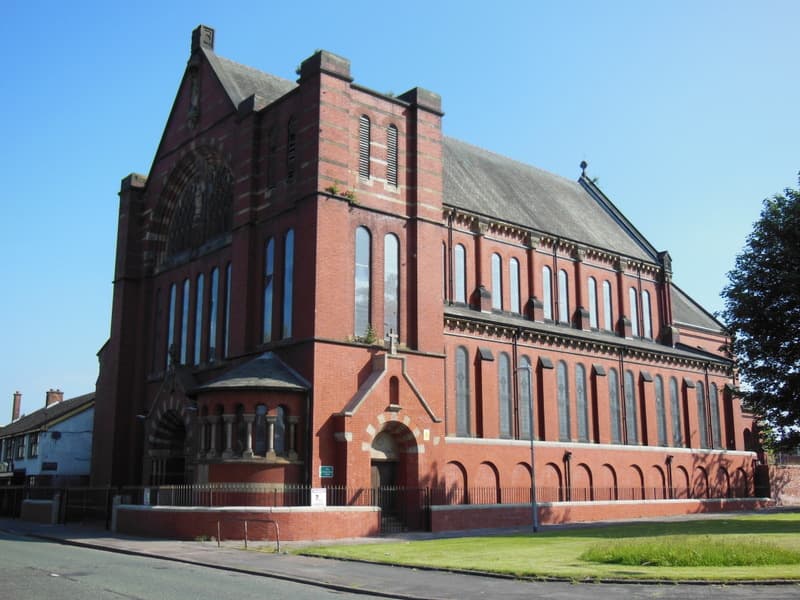
Corpus Christi Basilica, Miles Platting
Corpus Christi Basilica in Miles Platting, Manchester, was a Catholic church established by Premonstratensian canons regular. Designed by William Telford Gunson, its construction began in 1906 and it opened in 1907. The basilica served as a significant religious center until escalating repair costs led to its closure in 2007.

"Old" Basilica of Our Lady of Guadalupe
The Insigne y Nacional Basílica de Santa María de Guadalupe, commonly known as the Basilica of Our Lady of Guadalupe, is a prominent Catholic church in Mexico City dedicated to the Virgin Mary under her invocation as Our Lady of Guadalupe. It is one of the most visited Marian shrines in the world, attracting an estimated twenty million pilgrims annually, with a significant portion visiting around December 12th, the feast day of Our Lady of Guadalupe. The sanctuary complex includes the older church, now referred to as the Old Basilica, built in the early 18th century, and the modern New Basilica constructed in the 1970s to accommodate the growing number of devotees.